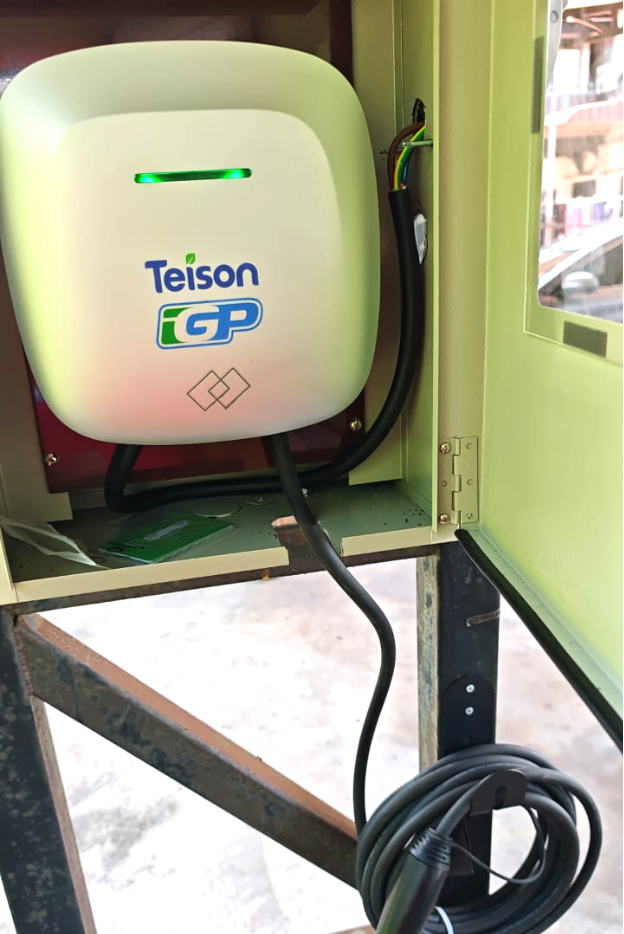
Understanding Charger Frequency: Why 50Hz vs. 60Hz Matters for EV Charging in Malaysia

When selecting an EV charger for home or commercial use, one critical but often overlooked specification is its rated frequency—whether it’s 50Hz, 60Hz, or 50 This seemingly small detail can significantly impact the charger’s compatibility, safety, and long-term reliability. Malaysia’s…

Read MoreUnderstanding Charger Frequency: Why 50Hz vs. 60Hz Matters for EV Charging in Malaysia

Why IGP Leaves Gaps Between the Single-Phase MCB and RCCB in EV Charger Installations

Many electricians and EV charger installers place protection components close together in a distribution board. However, at Innovative Green Power (IGP), we intentionally leave gaps between especially for the single-phase Miniature Circuit Breaker (MCB) and Residual Current Circuit Breaker (RCCB)…

Read MoreWhy IGP Leaves Gaps Between the Single-Phase MCB and RCCB in EV Charger Installations

Why Leaving Your EV Battery Fully Charged or Nearly Empty for Too Long Causes Damage

EV batteries, regardless of type—whether LFP (Lithium Iron Phosphate), NMC (Nickel Manganese Cobalt), NCA (Nickel Cobalt Aluminum), LMO (Lithium Manganese Oxide), or even newer chemistries like LFMP (Lithium Iron Manganese Phosphate)—all suffer when kept at 100% or near 0% charge…

Read MoreWhy Leaving Your EV Battery Fully Charged or Nearly Empty for Too Long Causes Damage

Why Use a 4-Pole MCB for Home EVSE Installations Instead of a 3-Pole MCB?

For home EV charging (EVSE) installations, a 4-pole Miniature Circuit Breaker (MCB) is the preferred choice over a 3-pole MCB, primarily due to enhanced safety, compliance with standards, and better electrical protection. ________________________________________ 1. Neutral Disconnection – Key Safety Factor…

Read MoreWhy Use a 4-Pole MCB for Home EVSE Installations Instead of a 3-Pole MCB?