By Alvin Wong, CEO of Innovative Green Power Sdn. Bhd.
“It’s not just about fast charging — it’s about safe charging.”
Behind every reliable EV setup lies one silent hero: proper earthing and earth leakage protection. Most homeowners overlook it, but it’s what keeps your charger (and your family) safe from shock and fire risks.
Learn what every EV owner should know about earthing, RCCBs, and compliance with Suruhanjaya Tenaga guidelines
__________
Earthing and Grounding in Home EV Charging
Why Earth Leakage Protection Matters
When you install an EV charger at home, most of the focus is often on cable size, breaker ratings, or how fast the charger can replenish your battery. But one element that quietly safeguards both people and property is often overlooked: earthing and earth leakage protection.
What is Earthing?
Earthing connects the metallic parts of your electrical system — such as your EV charger’s casing and conduits — to the ground through an electrode. This provides a low-resistance path for fault current to safely dissipate into the earth, instead of flowing through a person who touches the equipment.
In Malaysia, home wiring typically uses a TT earthing system, where both the supply side and the consumer side have their own earth connections. Proper earthing ensures that in the event of insulation failure, the protective device (RCD or RCCB) can trip quickly.
Why Earth Leakage Protection is Critical
Even with earthing in place, additional protection is required to detect small leakage currents that may not trip an overcurrent device. That’s where the Residual Current Device (RCD), commonly called RCCB, comes in.
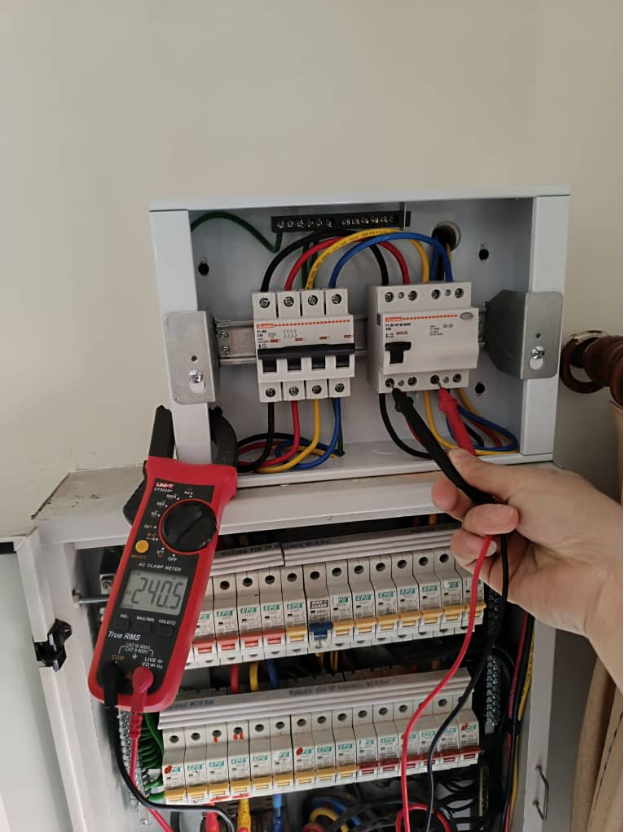
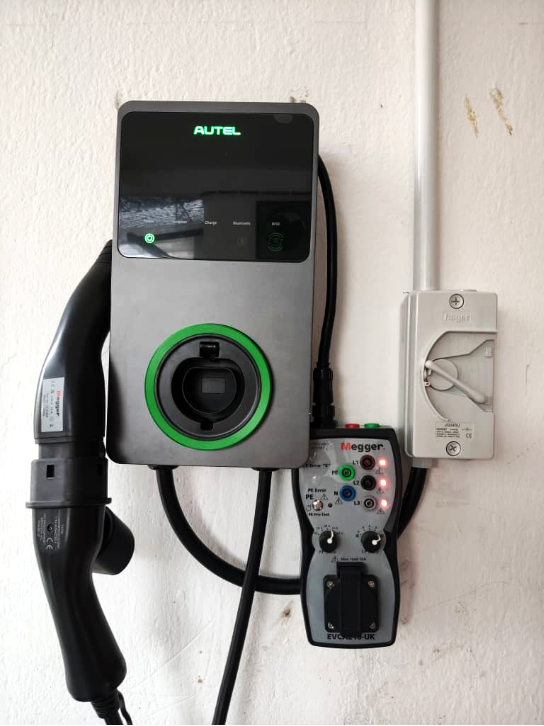
The Energy Commission’s EVCS Guidelines 2025 mandate that every EV charger’s final circuit must be protected by both:
–> An overcurrent device (MCB or MCCB)
–> A residual current device (Type A or B RCCB/RCBO, typically rated 30mA)
This is crucial because EVs introduce continuous high current flow over long periods — different from normal household appliances. Any slight insulation breakdown or water ingress could cause leakage to earth. Without an RCD, these leakages may persist unnoticed, creating fire risks or fatal shock hazards.
What Happens Without Proper Protection
–> Shock Hazard: If a live conductor touches the charger’s casing and the system is not earthed, touching the charger could deliver a lethal shock.
–> Fire Risk: Undetected leakage currents cause localized heating, potentially igniting wiring or plastic components.
–> Insurance Issues: Non-compliant installations can void insurance claims in the event of an electrical fire.
Real-World Requirements
Suruhanjaya Tenaga specifies that for circuits under 100A, residual operating current must not exceed 30mA, using Type A or B RCCBs. For larger systems, Earth Leakage Relays (ELR) are required.
In residential wiring, MS IEC 60364 and the Guidelines for Electrical Wiring in Residential Buildings also set clear rules:
Socket circuits must be protected at 30mA
Wet areas (such as water heater circuits) must be protected at 10mA
Best Practices for Home EV Charging
–> Dedicated Earthing – Ensure the EV charger has its own dedicated earth cable, sized correctly (e.g., 10–25 mm² depending on load).
–> Use Type A RCCB (or Type B if recommended by charger manufacturer) – EV chargers produce DC ripple currents; Type A is the minimum standard.
–> Regular Testing – RCCBs have a test button. Press monthly to ensure it trips.
–> Competent Installation – Malaysian law requires a competent electrical contractor to handle earthing and protective devices.
–> Avoid DIY Earthing Rods – Earth electrode resistance must be verified (target ≤10 ohms) through proper testing.
Conclusion
For EV owners, charging safety goes beyond just “having a wallbox.” Earthing and earth leakage protection are the unseen guardians that make sure your car charges without turning your home into a hazard.
When installing your home charger, always insist on proper earthing, RCCB protection, and compliance with Suruhanjaya Tenaga guidelines.
Safe and Reliable EV Charging Systems, one at a time.
WhatsApp us: https://wa.me/60125954786