By Alvin Wong, CEO of Innovative Green Power Sdn. Bhd.
If you’ve used DC fast chargers before, you’ll notice some stations charge by time — for example, RM1.20 per minute — instead of by energy (RM per kWh). But what does that really mean for your wallet? Is it cheaper or more expensive than home charging or other stations?
Here’s the simple way to think about it.
How Time-Based DC Charging Works
When a DC charger charges per minute, your actual cost depends on how fast your EV can charge.
- If your car pulls a high charging power (like 50 kW or more), your effective cost per kWh stays low.
- But if your car charges slower — or the power tapers off when your battery is fuller — you end up paying more per kWh.
The Simple Cost Calculation
The calculation is easy:
RM per kWh = (RM per minute × 60) ÷ average charging power (kW)
Example
- If the rate is RM1.20 per minute, and your car averages 50 kW during the session, you’re paying about RM1.44 per kWh.
- But if your car is charging slowly (say, 35 kW average), you could be paying more than RM2.00 per kWh.
Why Charging Speed Matters
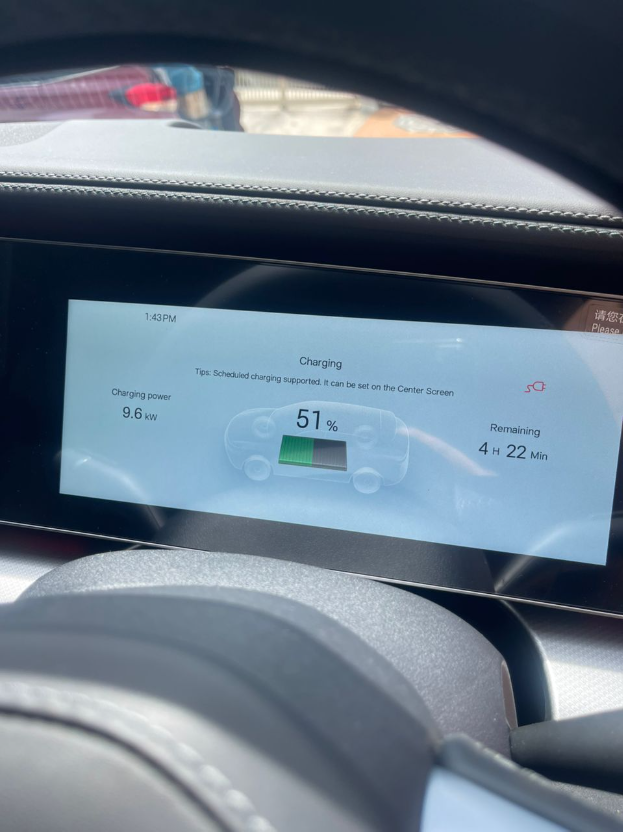
That’s why it’s smart to understand your EV’s charging curve. Most cars charge very fast up to 50–60% state of charge (SoC), then slow down after that.
On time-based chargers, many EV drivers choose to unplug once charging slows, to avoid paying more for less energy.
In Short
- The slower your car charges, the more expensive time-based charging becomes.
- Fast, efficient charging sessions give you the best value.
Need Help?
Want to know how this applies to your EV model? Or need help choosing the right home charger?
Reach out to us — we’re happy to help.
Let our obsession with quality protect your safety.
Because when it comes to EV charging and electrical systems, there’s no room for compromise.