By Alvin Wong, CEO of Innovative Green Power Sdn. Bhd.
Ever noticed a code like “IP65” or “IP54” on your EV charger’s nameplate? Those two little letters quietly decide whether your charger will withstand years of Malaysian rain, heat, and humidity — or fail within months.
Understanding Ingress Protection (IP) ratings isn’t just technical trivia. It’s the difference between a charger that keeps you safe and one that slowly deteriorates in silence.
Ingress Protection (IP) Ratings Explained: Indoor vs Outdoor Charger Safety in Malaysia’s Climate
1. What “IP” actually means
“IP” stands for Ingress Protection, a rating defined under IEC 60529, which the Energy Commission (ST) also refers to in the EVCS Guidelines 2025. It classifies how well an enclosure prevents solid objects (like dust) and liquids (like rainwater) from entering and damaging the internal components.
The format looks like this:
IPXY
– The first digit (X) = protection against solid objects/dust
– The second digit = protection against water
For example:
– IP44 means protection from solid objects over 1 mm and splashing water from any direction.
– IP65 means dust-tight and protected against water jets.
2. What ST requires for EV chargers
According to Section 5.3.3 of the EVCS 2025 Guidelines, the minimum required protection ratings are:
– Indoor use: at least IP41
– Outdoor use: at least IP44
That’s the legal baseline. But for Malaysia’s real-world tropical climate — heavy rain, humid air, and high UV exposure — installers like Innovative Green Power go further.
3. Real-world relevance for Malaysian conditions
Malaysia’s environment presents four main stress factors for EV chargers:
– Intense rainfall and wind-driven water ingress – common during monsoon seasons.
– Heat and humidity – accelerates corrosion of terminals and electronic boards.
– Dust and debris – especially near highways or construction zones.
– Frequent temperature swings – morning humidity followed by afternoon heat causes condensation inside enclosures.
That’s why most high-quality EV chargers today are rated IP65 or above. This provides full protection against dust and low-pressure water jets — perfect for semi-outdoor walls, car porches, or open-air parking lots.
4. Common misconceptions
– “My car porch is covered, so IP41 is enough.” Not in Malaysia. Even under a roof, wind-blown rain and humidity can easily exceed what IP41 tolerates.
– “IP68 means better performance for chargers.” Not necessarily. IP68 is for continuous immersion (like underwater use), which is unnecessary and costly for EV chargers. Focus instead on IP54–IP66, which balances practicality and protection.
5. Why proper IP rating saves money and lives
A charger with inadequate protection may:
– Allow moisture into live components, causing short circuits or earth leakage.
– Accelerate corrosion in connectors and contactors, leading to overheating.
– Trip RCDs repeatedly or fail prematurely.
In EVCS 2025, moisture ingress is a recognized safety concern. It’s why all EV Supply Equipment (EVSE) enclosures must comply with IEC 60529 and relevant Malaysian standards before a Certificate of Approval (CoA) is granted.
6. How we apply this in every IGP installation
At Innovative Green Power, every charger we install — indoor or outdoor — is:
– Minimum IP65-rated enclosure
– Tested for proper sealing, cable entry points, and waterproof glands
– Mounted at a suitable height (≥ 1.2 m above floor as per ST recommendations)
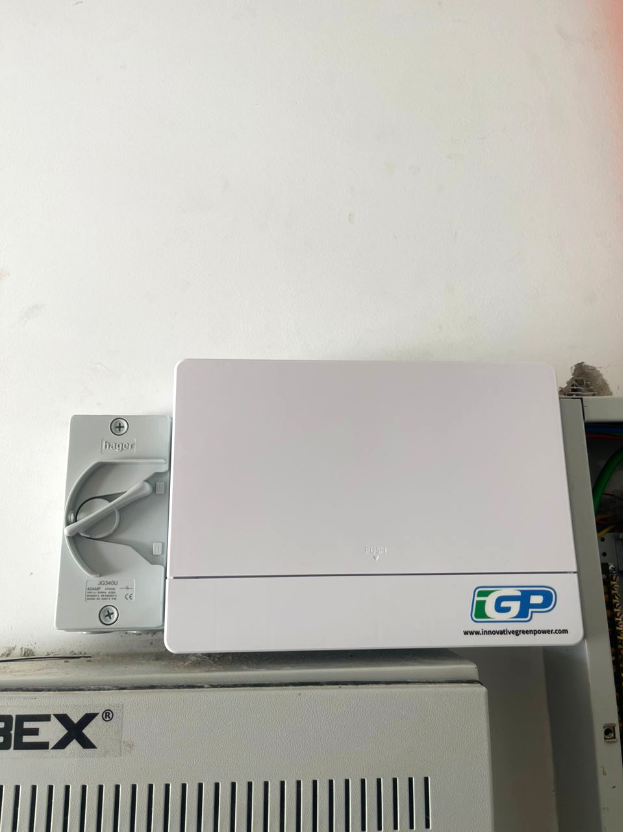
– Backed by weatherproof isolators and proper drainage spacing
Our approach exceeds national minimums, ensuring long-term durability and user safety under Malaysia’s most challenging weather.
Closing Thought:
The right IP rating doesn’t just protect the charger — it protects you, your property, and your investment. When you see IP65 on your Teison-IGP wallbox, it’s not a marketing number. It’s proof that your charger was designed to survive Malaysia.
Safe and Reliable EV Charging Systems, one at a time.
WhatsApp us: https://wa.me/60125954786