1. Introduction
When planning a home EV charger, one of the most important safety requirements is that it must be connected to a dedicated final circuit. This is not just a good practice; it is mandated by Suruhanjaya Tenaga (ST) guidelines. This article explains what a dedicated circuit is, why EV chargers need one, and how IGP ensures your installation meets these requirements.
2. What Is a Final Circuit?
A final circuit is the last stage of wiring that connects your distribution board directly to an outlet or appliance. It includes its own protective devices, such as a miniature circuit breaker (MCB) and a residual current device (RCD). For everyday appliances, multiple sockets may share one circuit; for EV chargers, this is not allowed.
3. Why EV Chargers Must Be on a Dedicated Circuit
- Continuous High Load: EV chargers can run for hours at maximum current (e.g., 32 A). Sharing a circuit with other loads could cause overheating, frequent trips or even fire.
- Safety & Protection: ST’s guidelines require each EV charger or EV charging socket to be powered by its own final circuit, with cables sized appropriately and protected against overcurrent and earth leakage. This ensures safe disconnection during faults without affecting other home circuits.
- No Joints: Cables in a dedicated EV circuit must be continuous without joints. Joints create weak points that can overheat over years of use.
- Regulatory Compliance: Using a shared circuit can invalidate warranties and may affect insurance claims. It also violates the Electricity Regulations 1994 and ST-issued guidelines.
4. What Happens If You Share a Circuit?
If an EV charger is wired into an existing socket circuit, the cable and protection devices may become overloaded when other appliances are running. This increases the risk of:
- Nuisance tripping and unreliable charging.
- Cable insulation damage from overheating.
- Fire hazards and regulatory non-compliance.
5. IGP’s Approach to Dedicated Circuits
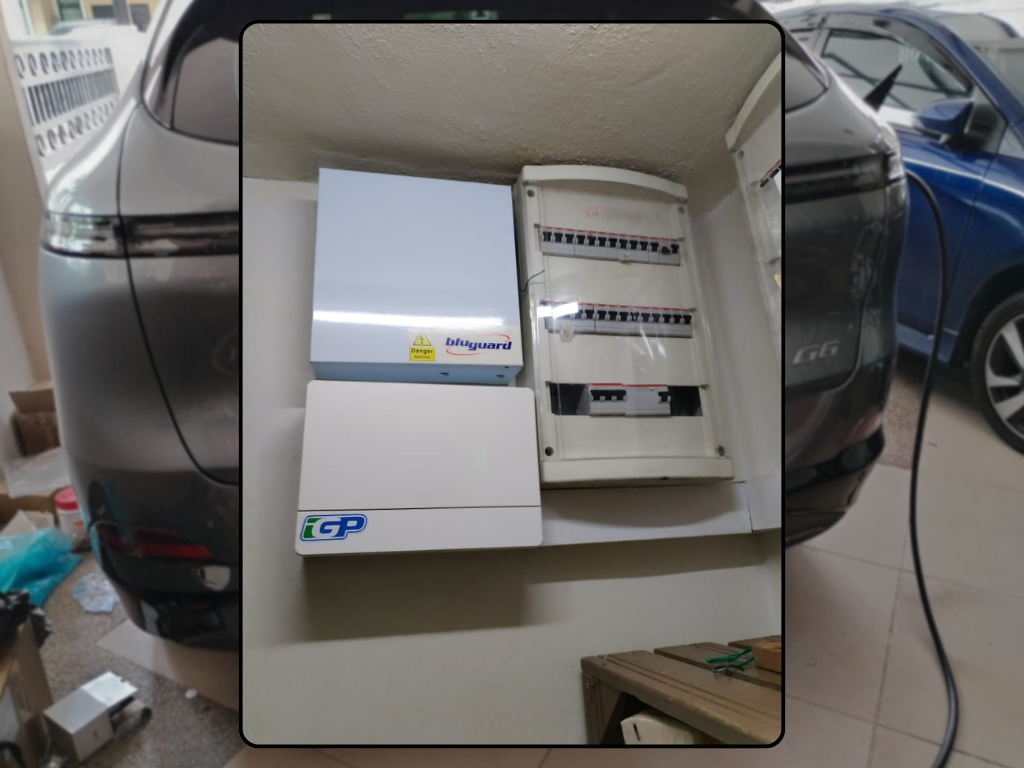
Our installation packages include a dedicated distribution box, properly rated MCBs, RCCBs or RCBOs and minimum 6 mm² cabling up to 10 m. This aligns with TNB’s EV charging guidelines, which require a dedicated circuit with appropriately sized cables and a 30 mA RCD. If longer cable runs or heavier currents are needed, we upgrade to 10 mm² conductors. We never tap into existing circuits; instead, we design a complete final circuit from your DB to the charger.
6. Additional Safety Measures
In addition to a dedicated circuit, we provide:
- Isolator Switch: For safe maintenance and emergency disconnection. EV chargers are fixed electrical equipment, and standards require a physical means of isolation separate from software controls.
- Surge Protection: To protect the charger from lightning and voltage spikes.
- Clear Labelling: Our installations clearly label the EV circuit and isolate it from other loads for easy identification.
7. Conclusion
EV chargers must not share sockets or circuits with other appliances. A dedicated final circuit is a regulatory requirement, ensuring continuous high-load equipment is protected and safe. By insisting on a dedicated circuit and working with an ST-registered contractor like IGP, you safeguard your home, your vehicle and your warranty. We design and install complete circuits with proper cable sizing, protection devices and isolation switches, giving you peace of mind for years of charging.