1. Introduction
EV chargers do more than draw power intermittently; they operate for hours at a constant current. This makes them continuous loads, and that classification has big implications for cable sizing, protection devices and overall safety. This article explains what continuous load means and why it matters for your home EV charger installation.
2. What Is a Continuous Load?
Under IEC 61851-1 (Electric Vehicle Conductive Charging System), EV charging equipment is designed for continuous operation at its rated current. A typical 7 kW single-phase charger operates at about 32 A and may run for several hours without interruption. This is different from appliances that cycle on and off, like air conditioners or kettles.
3. Why Continuous Loads Require Larger Cables
Electrical standards apply stricter rules to continuous loads. MS IEC 60364 and IEC 60364-5-52 require that conductors supplying continuous loads be selected to prevent thermal limits from being reached, maintain voltage drop within 4 % of nominal voltage, and allow for long-term insulation life. EV chargers:
- Do not cycle off, maintaining near-constant current.
- Generate sustained heating in conductors.
- Can cause voltage drop to exceed the 4 % limit if cables are undersized.
In Malaysian conditions—where cables are often in conduits or hot roof spaces—these factors necessitate minimum 6 mm² copper conductors for a 7-kW charger. Using smaller cables (e.g., 4 mm²) fails to provide sufficient margin when continuous load factors and derating are applied.
4. Breaker Selection for Continuous Loads
Circuit breakers are tested to carry their nominal current indefinitely. However, for continuous loads, standards recommend sizing breakers at 125 % of the continuous load. For example, a 32 A EV charger may require a breaker rated slightly above 32 A to avoid nuisance tripping under continuous operation. This ensures the breaker can sustain the heat generated without tripping unnecessarily.
5. Malaysian Wiring Guidelines and Voltage Drop
The Suruhanjaya Tenaga Guidelines for Electrical Wiring in Residential Buildings limit voltage drop to 4 % of nominal voltage. At 32 A, even small cable runs can approach this limit, especially in conduits or hot environments. A 6 mm² conductor provides the margin needed to keep voltage drop within limits and maintain charger efficiency.
6. IGP’s Practice
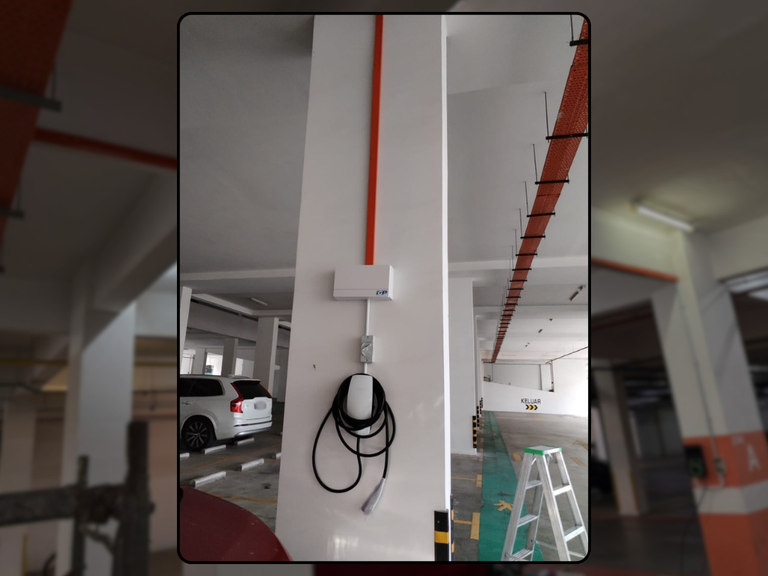
We design EV charger circuits as continuous-load circuits. Our standard packages include 6 mm² cables (and 10 mm² for longer runs or three-phase systems), properly rated MCBs and residual current devices. We consider thermal derating; voltage drop and installation conditions to ensure compliance with MS IEC 60364 and ST guidelines. Our Smart Mini Home Charger also has load-balancing features that dynamically adjust current to prevent overload and keep continuous loads within safe limits.
7. Conclusion
EV charging is not like plugging in a kettle; it is classified as a continuous load and must be treated accordingly. This classification mandates larger cables, careful breaker selection and stringent voltage drop considerations. Ignoring these factors can lead to overheating, nuisance tripping and premature cable failure. By understanding continuous loads and working with a professional installer like IGP, you ensure your EV charger is safe, compliant and reliable for years of daily use.