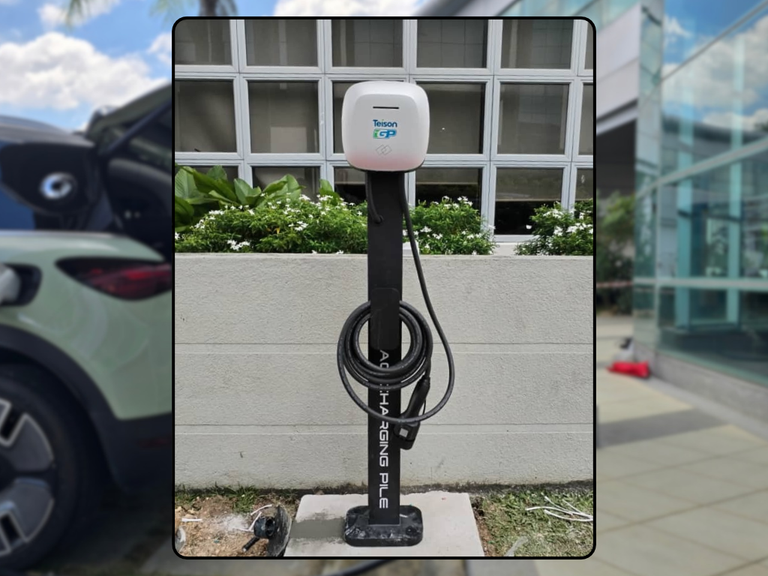
As rooftop solar systems become more common in Malaysia, many homeowners begin to ask an important question after purchasing an EV:
“Can I use my solar power to charge my car?”
The short answer is yes. But the full answer depends on how the EV charger interacts with the home’s energy system.
With the introduction of programmes such as Solar For Rakyat Incentive Scheme (SolaRIS) and the continued growth of Net Energy Metering (NEM) and Solar ATAP, more homes are becoming part of a small-scale distributed energy network.
In these homes, the EV charger becomes more than just a charging device — it becomes part of the home energy ecosystem.
Choosing the right charger allows EV owners to use solar energy more effectively and prepare for the future of home energy management.
Understanding How Solar Power Flows in a Home
In a typical grid-connected solar home, electricity flows in several directions depending on demand and solar production.
During the daytime:
- Solar panels generate electricity
- The home uses part of this energy
- Excess energy may be exported to the grid
At night:
- Solar generation stops
- Electricity is supplied from the grid
When an EV charger is added to this system, it becomes one of the largest electrical loads in the house.
A 7kW charger can draw far more power than most household appliances.
This makes EV charging an ideal way to use solar energy that would otherwise be exported to the grid.
The Challenge of Solar Variability
Solar generation is not constant.
Cloud cover, time of day, and weather conditions all affect how much electricity the panels produce.
For example:
- Midday sunlight may produce several kilowatts of power
- Cloud cover may suddenly reduce generation
- Solar output gradually declines toward evening
A basic EV charger cannot react to these changes.
It simply draws the charging current that has been set.
This may result in a situation where:
- solar generation drops
- the charger continues drawing full power
- the remaining electricity is taken from the grid
To manage this properly, the charging system must be able to adapt to solar conditions.
Smart Chargers Can Use Solar Energy More Efficiently
Modern smart EV chargers can work together with the home’s electrical monitoring system to optimise how energy is used.
These chargers can monitor:
- total home consumption
- solar production
- available electrical capacity
Using this information, the charger can adjust its charging power dynamically.
This allows several useful charging behaviours.
For example:
Solar Excess Charging
The charger uses only the electricity that would otherwise be exported to the grid.
Hybrid Charging
The charger combines solar power and grid power to maintain a stable charging rate.
Load Balanced Charging
The charger adjusts power to ensure the home’s electrical system remains within safe limits.
These capabilities allow EV owners to make better use of the energy generated by their solar system.
Preparing Homes for Future Energy Systems
As home energy systems evolve, more households are integrating technologies such as:
- rooftop solar
- battery energy storage systems (BESS)
- EV charging
- smart energy monitoring
These technologies are gradually transforming homes into distributed energy systems.
In this environment, EV chargers are no longer standalone devices. They are part of a broader energy management system.
Smart chargers designed with communication and monitoring capabilities are better suited for this evolving ecosystem.
Charger Selection Should Consider the Entire Energy System
For homeowners with solar systems, choosing an EV charger should involve considering the overall energy system, not just the vehicle.
Factors to consider include:
- compatibility with home energy monitoring
- ability to support solar charging modes
- electrical capacity of the home
- charging behaviour during peak and off-peak periods
A charger that integrates well with the home’s electrical system allows the EV to become an efficient part of the household energy strategy.
Early Planning Makes Solar Integration Easier
For EV buyers who already have solar systems, or plan to install solar in the future, it is helpful to consider charger selection early.
When the home charging system is planned together with the electrical inspection, installers can recommend a configuration that works well with the home’s existing energy infrastructure.
This approach ensures that the EV charger will remain compatible with future energy upgrades.
Preparing for the Next Generation of Home Energy
Electric vehicles are not just a new form of transportation.
They are also becoming one of the largest electrical loads in residential homes.
As homes increasingly adopt solar and other energy technologies, EV charging will play an important role in balancing energy use.
Choosing a smart charging system that integrates with the home’s electrical infrastructure helps ensure the system remains flexible and future-ready.
Planning early allows homeowners to build an energy system that supports both sustainable transportation and efficient home energy use.
IGP’s Safety Principle
IGP enforces high standards as a deliberate benchmark to maximise safety in residential EV charging.
Because a home is not just an electrical installation—it is where lives and livelihoods are protected.
EV charging should be an upgrade to modern living, not a compromise in safety.
Let our obsession with quality protect your safety.
Because when it comes to EV charging and electrical systems, there’s no room for compromise.
Need your EV charger or electrical setup professionally inspected?
📞 WhatsApp Us: https://wa.me/60125954786
Stay connected with us:
🔹 Instagram: https://www.instagram.com/InnovativeGreenPowerMY
🔹 Facebook: https://www.facebook.com/innovativegreenpower
🔹 YouTube: https://www.youtube.com/@IGPEVCharging-ir8rv
🌍 Website: https://www.innovativegreenpower.com