By Alvin Wong, CEO of Innovative Green Power Sdn. Bhd.
As more Malaysians begin charging electric vehicles (EVs) at home, one common question arises:
How much charging load can your home safely support?
Here’s a step-by-step guide to help you determine that—while staying safe and avoiding hidden electrical risks.
Step 1: Get a Home Load Profile
- Ask your installer to assess your home’s daily electrical usage.
- Monitor how much current your household typically draws, especially during peak times.
- This includes usage from air-conditioners, water heaters, ovens, lights, washing machines, fridges, and more.
- The goal is to find out how much spare current is available for your EV charger.
Step 2: Understand Your Main Fuse Rating
- Most Malaysian homes have a main fuse rated at 32A, 63A, or 100A.
- This fuse controls the maximum current your home can draw from TNB.
- However, you should not use the full rated current continuously.
Why You Should Not Use 100% of Your Fuse Capacity
1. Fuses are designed to disconnect at their rated current.
- A 63A fuse will trip if there’s a continuous overload of more than a few seconds (detailed explanation in future posts).
- This means running close to the limit can cause nuisance tripping or power loss.
2. Many homes have aluminium incoming supply wires and aged fuse casings.
- Aluminium heats up faster than copper and doesn’t tolerate sustained high current well.
- Fuse casings before the meter are often old or loose, becoming heat points over time.
- Even running at 70% of the fuse capacity continuously can lead to overheating.
- We’ve seen close-call incidents where the area near the meter became severely charred or partially melted—thankfully, no full-blown fires yet, but the risk is real.
Step 3: Apply the 85% Safety Rule
- Always limit your total household load to 85% of your fuse rating to stay within safe limits.
For example:
- On a 63A fuse, 85% = 53.55A
- If your home typically draws 25A, you should allocate no more than about 28A for EV charging.
- This approach gives you a buffer to avoid overload and reduce the risk of heat buildup or fuse failure.
Step 4: Know Your Charger’s Standards
- According to IEC standards, Type 2 AC chargers (commonly used in Malaysia) are rated to deliver a maximum of 32A on single phase.
- Malaysia uses Type 2 connectors for AC charging and CCS2 for DC charging.
- Most home chargers are AC, and your charger should be set to an output below the spare capacity calculated above.
Step 5: Make Sure Your Wiring Can Handle It
- Ensure your EV charger circuit uses at least 6mm² full copper cable for up to 32A loads.
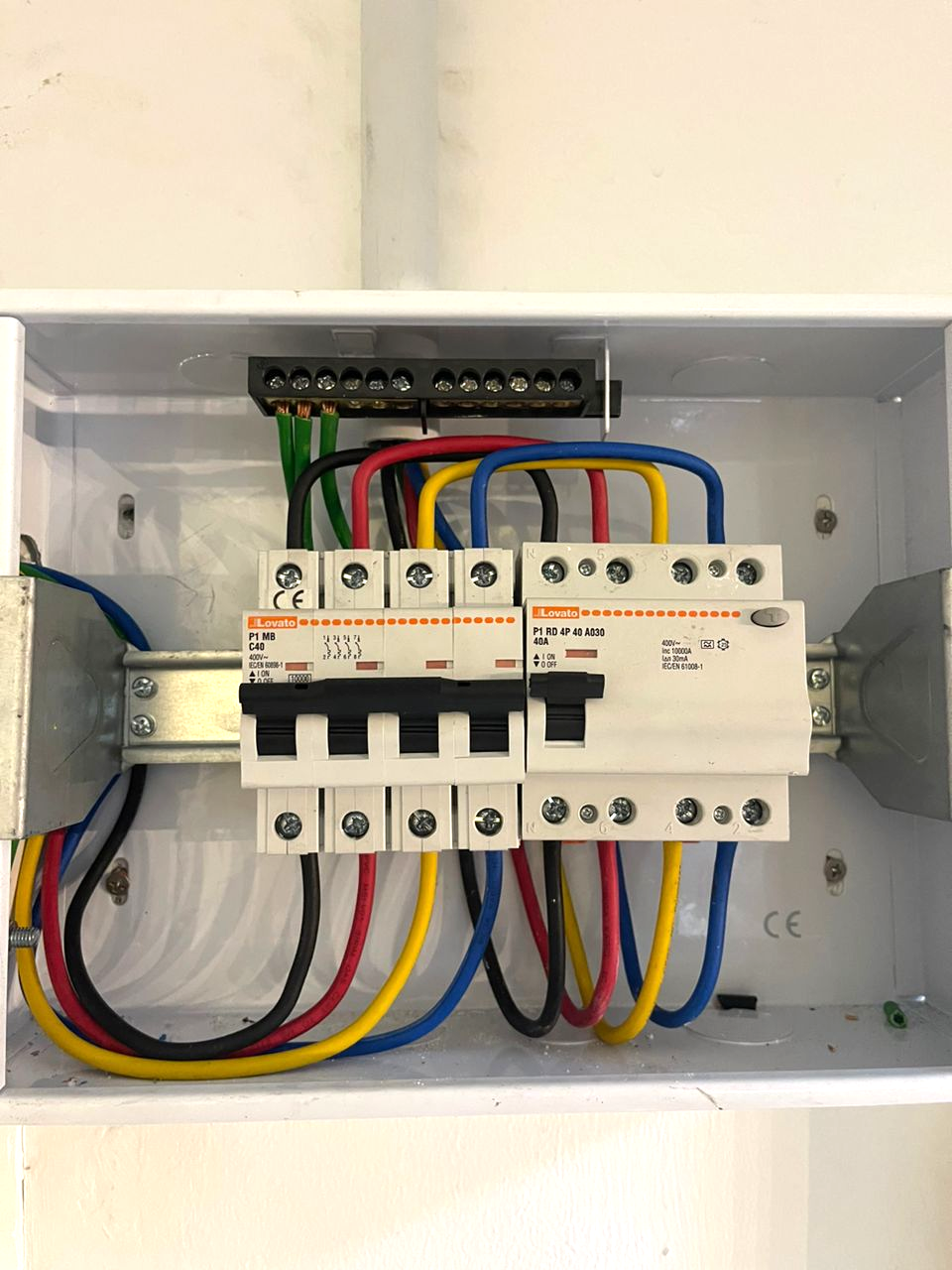
- Confirm that the MCB and RCCB ratings match the charging current.
- All connections must be tight, rust-free, and compliant with current standards.
- Substandard or degraded wiring can overheat—even at moderate loads.
Step 6: Use a Smart Charger for Load Management
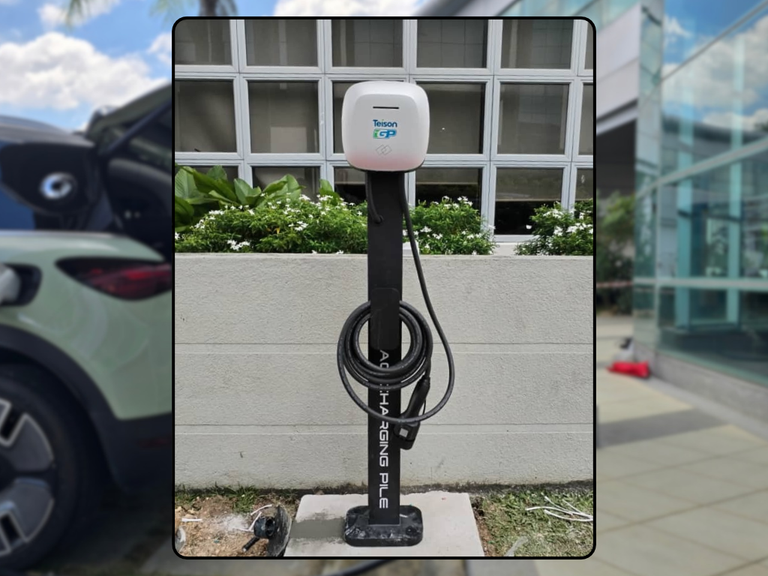
- Chargers like the Teison-IGP Smart Mini Series allow:
- Manual or automatic current control (e.g., 6A to 32A)
- Real-time monitoring of home power usage
- Load balancing features that adjust charging when your home’s consumption spikes
- Solar integration, if available
Final Thoughts
Charging your EV at home should be convenient—but it must also be safe.
- Never assume your fuse can handle your charger’s maximum current.
- Apply the 85% rule.
- Factor in your real-world home load.
- Respect the condition of your infrastructure, especially the area near your meter.
- And always get professional advice before deciding on the charger’s output setting.
Let our obsession with quality protect your safety.
Because when it comes to EV charging and electrical systems, there’s no room for compromise.