What paperwork did your installer leave you after the wallbox powered on? A home charger handover is complete only when the owner receives enough information to operate, maintain and later verify the installation. Paperwork becomes especially important when the original installer is unavailable or the property changes hands. For new and existing home-charger owners, the practical objective is not to chase a perfect-looking component. It is to connect the equipment, fixed electrical installation, protection, operating behaviour and records into one traceable system.
That systems view matters because EV charging can run for hours and because later decisions are often made by someone who did not design the original installation. A homeowner, facility manager or maintainer needs evidence that answers three questions: what was intended, what is installed now, and what has changed. Where those answers are incomplete, the correct next step is targeted verification—not a confident guess.
Why the whole system matters
For a home, the boundary starts at the available supply and distribution board, follows the dedicated charging circuit and protection, and ends only after the wallbox, cable, connector and vehicle interface. Household loads, route conditions and user habits sit around that chain. Owners can collect records and observe accessible condition, but opening switchboards, changing protective devices or testing live circuits is work for suitable electrical professionals.
Equipment identity and approvals
Keep the invoice, charger make/model/serial, datasheet, applicable approval or certification documents and warranty terms. Begin with the evidence that can be confirmed today. This is important because an isolated observation can look reassuring while leaving the system boundary unclear. State the assumption, identify the component or record that can confirm it, and note the condition under which the conclusion remains valid.
Practical verification: Match every document to the installed nameplate and save a readable digital copy. Correct identity is necessary to confirm protection assumptions, maintenance instructions and spare-part compatibility. Record the date, asset or circuit identity, responsible person and any limitation. If the evidence conflicts with the installed condition, treat that as an open item for competent review rather than selecting the more convenient answer.
As-built circuit information
The pack should show the supply phase, circuit rating, cable route and size, protective devices, local isolation and load-management arrangement. Next, connect the design statement to what is physically installed. This is important because an isolated observation can look reassuring while leaving the system boundary unclear. State the assumption, identify the component or record that can confirm it, and note the condition under which the conclusion remains valid.
Practical verification: Ask for a labelled diagram or clear schedule that reflects the completed installation. As-built information reduces guesswork during fault finding, renovation or future upgrades. Record the date, asset or circuit identity, responsible person and any limitation. If the evidence conflicts with the installed condition, treat that as an open item for competent review rather than selecting the more convenient answer.
Inspection and test results
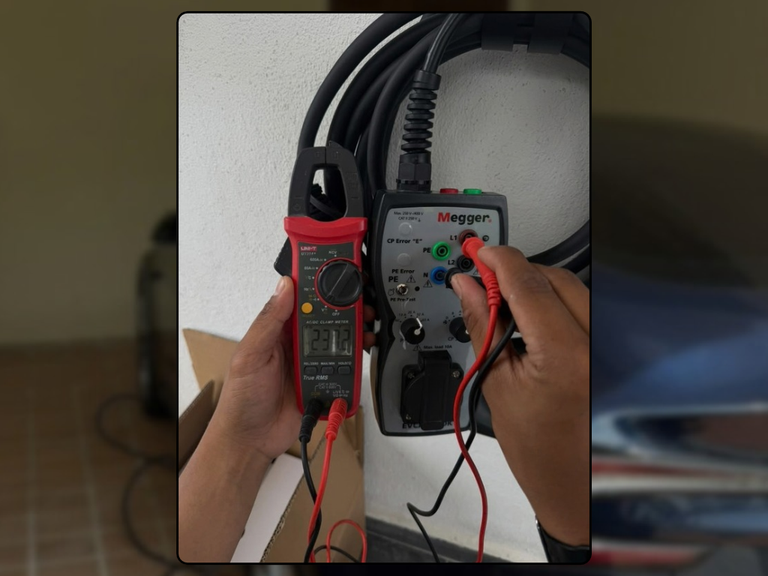
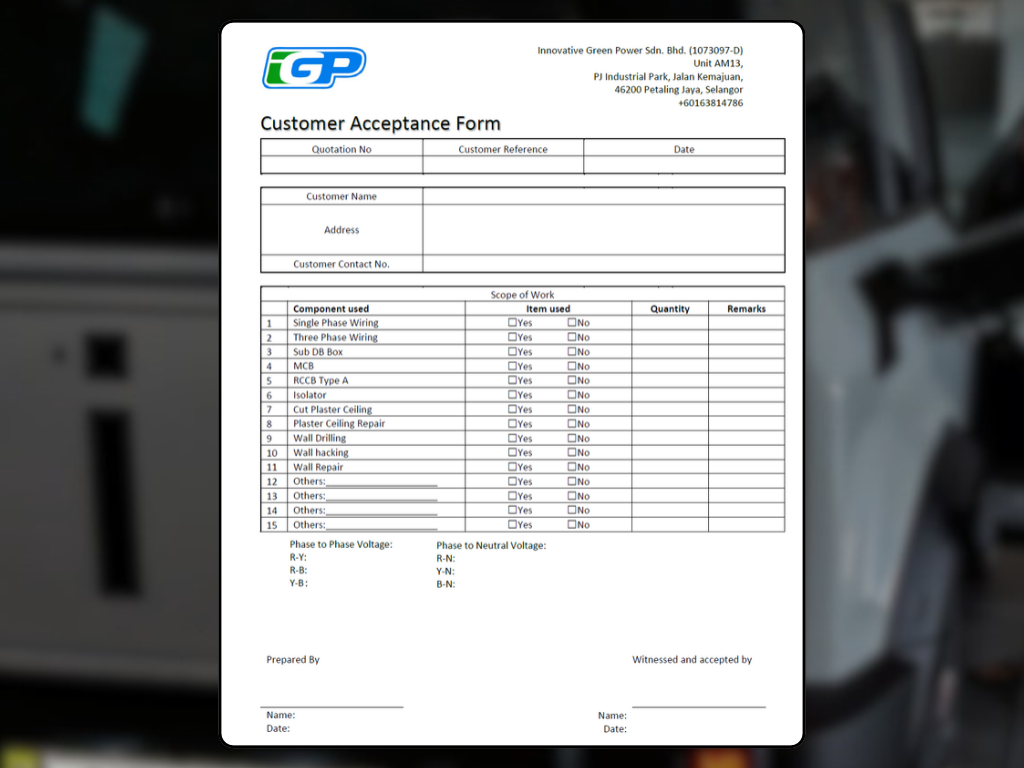
Keep the signed results for the electrical work and functional commissioning performed at handover. Then test the operating assumption instead of accepting a status light. This is important because an isolated observation can look reassuring while leaving the system boundary unclear. State the assumption, identify the component or record that can confirm it, and note the condition under which the conclusion remains valid.
Practical verification: Check dates, address, circuit identity, results, responsible party and any limitations or outstanding defects. TNB advises owners to use properly registered electrical parties and to retain relevant test documentation. Record the date, asset or circuit identity, responsible person and any limitation. If the evidence conflicts with the installed condition, treat that as an open item for competent review rather than selecting the more convenient answer.
User, maintenance and insurer information
Keep operating instructions, app access, current limits, emergency contacts, service intervals and disclosure correspondence with the insurer. Finally, preserve enough information for the next decision-maker. This is important because an isolated observation can look reassuring while leaving the system boundary unclear. State the assumption, identify the component or record that can confirm it, and note the condition under which the conclusion remains valid.
Practical verification: Record what the homeowner may do, what requires a qualified person and when settings were changed. A complete pack supports safe use, future assessment and policy conversations without promising coverage. Record the date, asset or circuit identity, responsible person and any limitation. If the evidence conflicts with the installed condition, treat that as an open item for competent review rather than selecting the more convenient answer.
Build the evidence pack
Build a compact evidence pack around the decision. Keep the exact charger and protective-device identities, approved or as-built circuit information, inspection and test records, settings or configuration exports, fault and maintenance history, clear photographs and the names of responsible parties. For commercial sites, also keep the asset register, go-live acceptance, operating procedure and service records. For homes, keep the installer handover, user instructions and any insurer correspondence. Documents should be readable, dated and matched to the equipment; a folder of unrelated brochures is not an evidence trail.
Avoid the familiar shortcuts
Common mistakes are predictable: treating ‘it charges’ as proof of the fixed installation; choosing protection from a generic Type A/Type B slogan; increasing a setting after repeated trips; relying on remote status as a substitute for inspection; assuming single-phase supply is inherently unsafe; or treating dynamic load balancing as newly created capacity. Another mistake is turning a public incident into a product accusation before investigators publish a finding. These shortcuts reduce lead quality because they start with an answer instead of the property, equipment and evidence.
A practical decision path
Use a three-stage decision. First, collect the information described above without disturbing live equipment. Second, compare it with current ST guidance, the exact EVSE instructions and the real operating need behind ‘Test report / installation records’. Third, commission only the inspection, testing, remediation or capacity study needed to close the identified gaps. This produces a scope that an owner can understand and a technical team can price responsibly. It also avoids replacing compliant equipment simply because documentation was initially poor.
Important limitation
Missing paperwork does not automatically prove unsafe work, and paperwork does not replace physical verification. Treat gaps as a reason for a document review and, where needed, an on-site assessment.
Conclusion
The goal is not to make charging sound frightening. It is to make the installation explainable. When the asset, circuit, protection, operating behaviour and records agree, owners can make better decisions and maintain the system with confidence. When they do not agree, the gap becomes a defined technical task rather than a vague fear.
Let our obsession with quality protect your safety.
Because when it comes to EV charging and electrical systems, there’s no room for compromise.
Need your EV charger or electrical setup professionally inspected?
📲 WhatsApp Us: https://wa.me/60125954786
Stay connected with us:
📷 Instagram: https://www.instagram.com/InnovativeGreenPowerMY
📘 Facebook: https://www.facebook.com/innovativegreenpower
🎥 YouTube: https://www.youtube.com/@IGPEVCharging-ir8rv
🖥 Website: https://www.innovativegreenpower.com