Why Fuse Ratings, Network Assumptions, and EV Charging Risks Must Now Be Managed Deliberately
By Alvin Wong, CEO of Innovative Green Power Sdn. Bhd.
As EV ownership grows in Malaysia, many homeowners rely on a simple assumption:
“My house is single-phase, but the fuse is 63 A or even 100 A — so EV charging at high power should be safe.”
On paper, this seems logical.
In practice, it exposes a serious gap between field conditions, network planning assumptions, and electrical safety principles.
This article explains:
- What TNB and ESAH 3.1 assume single-phase homes are designed for
- What is actually found in the field today
- Why higher fuse ratings can increase fire risk instead of reducing it
- How these risks must be actively managed, not ignored
1. What ESAH 3.1 and TNB Assume About Single-Phase Homes
Under the Electricity Supply Application Handbook (ESAH) 3.1, typical landed residential supply is planned as:
- Single-phase, 230 V
- Effective design assumption around 32 A
- Diversified, intermittent household loads
- No assumption of sustained high-current operation
This planning philosophy governs:
- Service cable sizing
- Low-voltage transformer capacity
- Diversity factors
- Voltage regulation
Crucially:
Supply planning is based on expected load behaviour — not the largest fuse installed.
2. The Reality in the Field: Fuse Ratings Have Drifted Beyond Planning Assumptions
Market observations across Malaysia now show that:
A large majority of single-phase landed homes have:
- 63 A
- 80 A
- Or even 100 A
service cut-out fuses.
These fuse increases typically occurred:
- To reduce nuisance tripping
- To accommodate added appliances
Without reassessing:
- Incoming service cable size
- Termination ratings
- Continuous load capability
- Network diversity assumptions
As a result, fuse ratings no longer reflect what the supply was originally designed to support.
3. Why This Confirms — Not Contradicts — TNB’s Concerns
This field condition explains why TNB issued a formal advisory in August 2025, highlighting that:
- EV charging has caused overload and cut-out fuse operation
- Single-phase homes operating around 5 kW that intend to install 7 kW EV chargers should:
- Conduct a supply capability assessment, and
- Apply for a three-phase upgrade if required
TNB’s concern is not theoretical.
It reflects actual failure modes now appearing in residential supply points.
4. Why Bigger Fuses Can Make Single-Phase Homes Less Safe
This is the critical technical issue.
A service fuse protects the incoming cable, not the homeowner’s convenience.
When:
- The service cable was designed for ~32 A continuous operation
- But the fuse is uprated to 63 A or higher
The fuse will:
- No longer operate during prolonged overload between 32 A → 63 A (or higher)
This allows:
- Silent overheating of the service cable
- Insulation degradation
- Overheated terminations
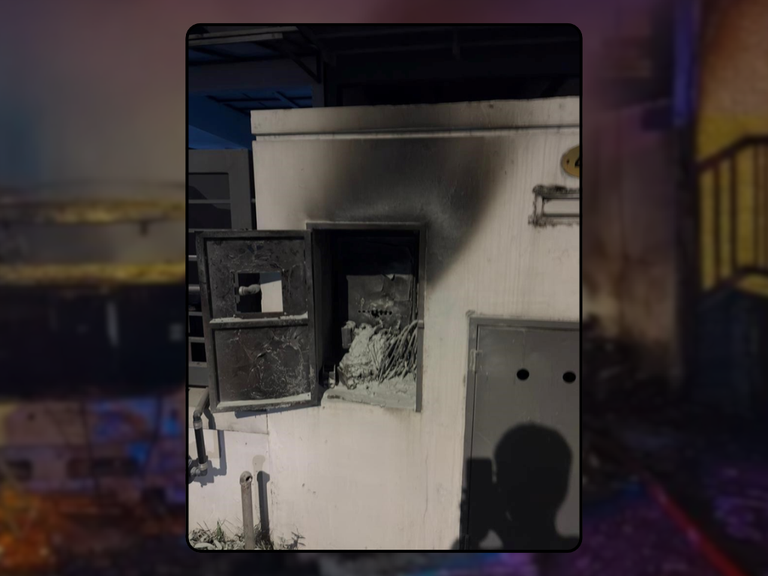
- Fire risk at the incoming supply — without any protective trip
In engineering terms:
Protection coordination has been broken.
5. Why EV Charging Exposes This Risk More Than Any Other Load
Before EVs:
- Overloads were intermittent
- Heat dissipated between cycles
- Damage accumulated slowly
EV charging changes this completely.
EV chargers:
- Draw high current
- Operate continuously
- For several hours
- Often daily
When combined with:
- Oversized fuses
- Original service cables
- No load management
The system can sustain dangerous, unprotected overloads at the most critical point of the installation.
6. Why This Risk Must Be Actively Managed — Not Assumed Away
Given today’s reality, safe single-phase EV charging cannot rely on fuse ratings alone.
It requires:
- Load control
- Supply assessment
- Thermal awareness
- Escalation to three-phase supply when justified
Responsible installers must go beyond “it works”.
7. How IGP Helps Mitigate Risk in Single-Phase EV Homes
Recognising the gap between planning assumptions and field conditions, IGP applies multiple risk-mitigation measures when deploying EV charging in single-phase homes.
These measures are designed to restore safety margins, not bypass them.
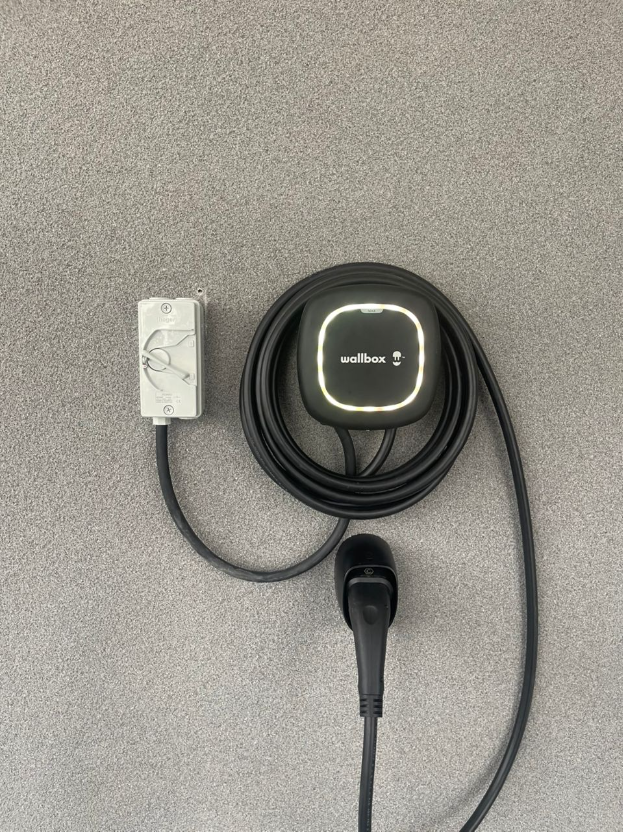
1. Recommending Chargers with Dynamic Load Balancing (DLB)
IGP prioritises chargers with dynamic load balancing, which:
- Continuously monitor total household demand
- Automatically reduce EV charging current when other loads increase
- Prevent sustained overload at the service entrance
This helps keep EV charging within safe, realistic limits, regardless of fuse size.
2. Checking and Verifying Home Load Patterns
Before recommending charging power, IGP:
- Reviews typical household load behaviour
- Assesses peak usage periods
- Identifies coincidence risks with EV charging
This avoids designing systems based purely on nameplate ratings.
3. Recommending Three-Phase Upgrades When Necessary
Where:
- EV charging demand cannot be safely managed on single-phase
- Multiple EVs are involved
- Continuous high-power charging is unavoidable
IGP recommends a formal three-phase supply upgrade aligned with:
- ESAH 3.1
- TNB supply planning
- Proper protection coordination
This restores system integrity, rather than masking the problem.
4. Offering Thermal Inspection as an Optional, Paid Safety Service
Where risk indicators exist — such as:
- High fuse ratings
- Long-duration EV charging
- Older incoming service infrastructure
IGP offers thermal inspection as an optional, paid service to:
- Identify overheating at incoming cables and terminations
- Detect early stress points invisible to visual inspection
This service is not part of the standard installation scope but is recommended where additional assurance is appropriate.
5. Making Smoke Detectors Available as Part of Installation
Recognising that electrical fires often develop silently, IGP:
- Makes smoke detectors available as part of EV charger installations
- Adds an early-warning layer for occupants
This complements electrical safety measures — it does not replace them.
8. When Three-Phase Supply Is the Correct Outcome
Despite mitigation measures, three-phase supply becomes necessary when:
- Safe limits cannot be maintained
- Charging demand is structurally high
- Load management alone is insufficient
At that point:
- A formal TNB application is made
- Cables, protection, and supply are upgraded properly
This is correct engineering escalation — not over-engineering.
Final Takeaway
In many Malaysian single-phase homes today:
High fuse ratings have created a false sense of capacity while quietly removing overload protection.
EV charging did not create this problem —
it revealed it.
Safe EV charging requires:
- Respect for continuous load behaviour
- Restoration of protection coordination
- Active risk mitigation
- Willingness to upgrade supply when justified
This is not about selling bigger chargers.
It is about keeping homes safe as energy use evolves.
Safe and Reliable EV Charging Systems, one at a time.
WhatsApp us: https://wa.me/60125954786