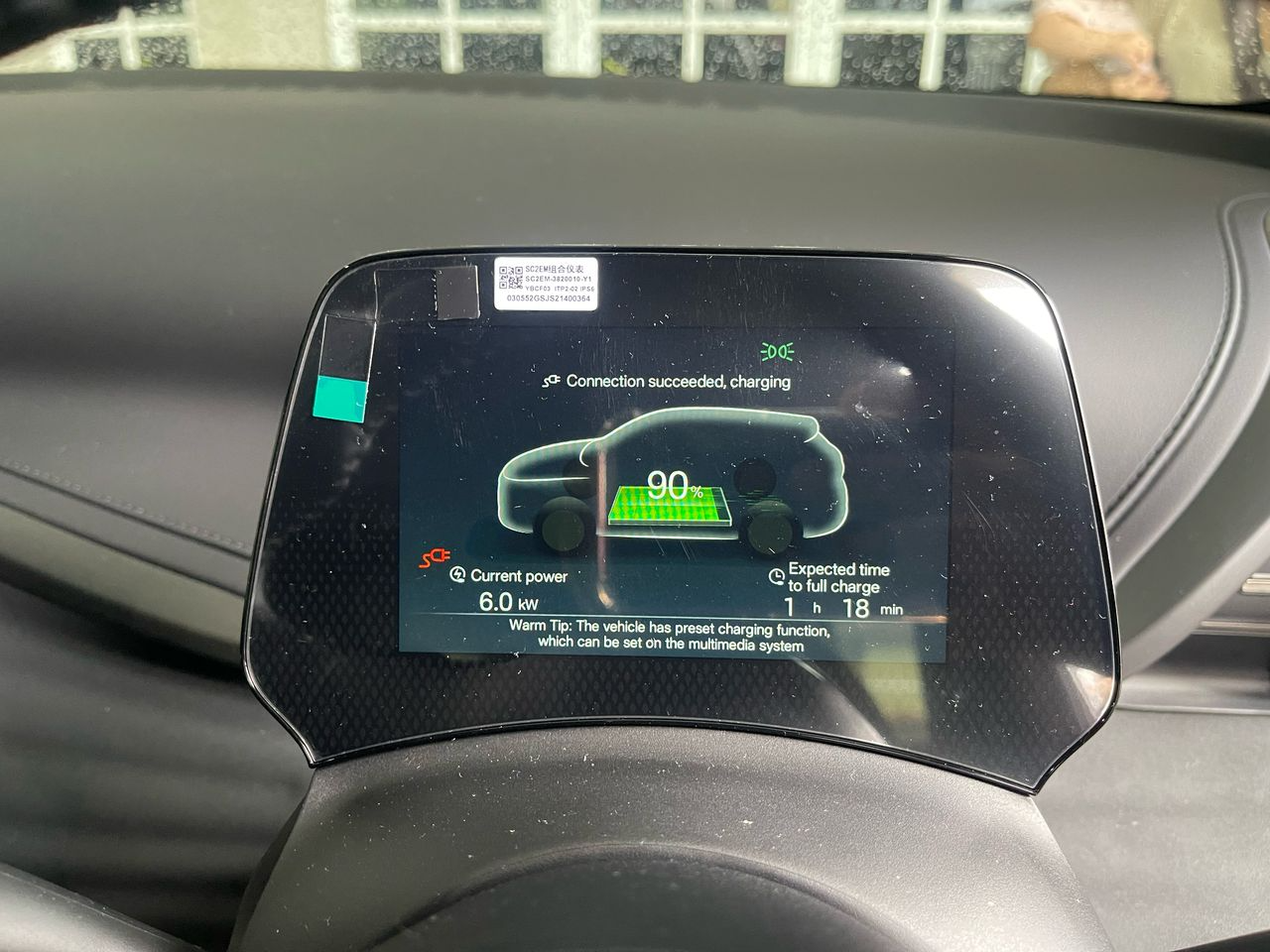
One of the most common mistakes new EV owners make is assuming that because their home charger is rated at 7kW, they need to charge at 7kW all the time.
That is not how home charging should be approached.
A 7kW wallbox is a capability, not an obligation.
What matters more is whether your charging strategy matches your daily driving, your battery size, your parking hours, and your home’s available electrical capacity.
When you have an EV charger at home, upgrading to three-phase is certainly ideal in many cases, but it is not the only way. For many households, a well-planned charging strategy, sensible power settings, or a charger with dynamic load management can already give you a safe and practical solution without immediately jumping into a supply upgrade.
That is especially important in Malaysia, because domestic electrical supply is fundamentally different between single-phase and three-phase homes. The Suruhanjaya Tenaga residential wiring guideline states that domestic single-phase supply is 230V, while three-phase supply is 400V. TNB’s handbook likewise states that low-voltage distribution is provided at 400/230V, and domestic premises are generally supplied either as single-phase 2-wire or three-phase 4-wire depending on the load requirement.
Under the current EVCS guideline, Mode 2 AC charging is described as operating with current not exceeding 32A at 230V single-phase or 400V three-phase, and Mode 3 charging allows charging-rate selection through communication between the charger and the EV. That means charging power is something to be selected appropriately, not something that must always be pushed to maximum.
The Real Question Is Not “Can My Charger Do 7kW?”
The real question is this:
How much energy do you actually need to put back into the car, and how many hours do you have to do it?
That is the correct way to think about home charging.
If your driving pattern is moderate and your car is parked overnight for long enough, you may not need anywhere near 7kW on most days.
Let us use a simple example.
- Daily commute: 100 km
- Energy consumption: 12 kWh/100 km
- Daily energy used: 12 kWh
- Home charging window: 10 hours
- Battery size: 40.16 kWh
The required average charging power is:
Required charging power = Energy needed ÷ Charging hours
So:
12 kWh ÷ 10 hours = 1.2 kW
That means if you drive 100 km a day and consume 12 kWh per 100 km, you only need around 1.2 kW average charging power over a 10-hour overnight window to recover that day’s usage.
That is far below 7kW.
A Proper Charging Strategy Matters More Than Maximum Charging Speed
This is where many EV owners’ overestimate what they need.
They see a charger rated at 7kW, then assume anything slower is inadequate.
But home charging is not DC fast charging at a highway stop. At home, the car usually sits for many hours. You are not trying to recover range in 15 or 20 minutes. You are simply making sure the car is ready the next morning.
That changes the entire discussion.
If your usage is predictable, and your car is parked for 8 to 12 hours most nights, you can often reduce charging power significantly and still get exactly what you need.
Example Charging Strategies
1. Daily charging
If you top up every day:
- Energy needed: 12 kWh
- Charging window: 10 hours
- Required average power: 1.2 kW
This is extremely manageable. In practical terms, this means many users do not need to run their charger anywhere near full power every night.
2. Charging every 2 days
If you charge once every two days:
- Energy needed: 24 kWh
- Charging window: 10 hours
- Required average power: 2.4 kW
This is still comfortably within the capability of a home EV charger, and still well below 7kW.
3. Charging about twice a week
If you stretch charging to around every 3.5 days:
- Theoretical energy needed: 42 kWh
- Charging window: 10 hours
- Required average power: 4.2 kW
From a charger-power perspective, this is still below 7kW.
But from a battery and usability perspective, this becomes much tighter, because a 42 kWh battery is not actually a 42 kWh usable battery. In real life, you also want buffer for traffic, detours, battery reserve, and unplanned trips.
So while this may still work on paper, it is less forgiving as a real-world ownership habit.
That is why, in many cases, a calmer charging strategy with more frequent lower-power charging is a better solution than simply chasing maximum speed.
Three-Phase Is Ideal, But It Is Not the Only Way
This is a point worth stating clearly.
When you have an EV charger at home, a three-phase upgrade is ideal in many cases. It gives you more headroom, more flexibility, and a better long-term platform if you intend to charge faster, add more electrical loads, or future-proof the home.
But it is not the only way.
If you are staying on single-phase, the answer is not to pretend the home can behave like a three-phase installation. The answer is to work within the limitations properly, using an appropriate charging strategy, proper site assessment, and where suitable, dynamic load control.
That is the key message.
What We Are Working With in Single-Phase Homes
This is where the practical limitation needs to be made explicit.
For single-phase homes, the standard fuse size context commonly worked around is 32A, and that is the practical starting point if the home is not being upgraded to three-phase. The Suruhanjaya Tenaga residential wiring guideline’s single-phase examples show 32A protective devices in the single-phase residential arrangement, which is consistent with the way many domestic single-phase installations are commonly configured.
At the same time, the EVCS guideline states that Mode 2 charging on single-phase AC is not to exceed 32A at the supply side, and it gives Mode 3 examples that include 230V/32A.
So if we are not upgrading the home to three-phase, then 32A is the relevant single-phase reference point we have to respect and work around.
And just as importantly, fuse upgrade is not the answer for single-phase homes.
A bigger fuse does not automatically mean the rest of the installation, the incoming supply arrangement, the conductors, the joints, the overhead network, the distribution board, or the maximum demand design assumptions can safely support more sustained load. The ST residential wiring guideline specifically requires a site visit to determine maximum load demand, single-phase or three-phase incoming supply, type of wiring, and equipment arrangement. It also requires maximum demand calculations to be prepared so the wiring equipment and cable sizes can be properly determined. In parallel, TNB’s handbook sets the minimum supply scheme for up to 12 kVA at 230V single-phase, while domestic three-phase supply sits in a separate 400V category.
So if the home needs more sustained charging capacity, the technically correct path is to assess the installation properly and consider moving to three-phase where justified, not to treat fuse upgrading as a shortcut.
Why Slower Charging Often Makes More Sense
Many homeowners still instinctively think faster is always better.
But at home, slower charging often makes more sense because it reduces stress on the entire electrical system.
A slower charging strategy can offer several advantages:
- lower demand on the incoming supply
- less clash with air-conditioning, water heaters, cooking, and general household usage
- better tolerance within older single-phase homes
- reduced risk of nuisance tripping
- more practical coexistence with real household behavior
- less pressure to jump immediately into supply upgrade discussions
This is especially relevant because an EV charger is not just another small appliance. Under the EVCS guideline, the EVSE or charging socket outlet must be powered by a dedicated final circuit, the cable must be selected based on the EVSE design requirement, and the dedicated final circuit cable is to be continuous without joints. It must also be individually protected from overcurrent and earth leakage, with circuits below 100A using Type A or Type B RCCB/RCBO not exceeding 30mA residual operating current.
That is why EV charging must be treated as a serious continuous load, not as a casual afterthought.
A 7kW Charger Is Still Useful Even If You Rarely Use 7kW
This is another point many people misunderstand.
A 7kW charger is still a useful charger even if you rarely charge at 7kW.
Why?
Because a good charger gives you control and headroom.
It allows you to charge lower most of the time, but still retain the option to charge faster when conditions allow and when you actually need it.
So the value of a 7kW wallbox is not only its maximum speed. Its value is also in its flexibility.
That flexibility is often far more important than the headline number.
Dynamic Load Management Is One of the Best Practical Answers
This is where smart chargers become especially valuable.
A charger with dynamic load capabilities can automatically adjust charging speed based on what the rest of the home is consuming at that moment.
So instead of choosing between two bad extremes:
- charging too aggressively and stressing the home supply, or
- charging too slowly all the time,
the system can adapt in real time.
When the house load is low, the charger can charge faster.
When the house load increases, the charger can reduce output.
When household demand falls again, charging can rise again.
For many single-phase homes, that is one of the most practical middle-ground solutions available.
It allows the charger to work with the house, not fight against it.
When Three-Phase Upgrade Becomes the Better Answer
There are definitely situations where three-phase should be seriously considered.
For example:
- your home’s real available capacity is too tight
- your household already carries substantial electrical load
- you want consistently faster charging
- you have more than one EV
- your overnight charging window is short
- you want stronger long-term headroom for future electrification
In those situations, three-phase is often the cleaner, more robust answer.
But the correct process is still not to assume first and calculate later.
The better process is:
- understand your real driving needs
- calculate the energy you need to recover
- review your available overnight charging hours
- assess the actual home electrical system
- consider lower charging current or dynamic load control
- move to three-phase when the numbers and the site condition justify it
That is the more professional and safety-first way to approach home EV charging.
A Better Question for Homeowners to Ask
Instead of asking:
“Can I get 7kW?”
A better question is:
“What charging speed do I actually need to recover my normal daily use safely within the time my car is parked?”
That question leads to much better decisions.
Because once you calculate your real daily need honestly, the answer is often much smaller than expected.
If your daily recovery need is only about 1.2 kW average over 10 hours, then full-power charging is clearly not necessary.
If your every-two-day recovery need is only 2.4 kW average, there is still a lot of room.
Even with less frequent charging, many users may still remain within a workable single-phase strategy if the installation is assessed properly and the charger is configured intelligently.
So in many cases, you do not need more power.
You simply need a better charging strategy.
Final Thoughts
A charger’s maximum rating should never be confused with your actual charging requirement.
A 7kW charger does not mean you need to charge at 7kW every night.
A three-phase upgrade is ideal in many situations, but it is not the only way.
And if you are staying on single-phase, then the practical reference point is the standard 32A single-phase context we are working within, not an assumption that the home can simply be pushed harder indefinitely.
Most importantly, fuse upgrade is not the proper shortcut for a single-phase home. The right approach is proper assessment, proper maximum demand calculation, proper protection, and the right charging strategy for the actual house.
That is what safe, practical, consumer-friendly EV charging should look like in Malaysia.
Let our obsession with quality protect your safety.
Because when it comes to EV charging and electrical systems, there is no room for compromise.
Need your EV charger or electrical setup professionally inspected?
WhatsApp Us: https://wa.me/60125954786
Stay connected with us:
🔹 Instagram: https://www.instagram.com/InnovativeGreenPowerMY
🔹 Facebook: https://www.facebook.com/innovativegreenpower
🔹 YouTube: https://www.youtube.com/@IGPEVCharging-ir8rv
🌍 Website: https://www.innovativegreenpower.com