By Alvin Wong, CEO of Innovative Green Power Sdn. Bhd.
When discussing EV charger installations, cable size often gets attention — but cable length is just as critical and far more frequently underestimated.
Many EV charger issues that appear months or years later are not caused by:
- Charger defects
- Grid instability
- EV limitations
They are caused by excessive voltage drop due to long cable runs.
This article explains why distance matters, how voltage drop is regulated under Malaysian-adopted standards, and why EV charging is especially sensitive to this issue.
1. Voltage Drop Is a Regulated Design Parameter, Not a Preference
Under MS IEC 60364, voltage drop is explicitly regulated to ensure:
- Proper equipment operation
- Thermal safety of conductors
- Long-term reliability
For final circuits supplying equipment, the commonly applied limit is:
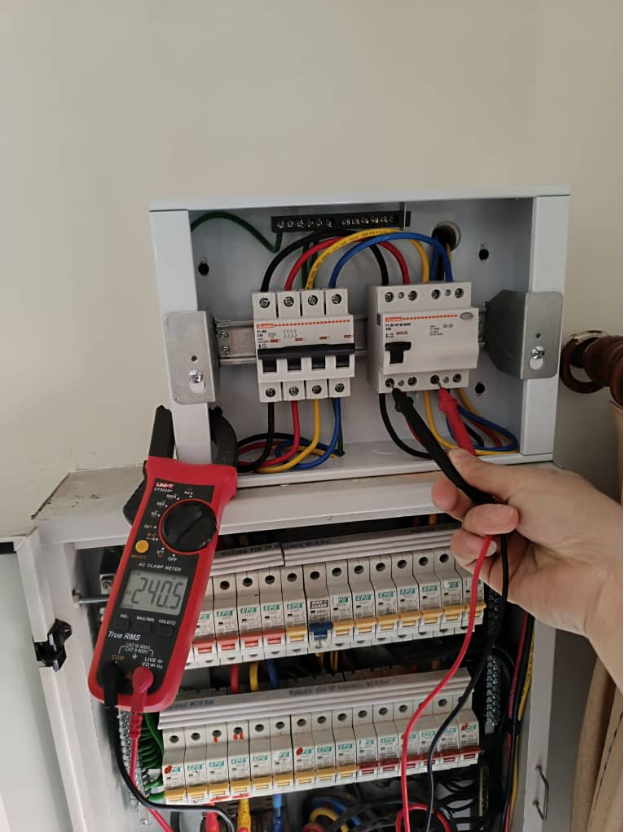
Maximum 4% voltage drop from the origin of the installation to the point of utilisation
This limit is reinforced by the Suruhanjaya Tenaga Guidelines for Electrical Wiring in Residential Buildings and aligned with international IEC practice.
2. Why EV Chargers Are More Sensitive to Voltage Drop
EV chargers differ from many household appliances because they:
- Draw high current continuously
- Operate for extended durations
- Actively monitor supply voltage
Under IEC 61851-1, EV chargers are required to:
- Adjust charging behaviour based on supply conditions
- Reduce output or stop charging if voltage falls outside safe limits
As a result, excessive voltage drop can cause:
- Reduced charging power
- Charging interruptions
- Increased thermal stress on cables and terminations
3. Cable Length Directly Increases Voltage Drop
Voltage drop increases with:
- Current
- Cable resistance
- Cable length
For a 7 kW EV charger drawing approximately 32 A, even small increases in length have a measurable impact.
In practical terms:
- A cable run that is acceptable at 5–8 metres
- May exceed voltage drop limits at 15–20 metres
This is why distance must be considered alongside cable size, not after.
4. Why “Upsizing the Cable” Is Not Always a Complete Solution
While increasing conductor size reduces resistance, standards do not permit voltage drop to be managed by assumption alone.
Under IEC 60364-5-52:
- Voltage drop calculations must be based on actual route length
- Installation method and grouping must be considered
- Ambient temperature affects conductor resistance
Simply choosing a larger cable without verifying the total voltage drop can still result in non-compliance.
5. Interaction with Continuous Load Behaviour
As established earlier:
- EV charging is a continuous load
- Continuous loads heat conductors
- Resistance increases with temperature
This means:
- Voltage drop under sustained charging is higher than initial cold calculations
- Marginal designs degrade over time
Standards anticipate this behaviour — which is why conservative voltage drop limits exist.
6. Why Long Cable Runs Are Common in Real Homes
In Malaysian homes, long EV charger cable runs often occur because:
- Chargers are installed far from the main distribution board
- Parking areas are remote from the meter position
- Routing must avoid structural elements
- Solar ATAP and BESS installations compete for space
Each additional metre adds cumulative electrical stress that must be accounted for.
7. Why Excessive Voltage Drop Is a Safety Issue, Not Just Performance
Excessive voltage drop is often dismissed as a “performance issue”, but standards treat it as a safety concern because:
- Higher current may be drawn to compensate
- Conductors operate at elevated temperatures
- Terminations are stressed continuously
- Protective device coordination may be affected
Over time, this increases the risk of:
- Insulation degradation
- Loose or overheated terminations
- Nuisance tripping
8. How Malaysian Standards Expect This to Be Managed
Malaysia enforces voltage drop limits by:
- Adopting MS IEC 60364
- Requiring competent persons to perform calculations
- Expecting designs to account for real routing, not straight-line distance
There is no exemption for EV chargers based on convenience or aesthetics.
9. What Good Practice Looks Like for EV Charger Cable Routing
Good, standards-aligned practice includes:
- Measuring actual cable route length, not just physical distance
- Selecting conductor size based on both current and length
- Accounting for continuous operation and ambient conditions
- Avoiding unnecessarily long or indirect routes
- Coordinating cable routing with solar and BESS layouts
This is design discipline, not overengineering.
10. How Readers Can Verify This Themselves
You can independently refer to:
- MS IEC 60364 – Voltage drop limits
- IEC 60364-5-52 – Cable selection and resistance
- IEC 61851-1 – EV charger supply behaviour
- Suruhanjaya Tenaga wiring guidelines
These documents clearly establish voltage drop as a mandatory design consideration.
Final Takeaway
Cable length is not a minor detail in EV charging installations.
For high-current, continuous loads like EV chargers:
Distance directly affects voltage stability, thermal behaviour, and long-term safety.
Standards do not assume ideal routing — they require designers to account for reality.
A charger that “works today” on a long cable run may already be operating outside intended design margins.
Safe and Reliable EV Charging Systems, one at a time.
WhatsApp us: https://wa.me/60125954786