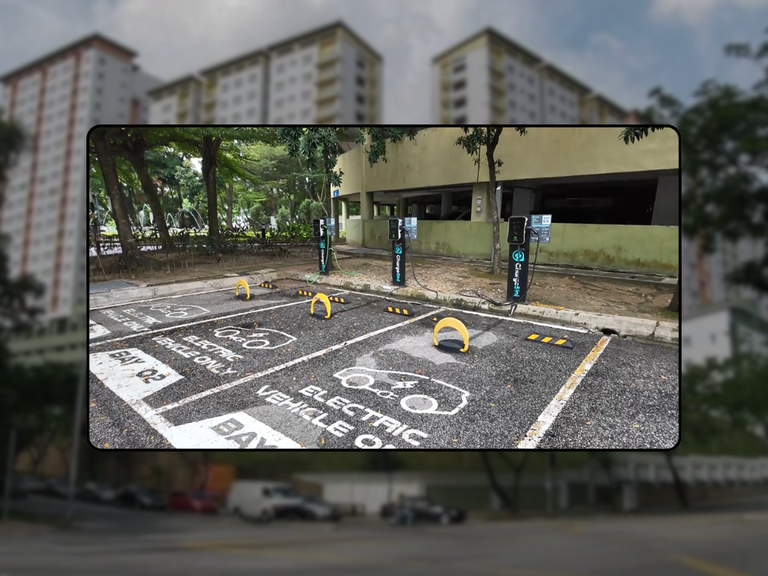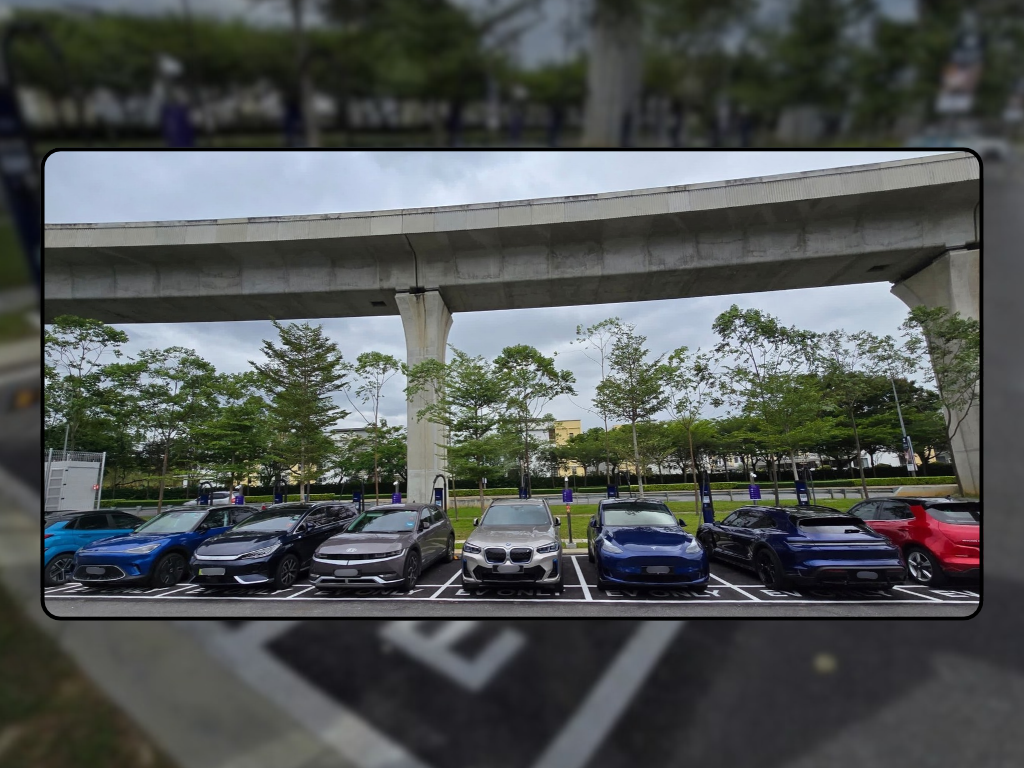
If you have recently bought an EV, or are waiting for delivery, congratulations. You are joining a growing number of Malaysians who are making electric driving part of everyday life. The next question is often very practical: how will charging fit into my home, my routine and my family’s needs?
Malaysia recorded 47,508 battery-electric car registrations in the first eight months of 2026, already exceeding the 44,813 recorded throughout 2025. Our base scenario puts 2027 at around 100,000 new registrations. That would be meaningful progress, but it also brings greater responsibility for everyone designing, installing and maintaining the charging systems these vehicles depend on. [1]
At Innovative Green Power, this is how we look at adoption. Every additional EV represents someone who needs dependable charging. Our commitment is to help people make that transition with a properly planned system and support they can turn to throughout ownership.
Looking back to November 2011
Taking November 2011 as our starting point, Malaysia’s electric-car market was exceptionally small. The JPJ car-registration file records six electric cars for 2011, all registered in October. Those six form the opening baseline for this review, rather than registrations attributed to November. The following year added just 25. [1]
Growth remained modest for much of the following decade. Across the 2011–2021 files, cumulative BEV car registrations reached only 578. Charging infrastructure was developing during those years: MGTC reports that its chargEV network had installed 403 stations across public and private locations by December 2021. That is one network’s historical footprint, rather than a national total. [1, 2]
The acceleration becomes clear from 2022. Budget 2022 introduced EV tax measures taking effect from January that year, including incentives for imported and locally assembled vehicles and individual relief for charging facilities. These measures helped create more favourable conditions for adoption, although the registration data alone cannot isolate their effect from vehicle launches, pricing and supply. [3]
| Period | BEV car registrations | Share of JPJ car registrations |
| 2021 | 257 | 0.05% |
| 2022 | 3,129 | 0.42% |
| 2023 | 13,301 | 1.60% |
| 2024 | 21,789 | 2.54% |
| 2025 | 44,813 | 5.15% |
| January–August 2026 | 47,508 | 8.38% |
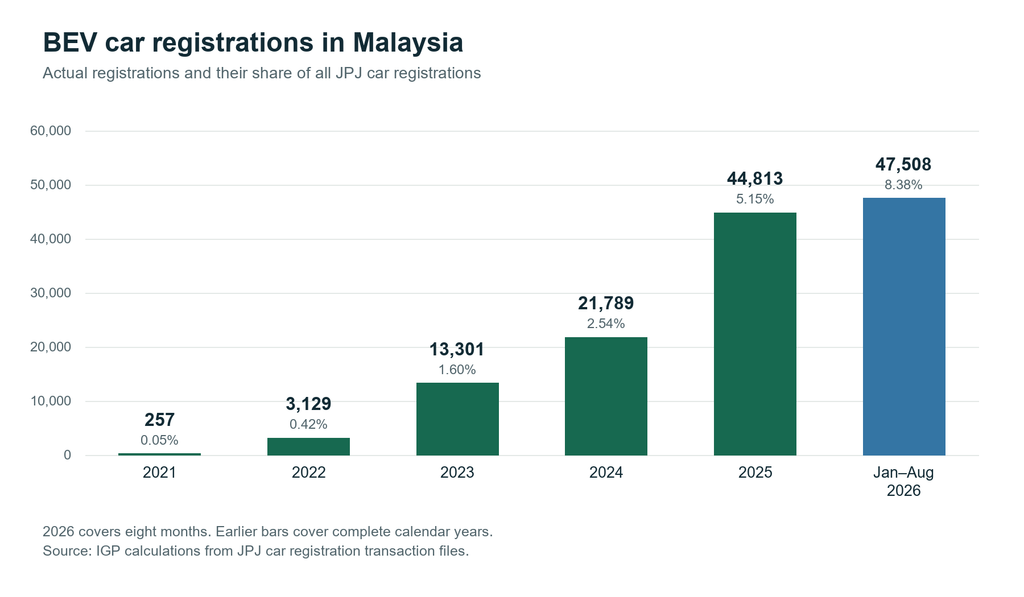
For a like-for-like comparison, January–August BEV registrations increased from 23,396 in 2025 to 47,508 in 2026, a rise of 103.1%. Total car registrations in the same transaction files rose by only 2.7%. Electric cars are gaining a larger share of the market, rather than simply following growth in the overall number of registrations. [1]
The next buyers need an EV that fits their lives
August 2026 alone recorded 8,833 BEV cars, representing 11.43% of that month’s car registrations. It is an encouraging month, but one strong month should not be mistaken for a permanent new level. Vehicle deliveries and promotions can move registrations substantially between months. [1]
There is also concentration behind the growth. The Proton e.MAS 5 accounted for 17,837 registrations during January–August, or 37.5% of BEV cars in the period. Proton’s two battery-electric models together accounted for 46.0%. One successful model can widen access quickly, while leaving the national growth rate sensitive to that model’s supply and demand. [1]
For the next household considering an EV, the decision extends beyond the purchase price. Monthly financing, insurance and eventual resale value matter. So does the cost of charging at the places they will actually use. A household with convenient home charging has a different ownership calculation from someone relying largely on public DC charging.
Local assembly is therefore worth watching. PROTON confirmed in July 2026 that the e.MAS 5 was locally assembled. MIDA’s 2025 investment report records the end of the blanket CBU EV tax exemptions in December 2025 and continued CKD incentives through December 2027. This makes local production and model availability important variables in the outlook. It does not mean every model will become cheaper, or that future incentives are guaranteed. [4, 5]
How IGP developed alongside the market
Innovative Green Power was registered in 2013. In April 2022, we pivoted into EV charger installation and obtained our full Suruhanjaya Tenaga registration as an electrical contractor around the same time. That was the beginning of our focused involvement in helping customers prepare their electrical systems for EV charging.
I took delivery of my first EV in March 2023. Experiencing ownership myself added another perspective to the work. Charging has to make sense when you get home after a long day, when other appliances are running, and when the family needs the car ready the next morning. The experience people remember is whether it works dependably in their daily routine. [6]
By May 2025, we had installed more than 2,000 home chargers across Malaysia, as recorded in my published message to new EV owners. Each installation carries an ongoing responsibility to the customer who has placed their trust in us. [6]
Our work today includes AC and DC charging solutions for residential and commercial settings, supported by site assessment, electrical planning, testing and commissioning. We also provide ongoing technical support. As charging requirements become more complex, understanding the surrounding electrical system becomes increasingly important. [7]
Customer education has developed alongside that work. Through our articles, we explain subjects such as available electrical capacity, component selection and load management in terms owners can use. We want people to understand the reasons behind a recommendation, including when the right answer involves further assessment or a different installation approach.
The charging market has grown and its responsibilities have expanded
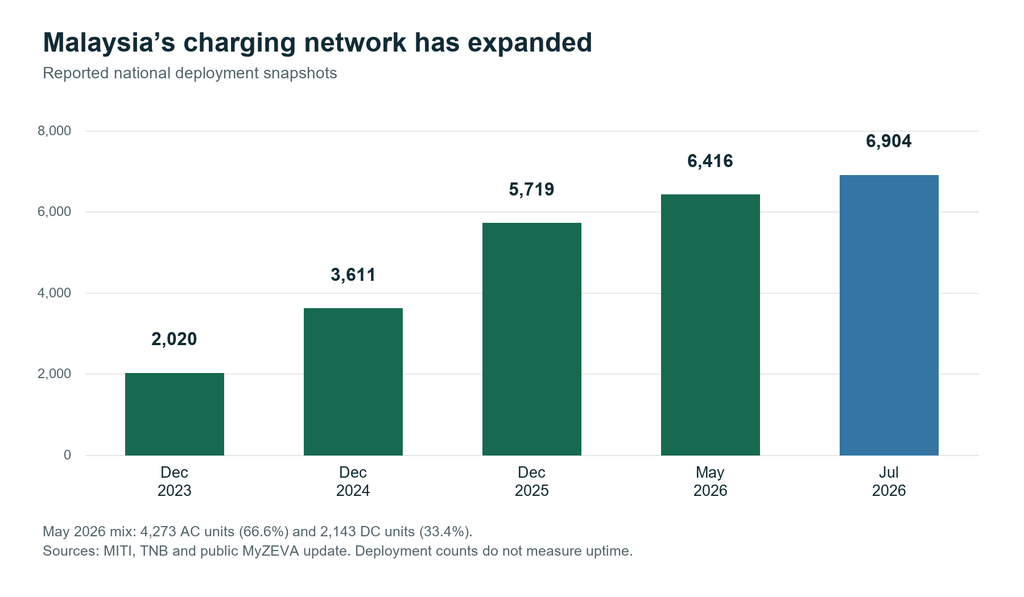
Malaysia’s national charging figures show substantial progress. MITI recorded 2,020 charging units at 750 locations at the end of 2023, rising to 3,611 points at the end of 2024. TNB’s published year-end briefing reported 5,719 points for December 2025, citing MyZEVA. [8, 9, 10]
By May 2026, MITI reported 6,416 public chargers, comprising 4,273 AC units and 2,143 DC units. MyZEVA subsequently stated publicly that the count had reached 6,904 by July. These are dated deployment snapshots; a national count does not establish that every unit is operating, accessible to every driver or capable of delivering its advertised power at any given moment. [11, 12]
The AC and DC mix deserves attention. AC charging can fit naturally into longer parking periods at home, work or a destination. DC charging supports shorter stops and longer journeys. A useful network needs both, with suitable capacity and dependable service at the places people need them.
More sites also create a larger maintenance and support obligation. Operators have to consider electricity connections and installation costs, then attract enough usage to sustain their service. Customers need clear pricing, understandable payment arrangements and a working contact when a session fails. An attractive location on a map needs a reliable charging experience behind it.
Everyday access will shape consumer adoption
For a landed-home owner, the starting point is an assessment of the property’s electrical capacity and the proposed installation. The charger must work within the home’s overall electrical design. TNB’s customer guide specifically calls for checking internal wiring and the distribution board, assessing the charging load and determining whether internal work or a supply upgrade is required. [13]
For a condominium resident, the discussion also involves building management, the route to the parking bay, shared capacity and how electricity use will be managed. As more residents buy EVs, buildings benefit from planning for expansion instead of treating every new request as an isolated installation.
For drivers without dependable home charging, access near home or work becomes especially important. Before buying, it is sensible to consider opening hours, parking charges, availability and a backup option. A charger that fits an existing routine can be more useful than a faster one that requires a separate journey.
Geography matters too, but JPJ registration states are not a reliable map of where people live or charge. The records include the registration channel ‘Rakan Niaga’. We should assess local charging needs using actual site conditions and usage evidence rather than assigning those registrations to particular residential areas. [1]
Where Malaysia could be in 2027
Our analysis uses three scenarios, built from the latest complete registration period. They are planning estimates, not official targets or statistical confidence limits. We first estimate the remaining four months of 2026, then apply explicit growth assumptions for 2027.
| Measure | Conservative | Base | Accelerated |
| 2026 BEV registrations estimated | 71,000 | 77,000 | 83,000 |
| 2027 BEV registrations projected | 82,000 | 100,000 | 120,000 |
| 2027 share of car registrations | 9.6% | 11.3% | 13.2% |
| Cumulative registrations since 2011 by end 2027 | 237,000 | 260,000 | 287,000 |
IGP scenario calculations, rounded to the nearest thousand. Shares use unrounded outputs and assumed total JPJ car registrations of 850,000, 880,000 and 910,000 respectively. Cumulative registrations are not a verified count of vehicles still in use.
The conservative scenario assumes September–December 2026 returns to the January–August monthly average of about 5,939 BEVs, followed by 15% growth in 2027. It allows for a slower transition in vehicle supply, continued affordability constraints and uneven charging access.
The base scenario carries the June–August average of about 7,328 registrations through the remainder of 2026, followed by 30% growth in 2027. It assumes local supply expands and consumer demand continues to strengthen, while recognising that recent growth rates will become harder to sustain as the market gets larger.
The accelerated scenario sustains August’s 8,833 registrations per month through year-end and adds 45% growth in 2027. It requires stronger vehicle availability and competitive ownership costs, supported by better everyday charging access. The growth assumptions are judgement calls informed by the data, not rates proven by a forecasting model.
There is good reason to avoid a single confident prediction. Applying our base-case year-end estimation method retrospectively would have come within 0.2% of the 2024 result, but underestimated 2025 by 19.5%. Late-year delivery surges can materially change the outcome. A severe affordability or supply shock could also take registrations below the conservative case.
My assessment is that around 100,000 BEV car registrations in 2027 is a reasonable central planning scenario. At an assumed overall market of 880,000 car registrations, it represents roughly one in nine new registrations. Malaysia would be moving further into everyday adoption, with considerable room to grow.
What that growth means for charging demand
The base scenario reaches approximately 260,000 cumulative BEV car registrations since 2011 by the end of 2027, compared with about 131,000 through August 2026. That larger installed vehicle base will need dependable charging long after the initial purchase.
An illustrative energy calculation helps show the scale. Using the base scenario’s average registration stock during 2027, about 210,000 vehicles, and assuming 12,000 kilometres per vehicle per year at 0.18 kWh per kilometre drawn from the electricity supply, charging demand would be about 454 GWh over the year. If public charging supplied 20–40% of that energy, the public network would deliver approximately 91–182 GWh.
These are assumptions, not measured usage. The calculation treats cumulative registrations as a proxy for active vehicles, assumes registrations arrive evenly during 2027 and makes no deduction for vehicles leaving service. It illustrates why charging demand depends on driving distance and where people charge. The appropriate number of bays also depends on usable power, utilisation, uptime and location. A single national charger-to-car ratio cannot resolve those questions.
Our commitment to the people behind the numbers
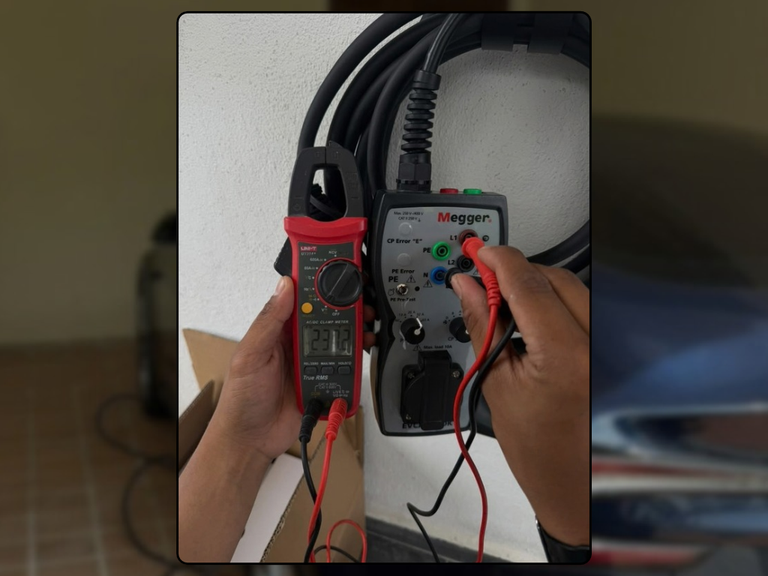
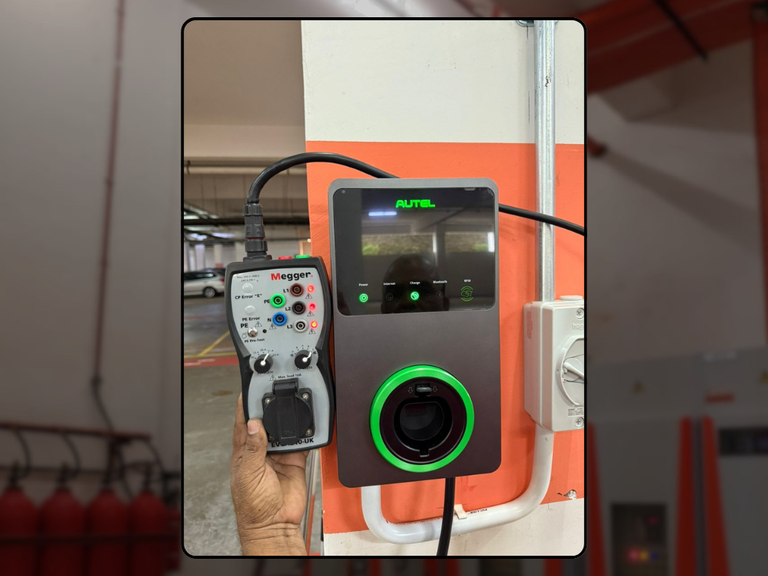
For us at IGP, market growth increases the responsibility to get the fundamentals right. A charging system needs appropriate protection and a design suited to the property. It needs competent installation and testing before handover, followed by care throughout its working life. ST’s EVCS guidelines address that wider system, including design, installation, operation and maintenance. [14]
Our commitment is to explain the work clearly, select a suitable approach for the site and stand behind the installation with support. Where load management is appropriate, it must form part of a correctly assessed system. Where an upgrade is necessary, the customer deserves to understand why.
We also want owners to feel comfortable asking questions. What has been assessed? What testing has been completed? What should I do if something changes or does not seem right? TNB advises owners to obtain the installation test report and arrange regular inspection and maintenance. Keeping those records and knowing who to contact are useful parts of ownership. [13]
Whether someone is buying their first EV, adding a second car or planning charging for a building, the purpose is the same: to make charging dependable while protecting the people and property around it. We will continue sharing knowledge and helping customers understand their choices as Malaysia’s EV market develops.
The growth figures are encouraging. Underneath them are families trusting an electrical system to work safely every day. That is the responsibility we carry with every charging system we install.
Let our obsession with quality protect your safety.
Because when it comes to EV charging and electrical systems, there’s no room for compromise.
Need your EV charger or electrical setup professionally inspected?
📲 WhatsApp Us: https://wa.me/60125954786
Stay connected with us:
📷 Instagram: https://www.instagram.com/InnovativeGreenPowerMY
📘 Facebook: https://www.facebook.com/innovativegreenpower
🎥 YouTube: https://www.youtube.com/@IGPEVCharging-ir8rv
🖥 Website: https://www.innovativegreenpower.com
Sources
[1] JPJ car registration transactions and monthly cross-check. Car transaction files, 2011–2026. Cross-check: https://data.gov.my/data-catalogue/registrations_type_fuel. Registration counts and derived ratios are IGP calculations.
[2] MGTC chargEV historical network information. 403 chargEV stations at public and private locations by December 2021. This is a network count, not the national total.
[3] Ministry of Finance Budget 2022. EV tax measures, effective from January 2022.
[4] PROTON first half 2026 results. 2 July 2026. Confirms e.MAS 5 local assembly. Manufacturer deliveries are not used as JPJ registrations.
[5] MIDA Malaysia Investment Performance Report 2025. 2026 automotive outlook: CBU exemption expiry and CKD incentives to December 2027.
[6] IGP Founder Message to EV Owners. Public account of Alvin’s March 2023 first EV and more than 2,000 home installations by May 2025.
[7] IGP About Us and public educational articles. Current service scope and installation process. Educational archive: https://innovativegreenpower.com/category/electric-vehicles/.
[8] MITI Annual Report 2023. Printed page 76: 2,020 charging units at 750 locations, comprising 1,591 AC and 429 DC units.
[9] MITI Annual Report 2024. Printed page 79: 3,611 points at December 2024, comprising 2,516 AC and 1,095 DC.
[10] TNB Analyst Briefing Fourth Quarter 2025. Slide 23: 5,719 national EV charge points at December 2025, citing MyZEVA.
[11] Bernama report of MITI parliamentary reply. 8 July 2026. Public charging deployment at 31 May 2026: 6,416 units, with 4,273 AC and 2,143 DC.
[12] MyZEVA public GATE 2026 update. Public post titled Closing GATE 2026: Learning from the Region, Driving Change at Home. Reports 6,904 chargers as of July 2026.
[13] TNB Customer Guide Before You Install an EV Home Charger. Professional assessment, wiring and load checks, test reports and maintenance.
[14] Suruhanjaya Tenaga Guidelines on Electric Vehicle Charging System. EVCS 2025 guideline download and official publication record.