1. Introduction
Installing an EV charger in an older home is more challenging than in a newly built house. Many Malaysian homes were wired decades ago for appliances that draw only intermittent loads. EV charging is a continuous load, and older infrastructure may struggle to support it. This article highlights the hidden issues and how to address them.
2. Fuse Rating vs Cable Capacity
Older houses sometimes have main fuses upgraded from 32 A to 63 A or 80 A without upgrading the service cable. The fuse rating may suggest higher capacity, but the service cable may still be sized for 32 A. When an EV charger draws continuous current, these undersized cables can overheat silently, leading to insulation damage and fire risk.
3. Continuous Load Considerations
EV chargers operate at high current for several hours, classifying them as continuous loads. Continuous loads require larger conductors and careful voltage drop calculations to meet standards. Older homes often lack sufficiently sized cables and protective devices, making them susceptible to overheating.
4. Ignoring the Incoming Supply
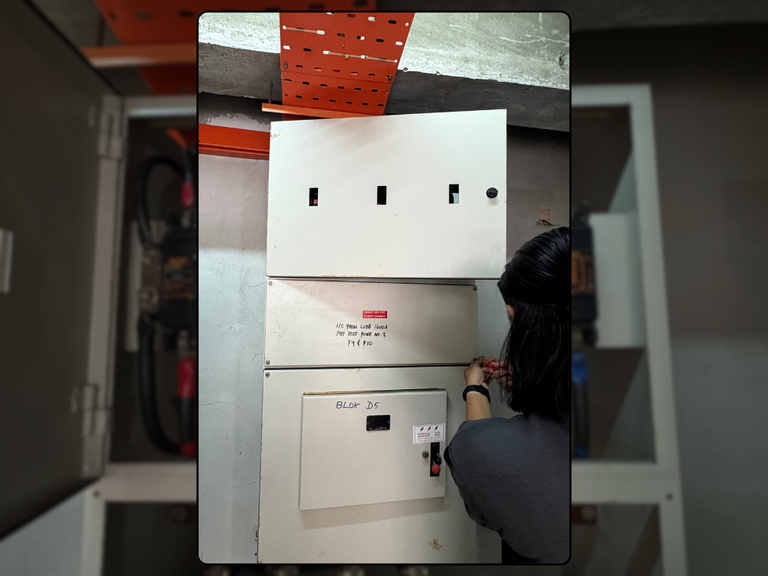
It’s common to ignore the incoming service cables, but they are critical. If a fuse upgrade hasn’t been matched with new service cables, they can overheat when an EV charger is installed. A proper inspection should examine the condition and capacity of the supply cables and the main breaker.
5. High-Power Chargers Without Load Management
Attempting to install a high-power charger (11 kW or 22 kW) in an older home without load management is risky. You may overload the supply and service cables, causing tripping or cable damage. Dynamic load balancing mitigates this, but sometimes a three-phase upgrade is necessary.
6. Real-World Example: 7 kW vs 3.7 kW
In some older homes, even a 7 kW charger may be limited to 3.7 kW when multiple appliances are running because the electrical system can’t sustain the full load. Nevertheless, a properly installed 7 kW charger still meets typical daily charging needs, as it can recharge most EVs overnight. The key is to ensure the wiring and protection are adequate.
7. Earthing and Residual Current Devices
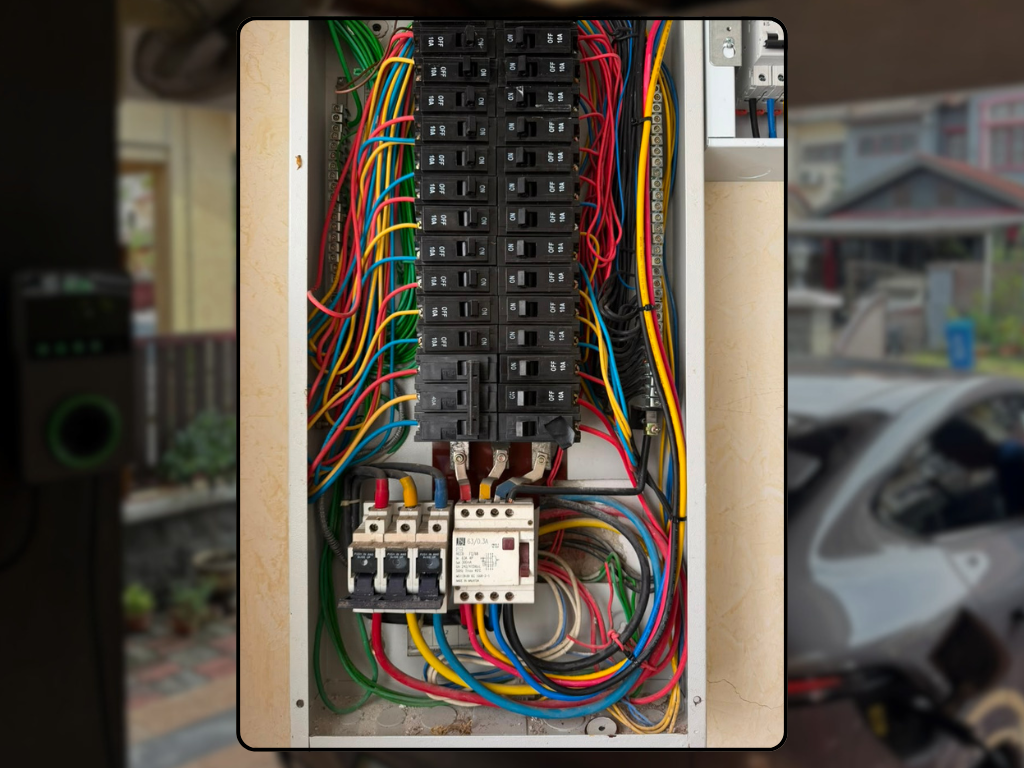
Many older homes lack proper earthing or modern residual current devices (RCDs). Correct earthing ensures fault currents are safely dissipated, while RCDs detect earth leakage and disconnect power. Installing dedicated earthing conductors and appropriate RCDs is essential when adding an EV charger.
8. How IGP Manages Older Homes
At Innovative Green Power, we:
- Conduct thorough inspections, assessing fuse ratings, service cables, distribution boards and earthing.
- Recommend appropriate cable sizes (minimum 6 mm² or 10 mm²) and protective devices.
- Offer load-balancing solutions and advise on supply upgrades when necessary.
- Install earthing and RCDs to bring older installations up to current standards.
- Provide transparent quotations for any required upgrades, ensuring you understand the cost and benefits.
9. Conclusion
Older Malaysian homes weren’t designed for continuous high-power loads like EV charging. Undersized service cables, outdated fuse ratings and inadequate earthing pose real risks. Before installing an EV charger, arrange a professional inspection to evaluate your electrical infrastructure. With IGP’s expertise and thorough approach, you can upgrade safely, protect your home and enjoy the convenience of EV ownership.