1. Introduction
Commercial buildings—such as offices, shopping malls and hotels—are integral to Malaysia’s EV charging network. Installing chargers in these settings must follow specific guidelines covering safety, space allocation and electrical requirements. This article summarises the key points for property owners and managers.
2. Planning and Regulatory Compliance
Suruhanjaya Tenaga (ST) and Bomba (Fire Department) have issued guidelines for Electric Vehicle Charging Bays (EVCB) in commercial premises. The guidelines emphasize:
- Application and Approval: Before installing chargers, building owners must submit an application to local authorities and the Fire and Rescue Department, particularly if installing DC fast chargers, which involve higher fire risks.
- Fire Safety Considerations: EV chargers must be placed at safe distances from entrance and exit points and not block emergency routes.
- Indoor vs Outdoor Placement: AC chargers (≤22 kW) can be located at any indoor level, while DC fast chargers (>22 kW) are restricted to the ground floor, first two floors above ground, and the first basement level for safety reasons.
3. EV Bay Allocation and Size
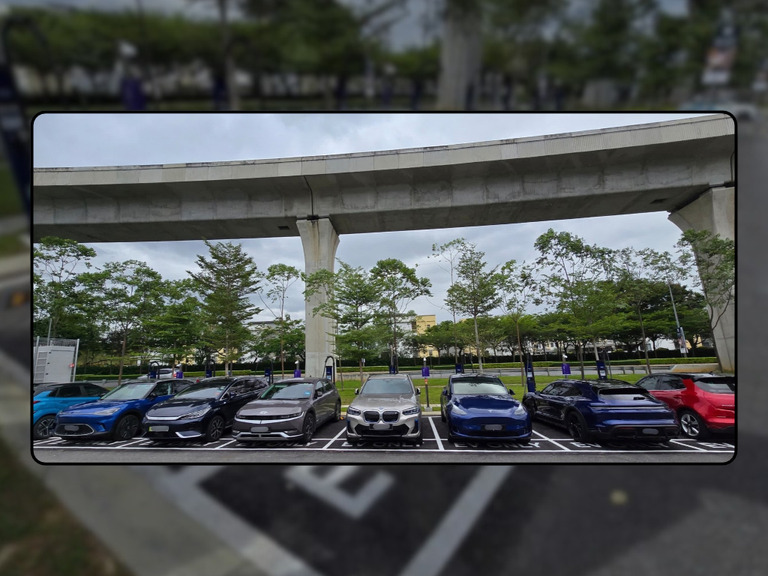
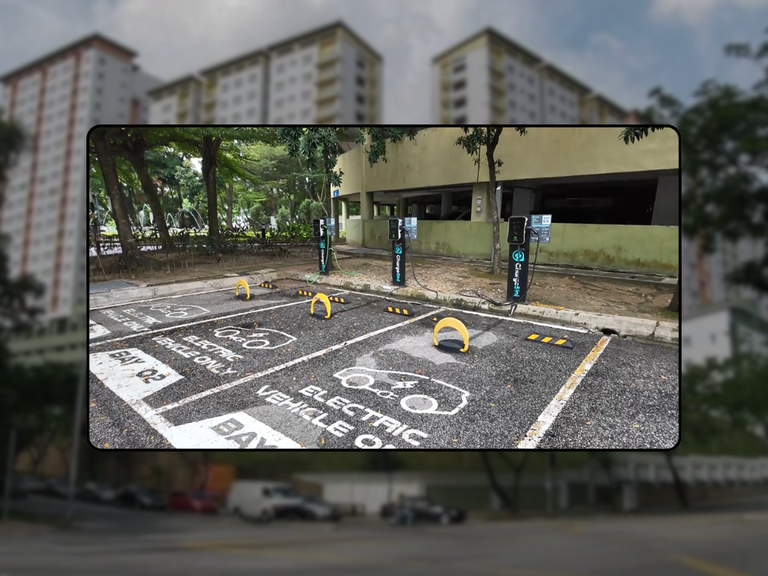
The Garis Panduan Perancangan (GPP) EVCB requires commercial developments to allocate at least 2 % of parking spaces for EV charging bays and to include at least one disabled-friendly EV bay and one motorcycle EV bay. The guideline sets minimum bay sizes: 2.5 m × 6 m for regular EV bays and 3.5 m × 6 m for disabled-friendly bays. Bays should be clearly marked and positioned to avoid interference with traffic flow and emergency exits.
4. Separation and Fire Resistance
For AC charger bays, new developments must provide 2.5 m separation between the EV bay and adjacent parking spaces. For DC charger bays, separation distances depend on whether the bay is indoors or outdoors and the size of the EVCB. Large indoor bays (>216 m²) require a two-hour fire-rated wall; smaller bays can use a 5 m separation. This ensures adequate fire protection and ventilation.
5. Electrical Load and Supply Upgrades
Commercial properties often have three-phase supply, enabling faster chargers (11 kW, 22 kW or even 50 kW). However, property owners must consult a qualified electrical contractor to assess the building’s load capacity and determine if supply upgrades or dedicated transformers are needed. TNB guidelines still apply: a dedicated circuit with properly sized cables and residual current protection is mandatory.
6. Tender and Contractor Selection
If the property owner or management corporation (MC) intends to install chargers as a shared facility, an open tender is recommended to select a service provider. This ensures fair pricing and compliance with safety standards. All contractors must be ST-registered and comply with the GPP EVCB guidelines.
7. Conclusion
Installing EV chargers in commercial properties requires careful planning, compliance with fire safety and separation guidelines, appropriate bay allocation, and coordination with local authorities. Partnering with an experienced, ST-registered contractor like IGP ensures that your installation meets regulatory requirements and provides a safe, convenient charging experience for tenants and visitors.