And How Electrical Standards Are Meant to Prevent Them
By Alvin Wong, CEO of Innovative Green Power Sdn. Bhd.
As EV adoption accelerates in Malaysia, EV charger installations are becoming common in landed homes.
Most installations work. Many charge vehicles daily without obvious issues.
Yet when incidents occur—overheating, nuisance tripping, damaged cables, or in rare cases fire—investigations often reveal the same recurring mistakes.
These are not reckless errors.
They are usually the result of misunderstanding how EV charging changes electrical behaviour.
This article outlines the most common EV charger installation mistakes seen in Malaysian homes, and explains how existing electrical standards were designed to prevent them.
1. Treating EV Chargers Like Ordinary Household Appliances
Mistake
Designing EV charging circuits as if they were sockets, ovens, or air-conditioners.
Why it happens
- Power ratings look familiar (7 kW, 32 A)
- Installers are accustomed to intermittent domestic loads
Why it’s a problem
Under IEC 61851-1 and MS IEC 60364, EV chargers are classified as continuous loads:
- High current
- Long duration
- Repeated daily cycles
Standards therefore require:
- Additional thermal margin
- Conservative protection coordination
- Controlled voltage drop
When EV charging is treated as “just another appliance”, long-term thermal stress is ignored.
2. Assuming Fuse Rating Equals Usable Capacity
Mistake
Believing that a 63 A or 100 A single-phase fuse means the home can safely draw that current continuously.
Why it happens
- Fuse upgrades were historically used to reduce nuisance tripping
- Fuse rating is visible and easily referenced
Why it’s a problem
A fuse is intended to protect the incoming service cable, not to grant additional capacity.
When:
- Service cables were designed around ~32 A planning assumptions
- But fuses are uprated to 63 A or higher
Overload protection between 32 A and the new fuse rating is effectively lost.
EV charging exposes this weakness because it is:
- Continuous
- Sustained for hours
- Repeated daily
This directly contradicts the protection intent of ESAH 3.1 and IEC 60364.
3. Ignoring the Incoming Supply as a Critical Risk Point
Mistake
Focusing only on the EV charger circuit while ignoring:
- Incoming service cables
- Meter tails
- Cut-out terminations
Why it happens
- These components are upstream and often sealed
- Problems are not immediately visible
Why it’s a problem
With oversized fuses and continuous EV charging:
- Incoming cables can overheat silently
- Failures occur at the most dangerous point in the home
- Protective devices may never operate
Standards assume protection coordination remains intact.
When it doesn’t, risk shifts directly into the building structure.
4. Installing High-Power Chargers Without Load Management
Mistake
Installing 7 kW single-phase chargers without any form of load control.
Why it happens
- Charger rating appears to match fuse rating on paper
- Household load diversity is assumed to remain
Why it’s a problem
EV charging:
- Removes diversity
- Coincides with evening household peak
- Pushes sustained demand beyond network planning assumptions
This is why dynamic load balancing (DLB) has become a practical necessity for many single-phase homes.
5. Avoiding Three-Phase Upgrades When They Are Actually Required
Mistake
Forcing single-phase solutions to work indefinitely even when household demand has structurally increased.
Why it happens
- Perceived cost or inconvenience of upgrades
- Misbelief that larger chargers or higher fuses solve the issue
Why it’s a problem
When:
- Continuous EV charging demand cannot be safely limited
- Multiple EVs are charged regularly
- Household load has permanently increased
A three-phase supply is not over-engineering—it is restoring alignment between load and infrastructure.
Standards never intended single-phase residential supply to absorb unlimited continuous load growth.
6. Skipping Verification and Post-Installation Checks
Mistake
Assuming that if charging starts successfully, the system is safe.
Why it happens
- Electrical faults are often invisible initially
- Overheating develops gradually
Why it’s a problem
Many EV-related electrical issues:
- Do not trip breakers immediately
- Accumulate heat at terminations
- Only manifest months later
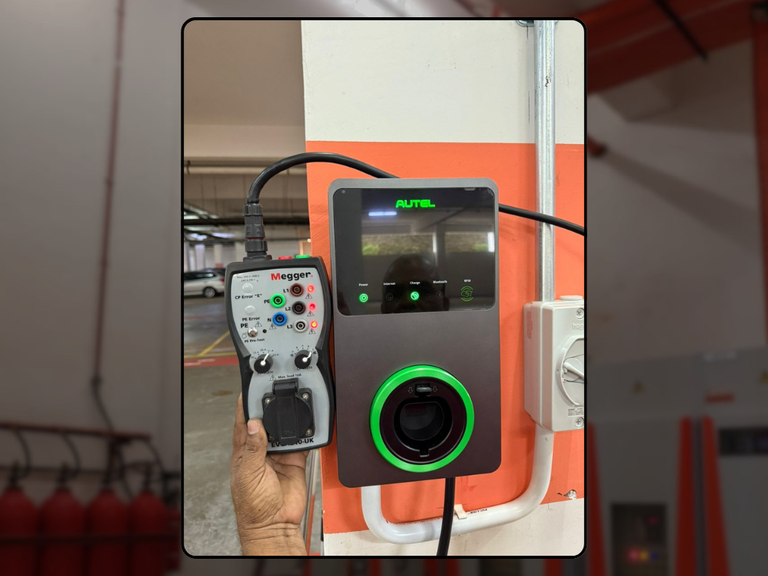
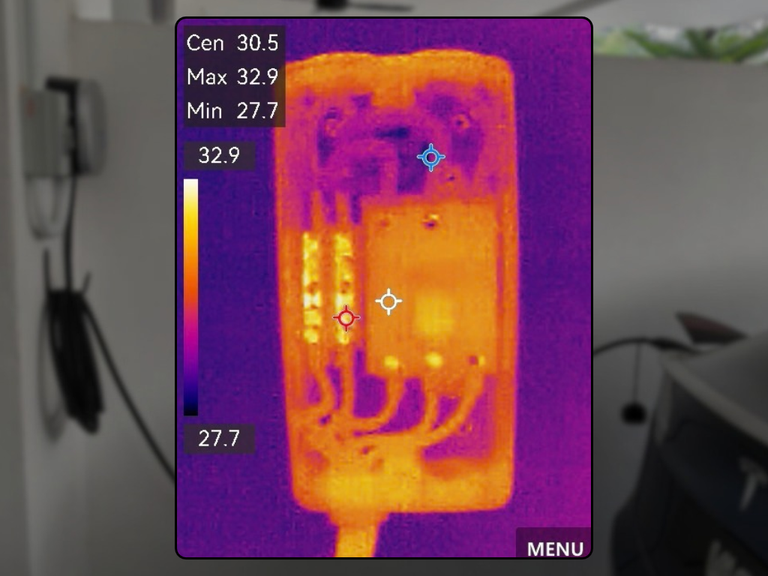
This is why verification—and where appropriate, optional thermal inspection—is an important risk-reduction measure for higher-risk homes.
7. Relying on Hardware Alone Instead of System Design
Mistake
Believing that a “better charger” alone guarantees safety.
Why it happens
- Product certifications are easy to communicate
- System behaviour is harder to explain
Why it’s a problem
Electrical safety is a system outcome, not a product feature.
Standards focus on:
- How loads interact
- How protection coordinates
- How heat accumulates
- How failures propagate
A compliant charger installed into a poorly coordinated system can still create serious risk.
Final Takeaway
Most EV charger installation issues in Malaysian homes are not caused by negligence.
They occur because:
- EV charging changes load behaviour
- Legacy assumptions no longer hold
- Protection coordination has quietly drifted
- Continuous loads expose hidden weaknesses
Electrical standards already anticipated these risks.
Problems arise when installations stop following the intent of the standards—even if everything appears to “work”.
EV charging did not break the system.
It revealed where the system was no longer aligned with how it was designed to operate.
IGP’s Safety Principle
IGP enforces high standards as a deliberate benchmark to maximise safety in residential EV charging.
Because a home is not just an electrical installation—it is where lives and livelihoods are protected.
EV charging should be an upgrade to modern living, not a compromise in safety.
Safe and Reliable EV Charging Systems, one at a time.
WhatsApp us: https://wa.me/60125954786