By Alvin Wong, CEO of Innovative Green Power Sdn. Bhd.
Taking delivery of your first electric vehicle (EV) is a proud moment. It’s quiet, powerful, and futuristic. But for many Malaysians, the big question that comes right after is:
“How do I make charging work for my lifestyle?”
Charging an EV is not like refueling a petrol car. It requires a change in mindset and planning — but once you adapt, it often becomes more convenient than ever visiting a petrol station. Let’s explore what charging looks like for different groups of Malaysians, why home or near-home charging makes all the difference, and what you need to know before making the switch.
1. Daily Commuters: A → B → A With Home Charging
If your life is a routine — home to office and back again — installing a home charger is the most seamless solution. You arrive home, plug in, and by morning your car is full again.
Most Malaysian landed homes run on single-phase supply, which supports a 7kW wallbox easily. That’s more than enough for the average daily commute (typically under 100 km). For those with three-phase power, faster 11kW or 22kW home chargers are possible, but even a 7kW unit comfortably keeps up.
Alternative if no home charging: For condo residents or those facing strata/JMB approval delays, nearby public AC chargers in malls or petrol stations can work as a stop-gap. It’s less convenient, but with growing availability in Klang Valley, Penang, and JB, it’s becoming easier.
2. The Roamers: E-Hailing Drivers, Delivery Vans, Salespeople
Drivers who don’t know where the day will take them need both home charging (as a base) and access to DC fast charging on their routes.
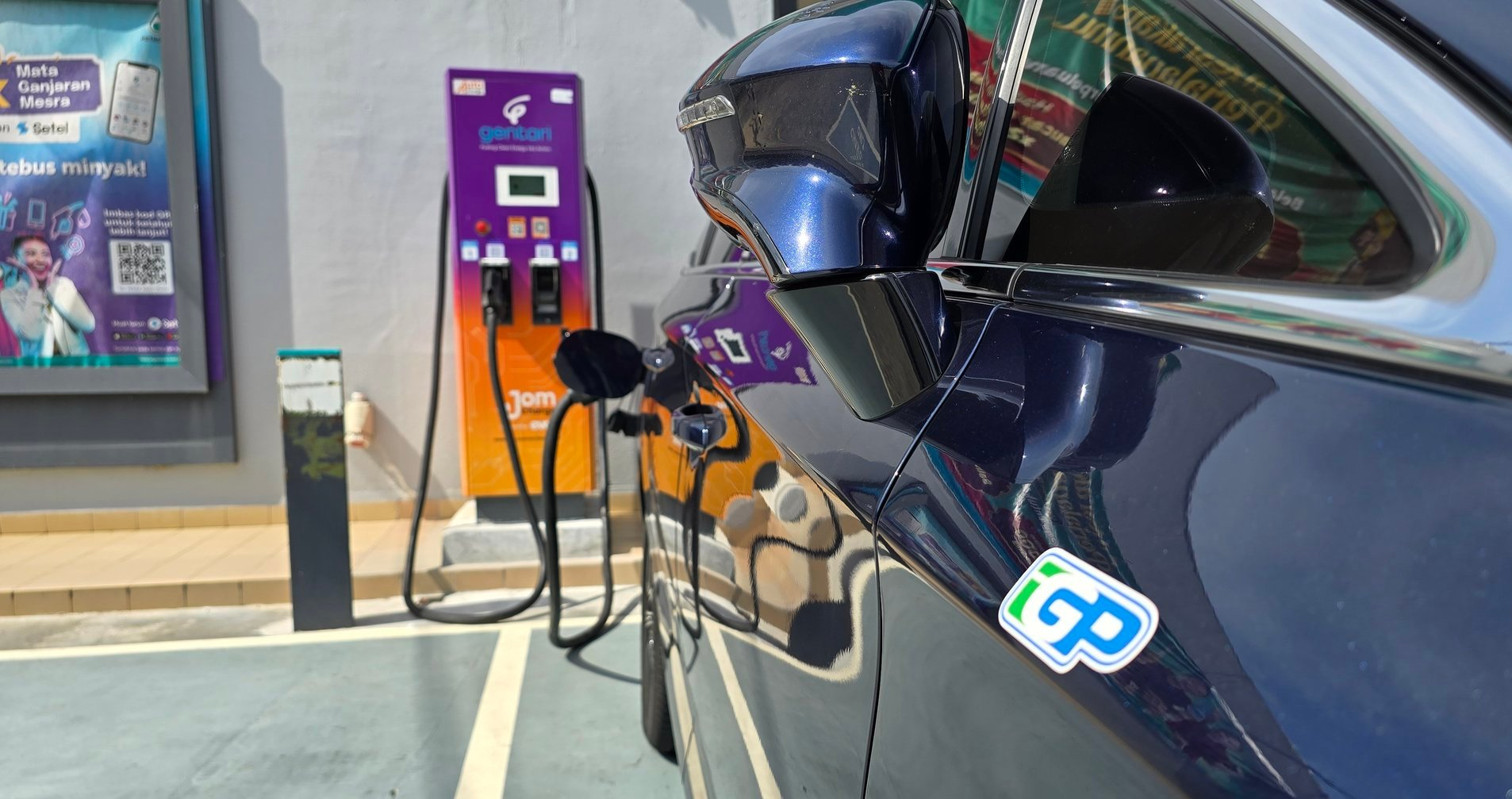
An overnight home charge covers the “base load” — but when jobs take them far out, a quick 20–40 minute DC top-up at Shell Recharge, Gentari, JomCharge, or ChargEV sites ensures they stay on the road.
Note for Malaysians: Using DC fast charging every single day isn’t ideal for battery health and costs more than AC. But for commercial drivers, the time saved is worth it.
3. Those With Charging at Work
Some companies and business parks in Malaysia now provide EV chargers as part of employee perks. This can be even more convenient than home charging — your car charges while you’re in meetings, and you drive home ready for errands.
If workplace charging is not available, many offices near city centres are surrounded by public charging hubs (for example, DC and AC chargers in KLCC, Mid Valley, Pavilion Damansara Heights).
4. Work-From-Home Lifestyle
For Malaysians working from home, EV ownership is the simplest. A wallbox at home means plugging in once or twice a week, depending on usage. Even those without long commutes will find it liberating to never “visit” a petrol station again.
Changing Habits: Petrol vs. Charging
Old petrol habit: Drive until the tank is low, then fill up to full.
EV habit: Plug in when convenient, not when desperate.
Think of your EV like your smartphone. You don’t wait for 5% battery to charge; you top up when you can. This “charge when you can, not when you must” mindset makes ownership stress-free, especially on road trips.
On Malaysian highways, EV drivers are learning to stop at R&R stations with chargers to add 20–30 minutes of range while enjoying a meal. Instead of being a delay, charging becomes part of the journey.
What Many Malaysians Wish They Knew Before Replacing Their ICE Car
- Home charging changes everything. Without it, ownership may feel inconvenient.
- AC vs DC matters. AC charging is for daily convenience, DC fast charging is for long trips or when you’re pressed for time.
- Battery health is real. Frequent DC charging is fine for emergencies but relying on it daily isn’t ideal.
- Plan differently for balik kampung. Charging adds time, but Malaysia’s North–South Expressway now has many DC chargers strategically located.
- Location > speed. A reliable 22kW AC charger at your condo is worth more than a 150kW DC unit you can’t easily access.
- Single-phase vs three-phase. Most older landed houses in Malaysia are single-phase (max ~7kW). Three-phase upgrades through TNB are possible but involve time, approvals, and cost.
The Positive Outlook for Malaysians
- More EV choices every year. From affordable Chinese EVs like BYD Dolphin and Ora Good Cat to premium models from BMW and Mercedes, Malaysians now have options at all budgets.
- Public chargers are growing fast. Gentari, TNB, Shell Recharge, Sime Darby and others are rolling out more DC and AC chargers nationwide, including smaller towns.
- Better safety awareness. Malaysians are becoming more conscious of installing wallboxes with proper MCB, RCCB, and load balancing — avoiding unsafe practices like using 3-pin sockets for daily charging.
- Condo charging progress. While still a challenge, more JMBs and developers are beginning to allocate EV bays with shared chargers.
- Supportive ecosystem. With Suruhanjaya Tenaga guidelines and TNB’s ESAH framework, the EV charging landscape is moving toward structured, safe, and reliable adoption.
Final Thoughts
Owning an EV in Malaysia requires adjusting your mindset, but it also opens up a new kind of freedom. You charge while you sleep, while you work, or while you have your kopi at an R&R — instead of wasting time at petrol pumps.
The future is bright: more EVs to choose from, more chargers across the country, and growing awareness that charging safely at home is just as important as choosing the right car.
Switching from petrol to electric isn’t just about technology. It’s about building a smarter habit that fits your life. Once you embrace it, EV ownership in Malaysia becomes not just practical, but liberating.