If you’ve just bought an EV—or are about to—one of the first decisions you’ll face is:
Who should install your home EV charger?
In Malaysia, this decision is more critical than most people realise.
Because unlike buying a charger, installation directly affects safety, performance, and long-term reliability.
This article breaks down exactly what separates a good EV charger installer from a risky one.
1. Proper Licensing and Competency (Non-Negotiable)
Let’s be clear:
EV charger installation is regulated electrical work in Malaysia.
According to Suruhanjaya Tenaga:
- Installation must be carried out by a competent person
- Work must comply with electrical safety standards and guidelines
What a good installer should have:
- Registered electrical contractor status
- Certified competent personnel (Wireman / Chargeman / Engineer)
- Familiarity with EVCS requirements
If they cannot show this clearly, that’s already a concern.
2. They Start With Your Electrical System — Not the Charger
A poor installer focuses on:
“Which charger do you want?”
A good installer starts with:
“Let’s understand your home first.”
Why this matters:
Your home electrical system determines:
- Maximum charging speed
- Safety limits
- Whether upgrades are needed
What they should assess:
- Incoming supply (single-phase or three-phase)
- Fuse rating
- Existing load usage
- Distribution board condition
- Cable routing feasibility
Without this, installation becomes guesswork.
3. They Design a Dedicated Circuit (Not Shared Wiring)
EV charging is not like plugging in a kettle.
It requires:
- Continuous high current
- Long-duration operation
That’s why guidelines require:
A dedicated final circuit for EV charging
A good installer will:
- Run a dedicated cable directly from DB
- Avoid sharing with other circuits
- Size the cable properly based on load
A poor installer may:
- Tap from existing socket circuits
- Share with aircond or other appliances
That’s where overheating risks begin.
4. They Specify Proper Protection Devices
Protection is where many installations cut corners.
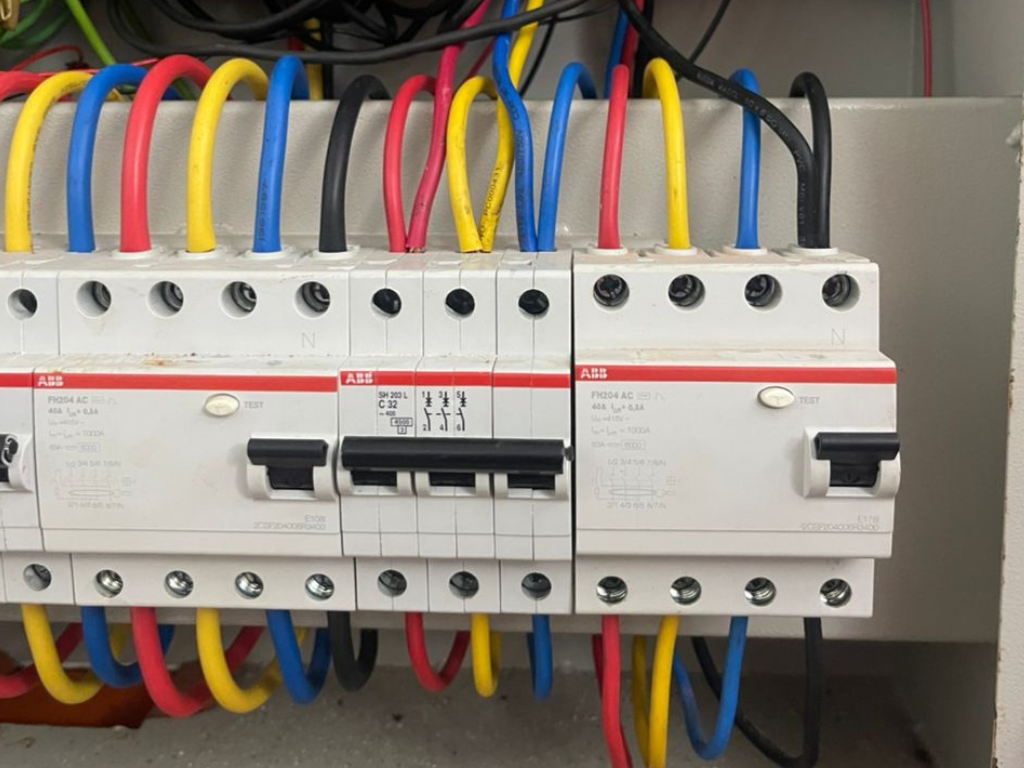
A proper EV charger setup must include:
Core protections:
- MCB (Overcurrent protection)
- RCCB Type A (minimum) or Type B (depending on charger)
- Proper earthing
As per guidelines:
- Earth leakage protection ≤30mA is required
What a good installer does:
- Explains protection selection
- Uses reputable brands
- Sizes correctly for EV load
What a poor installer does:
- Uses whatever is cheapest
- Doesn’t explain anything
- Oversizes breakers to avoid tripping (dangerous)
5. They Understand Malaysian Infrastructure Limitations
This is where real expertise shows.
Most Malaysian homes:
- Are single-phase
- Have limited capacity (often 60A or below)
- Share load across multiple appliances
A good installer will:
- Calculate usable capacity
- Avoid overloading your system
- Recommend:
- Load balancing
- Smart chargers
- Charging scheduling
Example:
Running a 32A charger continuously on a home already using:
- Aircond
- Water heater
- Oven
Without load control = high risk of tripping or overheating.
6. They Do Not Recommend Unsafe Shortcuts
This is a major differentiator.
Dangerous advice you may hear:
- “Just upgrade your fuse”
- “No problem, can support”
- “We always do like this”
Why this is wrong:
The fuse is designed to protect your system.
Increasing it without upgrading:
- Cable size
- DB capacity
- Load distribution
Is effectively removing your safety barrier.
A responsible installer will never recommend this blindly.
7. They Perform Testing and Commissioning
Installation is not the end.
A good installer will:
- Test the charger under load
- Verify protection devices
- Check system stability
This ensures:
- No hidden faults
- Safe operation from day one
8. They Provide Documentation and Support
Professional installers don’t disappear after installation.
They provide:
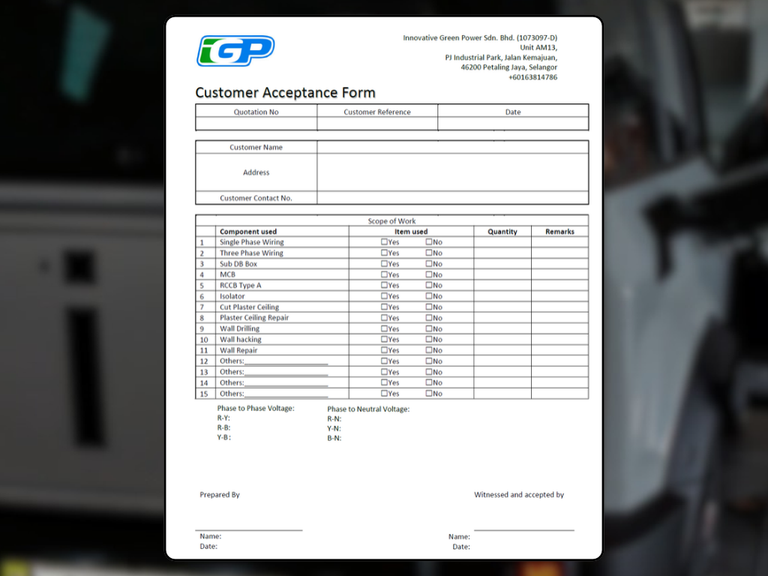
- Installation records
- Warranty support
- Guidance on usage
This matters especially when:
- You upgrade your EV later
- You face electrical issues
- You need compliance documentation
9. Clear Pricing, Not Just Cheap Pricing
A good installer explains:
- What is included
- What is excluded
- Why certain upgrades are needed
A poor installer:
- Gives a low headline price
- Adds costs later
- Cuts corners to maintain margin
10. Simple Checklist Before You Decide
Use this before confirming any installer:
- Are they a registered electrical contractor?
- Do they conduct proper assessment?
- Do they design a dedicated circuit?
- Do they specify protection devices clearly?
- Do they explain your home’s limitations?
- Do they avoid unsafe shortcuts?
- Do they perform testing and commissioning?
If the answer is “no” to any of these, reconsider.
Final Thoughts
Choosing an EV charger installer is not just a purchase decision.
It’s a safety decision.
The best EV charger installer in Malaysia is not the cheapest.
It is the one who understands your electrical system — and designs around it properly.
If you haven’t read it yet, continue here:
→ How to Choose the Best EV Charger Installer in Malaysia (2026 Guide)
Let our obsession with quality protect your safety.
Because when it comes to EV charging and electrical systems, there’s no room for compromise.
Need your EV charger or electrical setup professionally inspected?
📞 WhatsApp Us: https://wa.me/60125954786
Stay connected with us:
🔹 Instagram: https://www.instagram.com/InnovativeGreenPowerMY
🔹 Facebook: https://www.facebook.com/innovativegreenpower
🔹 YouTube: https://www.youtube.com/@IGPEVCharging-ir8rv
🌍 Website: https://www.innovativegreenpower.com