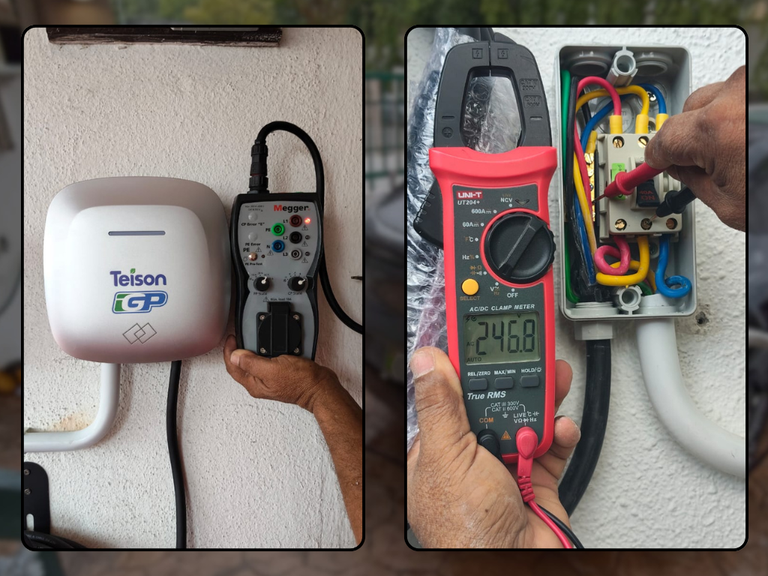
By Alvin Wong, CEO of Innovative Green Power Sdn. Bhd.
For home EV charger installations in Malaysia, one requirement appears consistently in compliant designs:
A dedicated isolator switch must be installed for the EV charger circuit.
This requirement is not decorative, optional, or installer-specific. It is derived from electrical safety principles, Malaysian regulatory intent, and international EV-specific installation standards.
This article explains why an isolator switch is required, what role it serves, and how this requirement is supported by verifiable guidelines.
1. EV Chargers Are Fixed Electrical Equipment, Not Plug-In Appliances
A home EV wallbox is classified as:
- Fixed electrical equipment
- Permanently connected to the electrical installation
- Capable of drawing high current continuously
Under MS IEC 60364 and IEC 60364, fixed equipment must be provided with a means of isolation for safe operation, maintenance, and emergency control.
This immediately distinguishes EV chargers from:
- Portable appliances
- Plug-connected devices
- General socket-outlet loads
2. Isolation Is a Core Requirement Under Electrical Safety Regulations
Malaysian regulatory basis
Under the Electricity Regulations 1994, electrical installations must be designed so that:
- Circuits can be safely isolated
- Electrical work can be performed without exposure to live conductors
- Maintenance and fault-finding can be conducted safely
Isolation is a fundamental safety principle, not an EV-specific invention.
The Suruhanjaya Tenaga Guidelines for Electrical Wiring in Residential Buildings reinforce this by requiring:
- Proper isolation and switching devices
- Clearly identifiable means to disconnect fixed equipment from supply
3. EV-Specific Requirements Under IEC 60364-7-722
EV charging installations are further governed by a dedicated section:
IEC 60364-7-722 Requirements for special installations or locations – Electric vehicle supply equipment
Relevant principle (Clause 722.537)
This section requires that EV supply equipment be provided with:
- A means of isolation
- Accessible to allow safe maintenance and emergency disconnection
- Independent of software or communication control
In other words:
Being able to “stop charging from the app” does not replace physical electrical isolation.
4. Why Software Control Is Not Considered Isolation
Many EV owners assume that:
- Turning off the charger via an app
- Pressing the charger’s stop button
- Disconnecting the vehicle
is sufficient.
From a standards perspective, this is incorrect.
Standards interpretation
Under IEC 60364, isolation must:
- Physically disconnect live conductors
- Be independent of control electronics
- Remain effective even if the charger is faulty
A software command:
- Does not guarantee conductor disconnection
- Cannot be verified visually
- May fail under fault conditions
This is why physical isolation is mandatory.
5. Safety During Maintenance and Emergency Situations
The isolator switch serves three critical safety roles:
1. Maintenance safety
Allows electricians to:
- Work on the charger or circuit
- Verify isolation before touching conductors
- Comply with safe work procedures under Malaysian regulations
2. Emergency disconnection
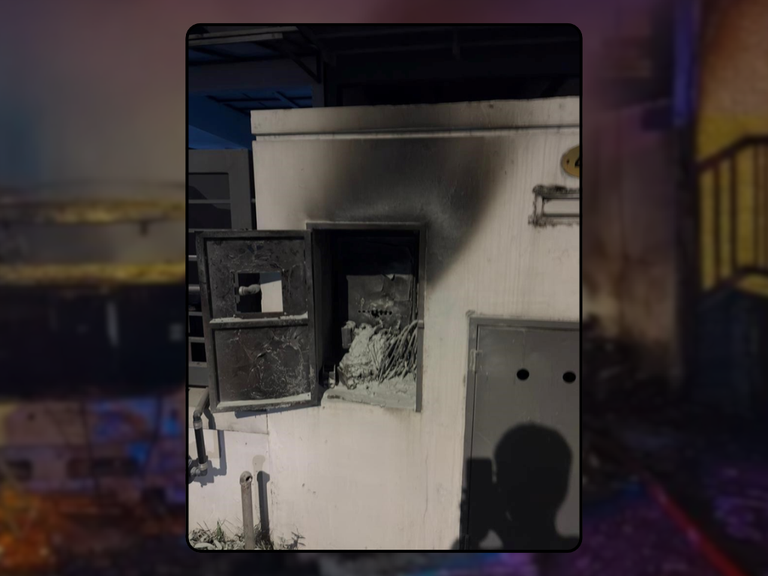
In events such as:
- Overheating
- Water ingress
- Physical damage
- Fire risk
A nearby isolator allows immediate manual disconnection, without accessing the main distribution board.
3. Clear point of responsibility
An isolator provides:
- A visible, labelled disconnection point
- Clear identification of the EV charger circuit
- Reduced risk of accidental energisation
6. Relationship Between the Isolator and the Main Distribution Board
The main switch or MCB in the distribution board:
- Protects the circuit
- Is not always immediately accessible
- May be shared with other loads
Standards distinguish between:
- Circuit protection (MCB / RCCB / RCBO)
- Local isolation (isolator switch)
For fixed high-power equipment like EV chargers, local isolation is required in addition to upstream protection.
7. Alignment with Fire and Emergency Access Principles
While EV charging fire guidelines are often associated with BOMBA, the electrical isolation principle aligns with broader emergency response logic:
- Emergency responders must be able to disconnect power quickly
- Isolation should not rely on software, network connectivity, or user access
- Physical switches remain the most reliable method
This reinforces why the isolator requirement persists even as chargers become “smarter”.
8. What a Compliant EV Charger Isolator Looks Like
While exact device types may vary, a compliant isolator generally:
- Is rated appropriately for the charger current (e.g. ≥ 40 A)
- Disconnects live conductors fully
- Is installed in an accessible location
- Is clearly associated with the EV charger circuit
The intent is safety and clarity — not aesthetics.
9. How Readers Can Verify This Requirement
You can independently reference:
- Electricity Regulations 1994 – Safe isolation principles
- Suruhanjaya Tenaga – Guidelines for Electrical Wiring in Residential Buildings
- IEC 60364-7-722 – EV charging installation requirements
- MS IEC 60364 – Isolation and switching requirements
These documents form the basis used by competent electrical contractors and inspectors in Malaysia.
Final Takeaway
The requirement for an isolator switch in EV charger installations exists because:
EV chargers are fixed, high-power, continuous-load equipment, and safe isolation is non-negotiable under electrical standards.
It is not about convenience, branding, or over-engineering. It is about ensuring that anyone interacting with the system can make it electrically safe, instantly and reliably.
Safe and Reliable EV Charging Systems, one at a time.
WhatsApp us: https://wa.me/60125954786