When people hear the word smart charger, many immediately think of an app.
Can it connect to WiFi? Can I see charging status on my phone? Can I schedule charging? Can I check the charging record?
Those features are useful. But for home EV charging in Malaysia, smart should mean something more important than app control.
A smart charger should help the charging system adapt to the home.
That matters because Malaysian homes are not all built the same. Some homes are single-phase. Some are three-phase. Some have older distribution boards. Some have many high-load appliances. Some have solar. Some have long cable routes from the DB to the car porch. Some have limited spare capacity, especially during evening hours when air conditioners, water heaters, kitchen appliances, and other household loads are being used at the same time.
So the question should not only be: Which charger has the highest power rating?
The better question is: Which charger can work safely and practically with my home electrical system?
Why a Basic Charger May Not Be Enough
A basic EV charger may be able to charge the car properly when the home electrical load is stable and there is enough spare capacity.
But in real homes, the load is not always stable.
One moment the house may only be running lights, refrigerator, and WiFi. Later, the air conditioners may come on. Someone may use the water heater. The oven, induction cooker, dryer, or kettle may run. If the EV charger is drawing a fixed high current at the same time, the total home demand can rise quickly.
This is where some homeowners experience tripping, unstable charging, or concerns about whether their home can really support a 7kW charger.
The issue is not always that the charger is bad. Often, the charger is simply not being managed according to the home condition.
That is why smart charging features are not just convenience features. In many Malaysian homes, they are practical load management tools.
What Makes the Smart Mini Relevant
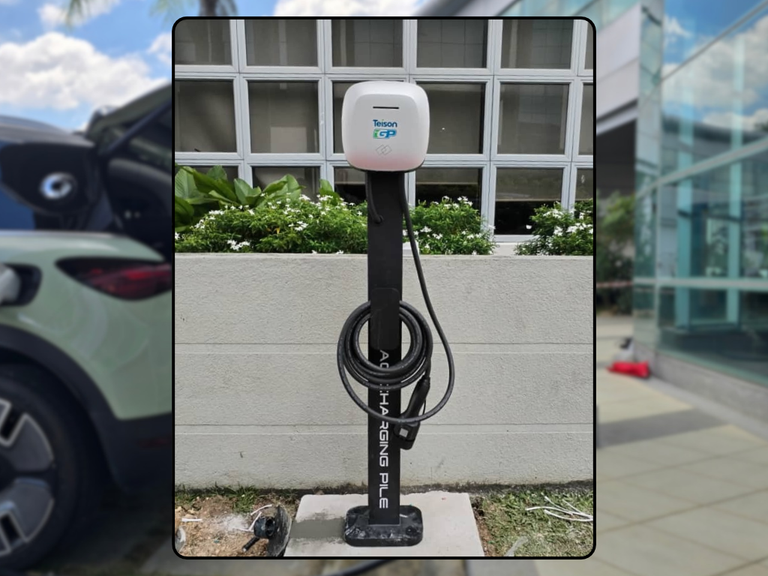
The Smart Mini charger makes sense for many Malaysian homes because it is designed around practical charging control, not only maximum output.
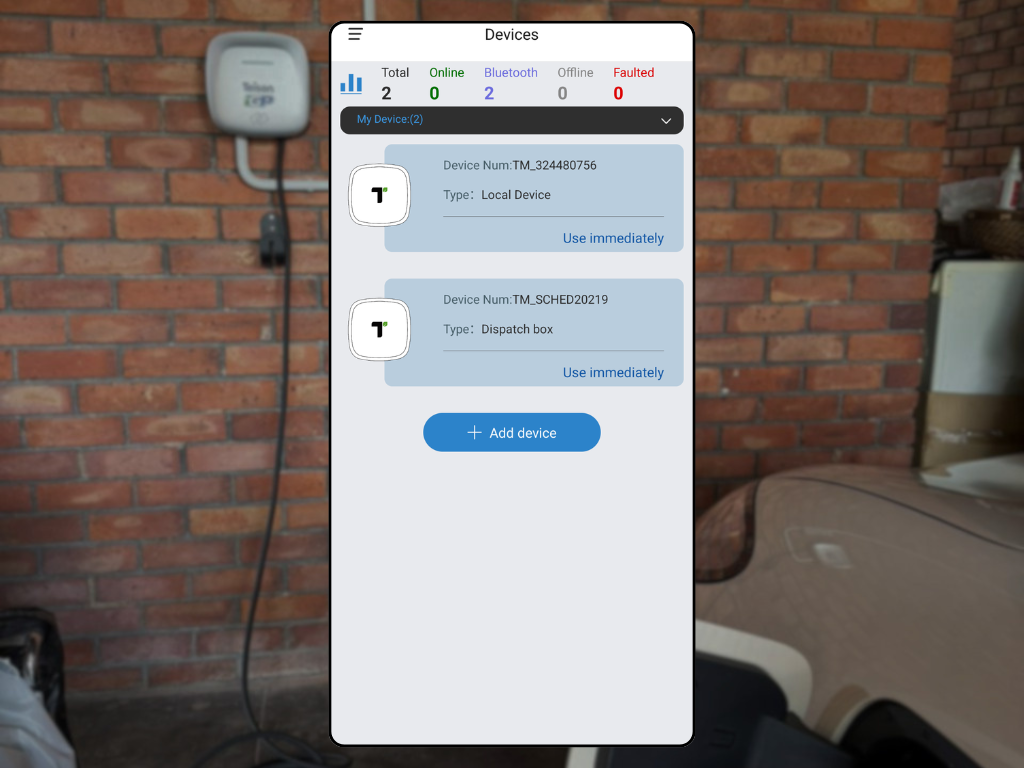
Depending on the installation configuration, Smart Mini chargers can support features such as adjustable charging current, Dynamic Load Balancing, usage monitoring, charging schedule control, and solar-related charging modes.
The most important point is not that the charger is powerful. The important point is that the charger can be configured according to how the home actually uses electricity.
For some customers, this may mean charging at a lower current most nights because the car is parked for many hours anyway.
For some homes, it may mean using Dynamic Load Balancing so the charger automatically reduces output when household load increases.
For solar homes, it may mean planning the charger to work with solar excess charging or a hybrid solar-and-grid charging strategy, where the system is properly designed for it.
This is why we always prefer to understand the home first before recommending the final charger setup.
Dynamic Load Balancing Is the Key Feature for Many Homes
Among all smart charging features, Dynamic Load Balancing is one of the most important for Malaysian residential installations.
In simple terms, Dynamic Load Balancing allows the charger to respond to the home’s real-time electrical usage. When the house is using more power, the charger can reduce its charging current. When household load drops again, the charger can increase charging current within the configured limit.
This does not magically increase the home’s electrical supply capacity. It also does not replace proper cable sizing, protection devices, earthing, and testing.
What it does is help the EV charger behave more intelligently within the safe operating limits of the home.
For many single-phase homes, this can be a more practical first solution than immediately jumping into a supply upgrade or forcing the charger to run at maximum power all the time.
This is especially important because most EV owners do not need to charge at full power every night. If the car is parked for eight to ten hours, lower-power charging may still recover the daily driving usage comfortably.
Smart Does Not Mean Ignoring Installation Quality
A smart charger is not a shortcut around proper installation.
This point is important. No matter how advanced the charger is, the installation still needs to be designed properly.
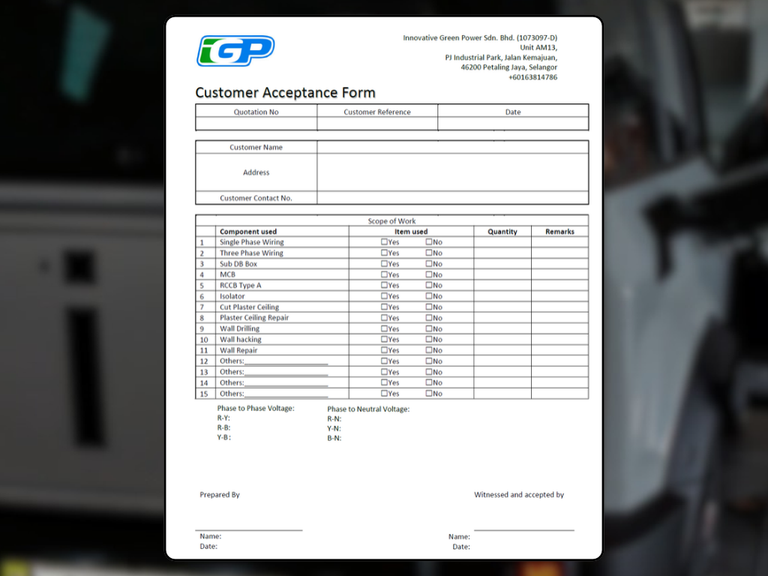
The charger still needs a dedicated circuit. The cable must be selected based on load, route length, installation method, and site condition. The protection devices must be suitable. Earthing must be checked. The system still needs testing and commissioning.
A smart charger installed badly is still a bad charging system.
So when we recommend Smart Mini, we are not saying the charger alone solves everything. We are saying it gives us better tools to design a safer and more practical home charging system when combined with proper electrical assessment and installation workmanship.
Where Smart Mini Makes the Most Sense
Smart Mini chargers are especially relevant for customers who want better control over how their EV charges at home.
They make sense for single-phase landed homes where household load can vary significantly throughout the evening.
They make sense for homeowners who want to avoid unnecessary stress on the electrical system by setting sensible charging limits.
They make sense for homes where solar may be added or is already installed, provided the system is configured correctly.
They also make sense for customers who want visibility over charging behaviour, rather than treating charging as a blind load running in the background.
But the final recommendation should still depend on the site. A good charger decision is not made from the EV model alone. It should be made from the EV, the home, the customer’s usage pattern, and the installation condition.
The Real Buying Decision
Many customers compare chargers by asking which one is cheaper, which one is faster, or which one has more functions.
Those questions are understandable, but they are not complete.
A better way to choose a home EV charger is to ask:
Can this charger be configured safely for my home?
Can it manage real household load?
Can it support my charging habits without constantly pushing the home to its limit?
Can the installer explain how the charger, cable, protection devices, and home supply capacity work together?
If the answer is clear, then the charger selection becomes much more meaningful.
Final Thought
For Malaysian homes, a smart EV charger should not be treated as a luxury gadget.
It should be treated as part of a safer, more controlled, and more practical charging system.
The Smart Mini charger makes sense because it gives the installer and homeowner more ways to manage real-world charging conditions. Adjustable current, Dynamic Load Balancing, scheduling, monitoring, and solar-related functions are useful because homes are not static electrical environments.
But the charger is still only one part of the system.
The best result comes from matching the charger to the home, installing it properly, and configuring it according to the customer’s actual usage.
That is the difference between simply buying a charger and building a home charging system that works safely every day.
IGP’s Safety Principles
IGP enforces high standards as a deliberate benchmark to maximise safety in residential EV charging. Because a home is not just an electrical installation—it is where lives and livelihoods are protected. EV charging should be an upgrade to modern living, not a compromise in safety.
Let our obsession with quality protect your safety.
Because when it comes to EV charging and electrical systems, there’s no room for compromise.
Need your EV charger or electrical setup professionally inspected?
WhatsApp Us: https://wa.me/60125954786
Stay connected with us:
Instagram: https://www.instagram.com/InnovativeGreenPowerMY
Facebook: https://www.facebook.com/innovativegreenpower
YouTube: https://www.youtube.com/@IGPEVCharging-ir8rv
Website: https://www.innovativegreenpower.com