What Documents Should You Receive After a Proper EV Charger Installation?
1. Introduction
A professional EV charger installation should leave you with more than just a working charger. Documentation proves that the work was done correctly, providing evidence for warranty and insurance claims. Here are the key documents you should receive and why they matter.
2. Commissioning Report (Test Results)
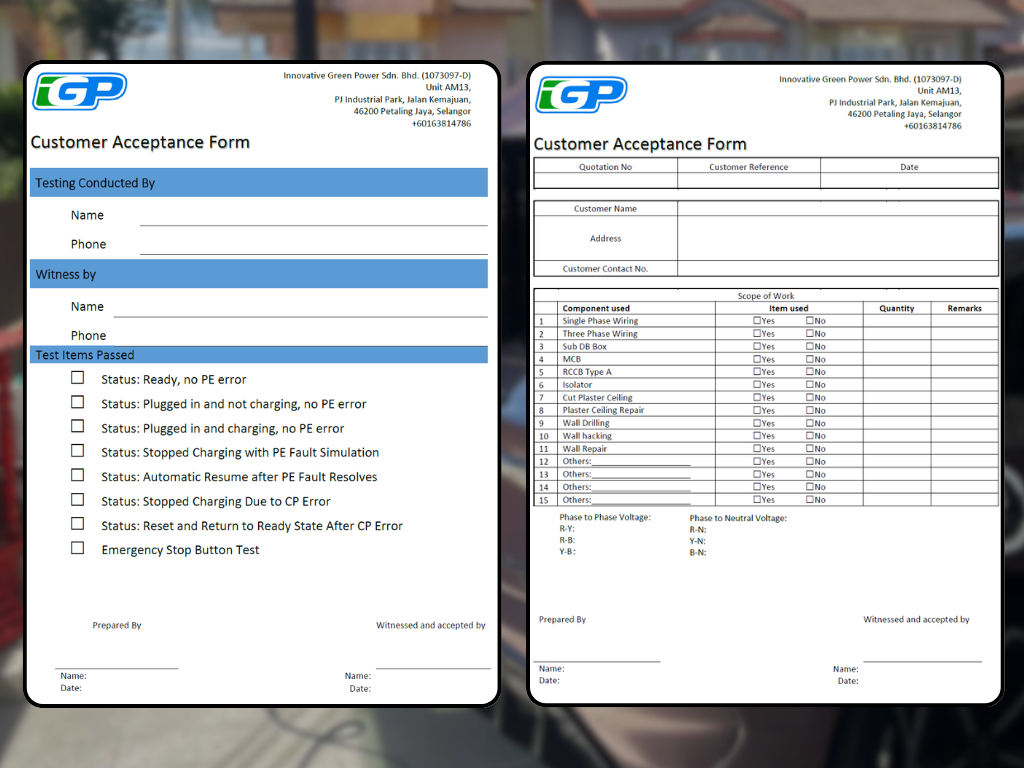
After installation, your contractor should give you a commissioning report containing test results such as continuity, insulation resistance, RCD trip time and voltage checks. This report shows that the installation meets safety standards and that the RCD trips correctly at 30 mA. IGP includes this report as part of our standard handover.
3. Circuit Diagram and Load Assessment
Request a diagram showing the dedicated circuit, cable size (typically 6 mm² or 10 mm²), protective devices (MCB, RCCB or RCBO) and isolator switch. The diagram helps future electricians understand your wiring, and it proves that the installation follows ST guidelines. A load assessment showing your home’s total consumption and the charger’s impact helps justify why a three-phase upgrade was or wasn’t necessary.
4. Photographs and Labeling
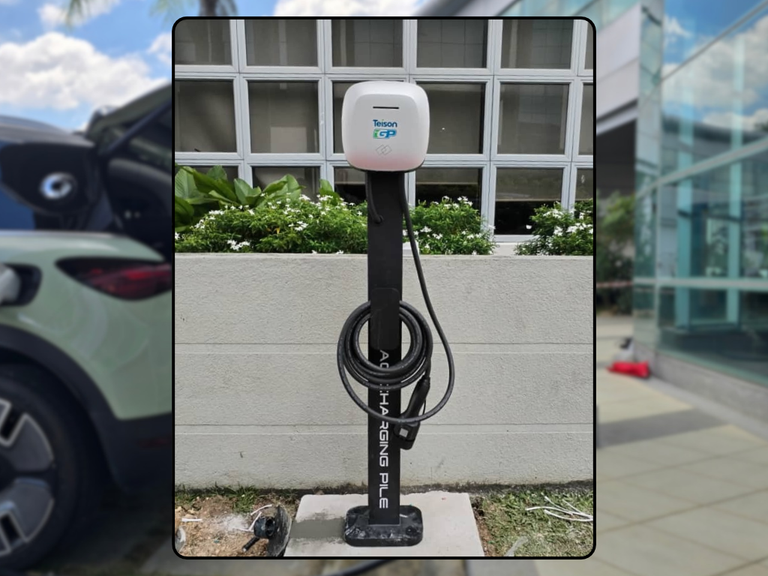
Ask for photographs of the completed installation and labels on your distribution board. Photos provide evidence of cable routing, protective devices and isolation switch placements. Labels ensure that future work on the DB won’t accidentally disconnect or alter the EV circuit.
5. Manufacturer’s Warranty Documentation
Your charger should come with a warranty certificate and user manual. Keep these documents safe. They specify warranty periods and conditions and explain how to register the charger with the manufacturer. Using unregistered installers or skipping recommended documentation may void the warranty.
6. Proof of Compliance (Form G and Form H, Where Applicable)
In Malaysia, Form G (Supervision and Completion Certificate) and Form H (Test Certificate) are official documents issued for new installations or major modifications. They certify that the work has been supervised and tested by a competent person. For typical home EV charger installations, these forms may not always be required, but some local authorities or developers may ask for them. Ask your installer if they can provide Form G and Form H or an equivalent compliance certificate.
7. Invoice and Site Visit Report
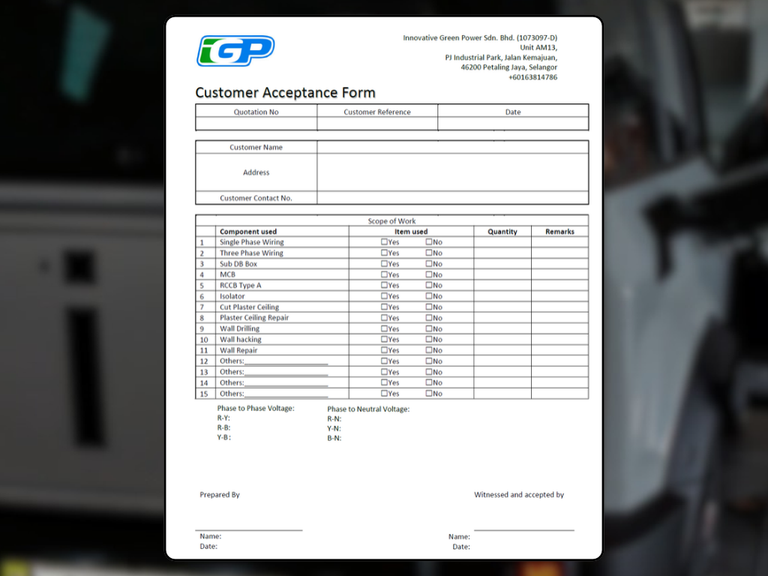
Finally, keep a detailed invoice showing materials used, labour charges and any additional work (such as three-phase upgrades). If you paid for a site inspection, the site visit report should outline findings and recommendations. IGP rebates the inspection fee if the installation proceeds, and we provide a clear invoice and report for transparency.
8. Conclusion
Proper documentation protects you from future liability and ensures your installation meets safety standards. At a minimum, expect a commissioning report, circuit diagram, photos, warranty documents and a detailed invoice. Ask whether Form G and Form H apply to your installation. IGP provides all necessary documents, giving you confidence that your EV charger is installed correctly and ready for years of reliable use.