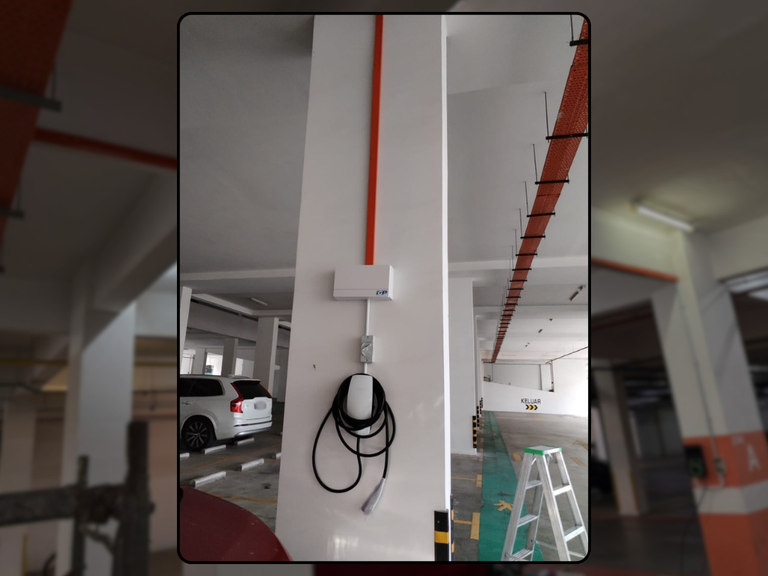
When we talk to EV owners about home charging, many people still focus on charger power first.
They ask whether they should install 7 kW, 11 kW, or 22 kW. They ask which charger is faster. They ask whether their car can accept more power.
Those questions are understandable, but for many Malaysian homes, there is another question that should come earlier:
How will the charger behave when the rest of the house is also using electricity?
This is where Dynamic Load Balancing becomes important.
In our view, Dynamic Load Balancing should not be treated as a luxury add-on. For many homes, especially single-phase landed homes or older properties with limited spare capacity, it should be treated as a core feature of responsible home EV charging design.
The Problem Is Not the Charger. The Problem Is Total Home Load.
A home EV charger does not operate alone. It shares the same electrical supply with everything else in the house.
At night, your home may already be using multiple high-load appliances. Air conditioners may be running. Water heaters may be used. The oven, dryer, induction cooker, kettle, or water pump may come on. Then the EV charger starts charging at the same time.
Each individual appliance may be acceptable on its own. The issue is what happens when the total load stacks together.
This is one of the most common realities in Malaysian homes. The EV charger may be rated for 7 kW, and the home may appear to support it on paper. But real homes do not behave like a simple calculation. Load changes from time to time.
That is why fixed-output charging can become a problem in homes with limited headroom.
What Dynamic Load Balancing Actually Does
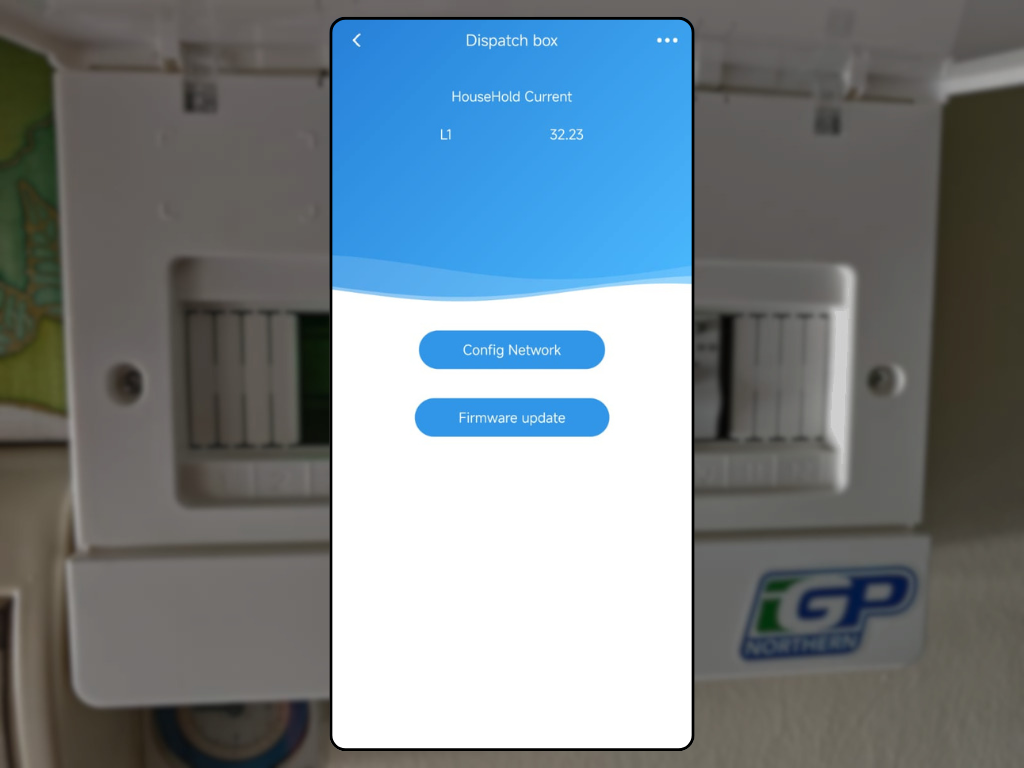
Dynamic Load Balancing, or DLB, allows the charging system to monitor the home electrical load and adjust the EV charger output according to available capacity.
In simple terms, when the house is using more electricity, the charger can reduce its charging current. When the household load drops again, the charger can increase its output back within the configured limit.
This does not create extra supply capacity. It also does not allow the home to ignore proper cable sizing, protection devices, or installation requirements.
What it does is more practical: it helps the charger work intelligently within the limit of the home.
That is the key value.
Why This Matters More in Malaysia
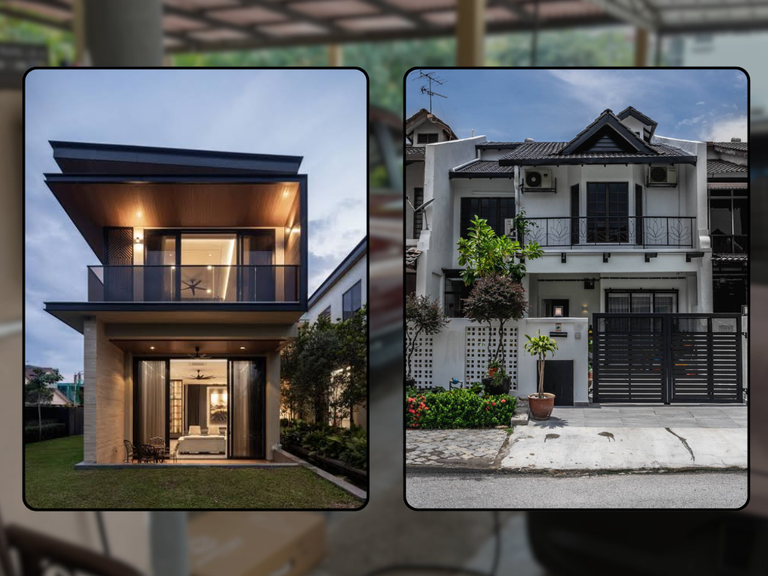
Many Malaysian homes were not originally designed with EV charging in mind. This is especially true for older landed homes and homes with single-phase supply.
A 7-kW charger can draw around 32A on single-phase supply. That is a significant continuous load. Unlike a kettle or microwave, the charger may run for many hours.
Without proper control, the home may experience nuisance tripping, overloaded circuits, or long-term stress on electrical components. In worse cases, weak terminations or undersized sections of the system can heat up over time.
This is why we do not like the mindset of simply pushing the charger to maximum output every night.
For daily use, most EV owners do not need full 7 kW charging all the time. What they need is predictable, safe, sufficient charging by the next morning.
DLB supports that approach.
DLB Is Not a Replacement for Proper Installation
This point is important.
Dynamic Load Balancing is useful, but it is not a shortcut. It does not make poor installation safe. It does not allow an installer to use undersized cable. It does not replace RCCB, MCB, isolator, earthing, testing, or proper workmanship.
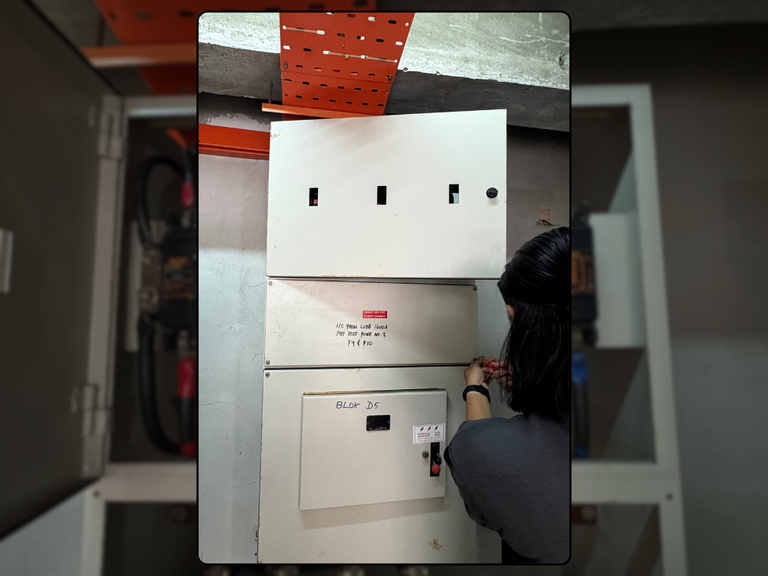
A proper EV charging system still needs a dedicated circuit, correct cable selection, suitable protection devices, proper routing, secure terminations, and testing after installation.
DLB works best when it is part of a properly designed system, not when it is used to hide a weak installation.
This is why a smart charger installed badly is still a bad charging system.
Why We Prefer Load Management Over Blind Fuse Upgrades
Some EV owners are told that if their home capacity is not enough, they should simply upgrade the main fuse.
That advice can be risky when given without proper assessment.
A fuse is part of the protection system. Increasing its rating without checking the incoming cable, distribution board, terminations, load profile, and upstream condition can reduce the safety margin of the installation.
In many cases, a better first step is not to force more current into the home. A better first step is to understand the home load and manage charging properly.
This is where smart charging and DLB become commercially and technically sensible.
Instead of asking the home to blindly always support maximum charging, DLB allows the charger to respond to real conditions.
A Practical Example
Imagine a single-phase home charging an EV at night.
The charger is set to high output. At the same time, three air conditioners are running, someone uses the water heater, and the kitchen appliances are still active.
Without load balancing, the charger continues drawing its set current unless something trips or the charger is manually reduced.
With Dynamic Load Balancing, the system can detect that the home load has increased and reduce the EV charging current automatically. When the household load drops later in the night, charging output can increase again.
The EV still charges. The home stays within a safer operating range. The owner does not need to manually guess what setting to use every night.
That is the difference between fixed charging and managed charging.
Why Smart Mini Makes Sense in This Context
The Smart Mini charger is useful for Malaysian homes because it is not only about providing charging power. It supports a more controlled charging strategy.
With adjustable charging current and Dynamic Load Balancing capability when properly configured, the charger can be matched to the home instead of forcing the home to fit the charger.
This is especially useful when customers want practical home charging without immediately jumping into expensive infrastructure upgrades.
But again, the product is only one part of the system. The charger still has to be installed properly, configured correctly, and matched to the home electrical condition.
DLB Should Become a Buying Criterion
As EV adoption grows, we believe customers should start asking better questions when choosing a charger.
Not only:
How many kW is this charger?
But also:
Can it manage home load?
Can it adjust charging current?
Can it work with my actual household usage?
Can it support safer daily charging?
Can my installer configure it properly?
These questions matter because the best home charging system is not always the fastest one. It is the one that fits the home, the car, and the owner’s usage pattern safely.
Final Thought
Dynamic Load Balancing should not be treated as a premium feature that only some owners consider later.
For many Malaysian homes, it should be part of the main home charging discussion from the beginning.
It helps the EV charger behave more intelligently. It reduces the need to constantly push the home to maximum load. It gives owners more confidence that charging can happen safely alongside normal household usage.
The goal is not to charge at the highest power every night.
The goal is to charge safely, reliably, and sufficiently for daily life.
That is what good home EV charging should be.
IGP enforces high standards as a deliberate benchmark to maximise safety in residential EV charging.
Because a home is not just an electrical installation. It is where lives and livelihoods are protected.
EV charging should be an upgrade to modern living, not a compromise in safety.
IGP’s Safety Principles
IGP enforces high standards as a deliberate benchmark to maximise safety in residential EV charging. Because a home is not just an electrical installation—it is where lives and livelihoods are protected. EV charging should be an upgrade to modern living, not a compromise in safety.
Let our obsession with quality protect your safety.
Because when it comes to EV charging and electrical systems, there’s no room for compromise.
Need your EV charger or electrical setup professionally inspected?
WhatsApp Us: https://wa.me/60125954786
Stay connected with us:
Instagram: https://www.instagram.com/InnovativeGreenPowerMY
Facebook: https://www.facebook.com/innovativegreenpower
YouTube: https://www.youtube.com/@IGPEVCharging-ir8rv
Website: https://www.innovativegreenpower.com