1. Introduction
Electrical safety devices are the unsung heroes of an EV charger installation. They detect faults, disconnect power, and prevent fires. Knowing the purpose of each device helps you understand why a proper installation costs what it does. This article explains the roles of MCBs, RCCBs and RCBOs in EV charger circuits and how IGP applies them.
2. Miniature Circuit Breaker (MCB)
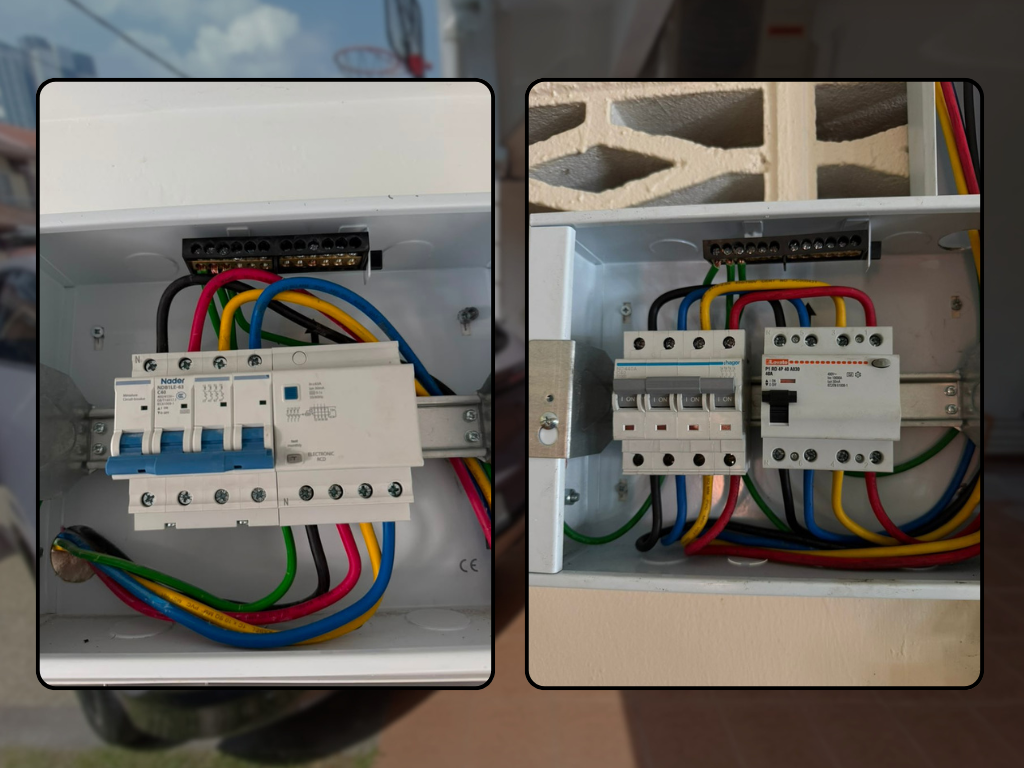
An MCB protects a circuit against overcurrent—both overload and short-circuit conditions. If an EV charger draws more current than the cable can handle or if a fault causes a surge, the MCB trips and disconnects the circuit. ST’s EVCS guidelines require a dedicated overcurrent protection device for each EV charger circuit. Without an MCB, the cable could overheat and cause a fire.
3. Residual Current Circuit Breaker (RCCB)
An RCCB (also called RCD) protects against earth leakage (residual current). It senses any imbalance between live and neutral conductors. If current leaks to earth—through damaged insulation or a person—the RCCB trips quickly, reducing the risk of electric shock. The EVCS guidelines specify using a 30 mA RCCB or RCBO for each charger circuit. Because EV chargers operate outdoors or in semi-exposed environments, earth leakage protection is essential.
4. Residual Current Breaker with Overcurrent (RCBO)
An RCBO combines the functions of an MCB and an RCCB in a single device. It provides both overcurrent and earth leakage protection on a single pole. RCBOs save space in the distribution board and simplify wiring. They are particularly useful in EV charger installations where panel space is limited or when you want an all-in-one device.
5. Isolator Switch
In addition to MCBs and RCCBs, EV charger circuits should include an isolator switch that allows safe, local disconnection for maintenance. Standards require a fixed isolator separate from software or charger controls. An isolator ensures you can turn off the charger circuit during servicing without disconnecting the entire distribution board.
6. Why These Devices Matter
- MCBs prevent fires by tripping in response to overloads or faults.
- RCCBs/RCDs prevent electric shock, particularly important when chargers are outdoors or in damp conditions.
- RCBOs combine both protections, offering space-efficient solutions.
- Isolators provide safe maintenance, ensuring technicians can work without risk.
Skipping any of these devices or using incorrect ratings defeats the purpose of safety standards and may void your warranty or insurance. Unfortunately, some low-cost installations omit RCCBs or use shared breakers, which is non-compliant and dangerous.
7. IGP’s Protective Standards
IGP’s installation packages include properly rated MCBs, RCCBs or RCBOs for each EV charger. We calculate the correct rating based on the charger’s power and cable size, and we follow ST guidelines requiring a 30 mA residual current device. We also install isolator switches for maintenance and test the system thoroughly before commissioning. Our commitment to full protection devices reflects our focus on safety, compliance and long-term reliability.
8. Conclusion
MCBs, RCCBs and RCBOs are critical components of safe EV charger installations. They protect against overcurrent, earth leakage and allow safe maintenance. Malaysian guidelines mandate that every EV charger circuit include these devices. When choosing an installer, ensure they design a circuit with the right protective devices and understand their purpose. IGP’s installations meet these requirements, providing peace of mind that your EV charger is both safe and compliant.