When installing an EV charger, most people focus on:
- Charger brand
- Charging speed
- Installation cost
But one of the most important safety components is often overlooked:
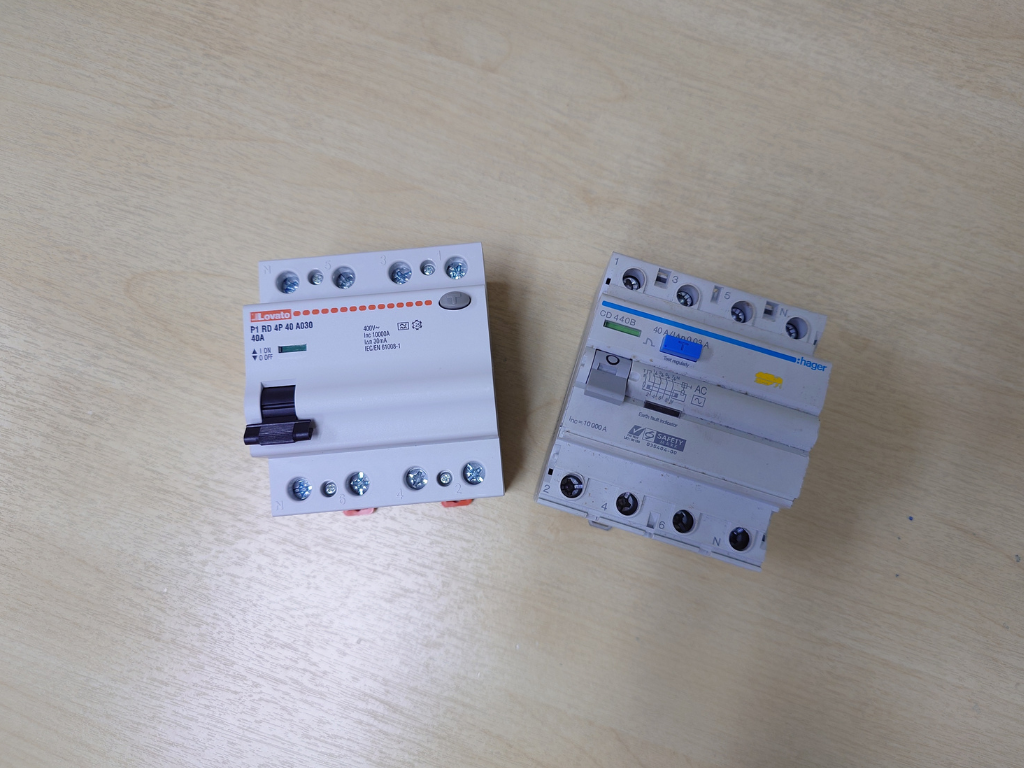
The RCCB (Residual Current Circuit Breaker)
And more specifically:
Should you use Type A or Type B?
This is where confusion — and misinformation — is very common.
1. What Is an RCCB and Why It Matters
An RCCB is designed to:
- Detect leakage current
- Cut off power when a fault occurs
In simple terms:
It protects you from electric shock and prevents electrical fires.
For EV charging:
This is critical because:
- Charging involves high current
- Outdoor or semi-outdoor environments are common
- Long-duration operation increases risk exposure
2. What Types of Leakage Currents Exist?
To understand RCCB types, you need to understand leakage current types:
AC Leakage
- Standard alternating current leakage
- Found in normal household appliances
DC Leakage
- Direct current leakage
- Can be generated by EV chargers
Why this matters:
Some RCCBs cannot detect DC leakage properly.
3. RCCB Type A vs Type B — The Core Difference
Type A RCCB
- Detects:
- AC leakage
- Pulsating DC leakage
Type B RCCB
- Detects:
- AC leakage
- Pulsating DC
- Smooth DC leakage
Summary:
Type B is more comprehensive — but also significantly more expensive
4. The Key Question: Do You Always Need Type B?
This is where many installers oversell.
Type B is NOT always required
Why:
Modern EV chargers often include:
- Built-in DC leakage detection (6mA DC protection)
If your charger has this feature:
- A Type A RCCB is typically sufficient
5. What the Standards and Guidelines Indicate
EVCS guidelines require:
- Proper earth leakage protection
- Typically ≤30mA sensitivity
Industry practice:
- Type A RCCB + built-in DC protection in charger
- OR Type B RCCB if no internal DC protection exists
Key principle:
Protection must cover both AC and DC leakage risks
6. Why Type B RCCB Is Expensive
Type B RCCBs:
- Are more complex
- Detect wider leakage spectrum
- Cost significantly more than Type A
Typical difference:
- Type A: Standard pricing
- Type B: Can be several times more expensive
Result:
Some installers:
- Push Type B unnecessarily
- Increase project cost without clear justification
7. When You Actually Need Type B
You should consider Type B if:
- Charger does NOT have built-in DC leakage detection
- You are installing:
- Older EVSE models
- Certain commercial systems
- Manufacturer specifically requires it
8. When Type A Is Sufficient
Type A is typically sufficient when:
- Charger has:
- 6mA DC leakage detection built-in
- System is properly designed
- Installation complies with guidelines
This is the case for many modern chargers:
Including well-designed smart chargers in the market
9. Common Mistakes in the Market
Mistake 1: Always Using Type B
- Increases cost unnecessarily
Mistake 2: Using Type A Without Understanding Charger Specs
- Risk of incomplete protection
Mistake 3: No RCCB at All
- Serious safety violation
Mistake 4: Wrong RCCB Rating
- Incorrect current rating
- Incorrect sensitivity
10. What a Proper Installer Will Do
A professional installer will:
- Check charger specifications
- Confirm DC leakage protection capability
- Select RCCB accordingly
- Explain the decision clearly
They will not:
- Use “one standard for all”
- Recommend blindly
Simple Decision Guide
If your charger HAS built-in DC protection:
Use Type A RCCB (30mA)
If your charger DOES NOT:
Use Type B RCCB
Final Thoughts
RCCB selection is not about choosing the “best” type.
It is about choosing the correct type for your system.
Over-specifying increases cost.
Under-specifying increases risk.
The right balance comes from:
- Understanding your charger
- Understanding protection requirements
- Designing the system properly
If you’re planning your installation, continue here:
→ What Size Cable Is Required for EV Chargers in Malaysia?
→ Questions You Must Ask Before Hiring an EV Charger Installer
Let our obsession with quality protect your safety.
Because when it comes to EV charging and electrical systems, there’s no room for compromise.
Need your EV charger or electrical setup professionally inspected?
📞 WhatsApp Us: https://wa.me/60125954786
Stay connected with us:
🔹 Instagram: https://www.instagram.com/InnovativeGreenPowerMY
🔹 Facebook: https://www.facebook.com/innovativegreenpower
🔹 YouTube: https://www.youtube.com/@IGPEVCharging-ir8rv
🌍 Website: https://www.innovativegreenpower.com