By Alvin Wong, CEO of Innovative Green Power Sdn. Bhd.
When you first get an electric vehicle (EV), it often comes with a portable charger that plugs into a standard 3-pin household socket. While convenient in emergencies or for occasional use, this type of charging—known as Mode 2 charging—was never designed to be a permanent solution for EV ownership.
The Weakness of the 3-Pin Socket
Standard 3-pin plugs and sockets were created decades ago for domestic appliances such as lamps, televisions, or small kitchen equipment. They were never intended to continuously carry high electrical loads for many hours.
An EV charger draws sustained current at or near the maximum rating of the socket, which exposes its weaknesses:
- Wear and Tear: Repeated plugging and unplugging causes mechanical fatigue to the pins and socket contacts, gradually loosening them.
- Rising Resistance: As contact points loosen or corrode with age, electrical resistance increases.
- Excessive Heat: High amperage (typically 10–13A for a granny charger) through a worn connection generates heat. Over time, this can cause the socket face to discolour, deform, or even melt.
- Unpredictable Failure: Some sockets may fail after years, while others can show problems in just days or months. This unpredictability makes it a genuine safety risk.
Continuous Load vs. Household Appliances
It’s important to understand how EV charging differs from the way normal household appliances use electricity.
Most appliances draw electricity intermittently. A kettle may use 13A, but only for 3–5 minutes before switching off. An iron cycles its heating element on and off. Even air-conditioners, though they run for long periods, modulate their compressor loads and rarely stay at maximum current draw.
In contrast, an EV charger pulls a continuous load for many hours. Charging a 60–70 kWh battery at 10A can take more than 20 hours if relying solely on a 3-pin socket. That means the socket, wiring, and protective devices are pushed to their limits for long durations—something they were never designed to handle.
This fundamental difference is why sockets that seem perfectly fine for everyday appliances can deteriorate quickly once pressed into service for EV charging.
Real-World Examples of Socket Failures
Cases of socket failures linked to EV charging are not uncommon:
- Homeowners have reported melted plastic casings around wall sockets after leaving their EVs to charge overnight.
- Some sockets show burnt or blackened marks around the pins, indicating arcing caused by loose connections.
- In severe cases, entire outlets have deformed, making them unsafe for any future use.
The risk here isn’t just damaging the socket—it can extend to nearby wiring concealed within walls. Once insulation is damaged by heat, it can spread fire invisibly until it breaks out elsewhere.
This unpredictability—some sockets last months, others fail within days—underscores why regulators discourage relying on granny chargers for daily charging.
When a Granny Charger Is Acceptable
Despite these risks, the 3-pin portable charger has its place. It is not a bomb, and when used correctly, it can be safe in the right situations:
- Travel and Emergencies: Ideal when you’re visiting relatives or staying somewhere without a wallbox.
- Short-Term Use: Acceptable as a stopgap while waiting for a proper EV charger installation.
- Low Mileage Users: If you drive only occasionally and rarely need to recharge more than a few kWh, a granny charger can be a temporary solution.
The key is to recognise its limitations. It should never be treated as the main, everyday charging method for your EV.
The Regulatory and Insurance Angle
The Suruhanjaya Tenaga (Energy Commission) requires that EV chargers be installed with a dedicated final circuit, MCB, and RCCB Type A (30mA) protection. This ensures safety against overcurrent, short circuits, and earth leakage faults.
If an EV is damaged or a fire occurs because charging was done on an unsuitable socket, two serious consequences may follow:
- Warranty Void: Manufacturers and charger suppliers may deny warranty claims if the EVSE was not installed in compliance with local guidelines.
- Insurance Rejection: Insurers can reject fire or property damage claims if the cause is traced to non-compliant electrical setups.
This regulatory and financial risk is often overlooked but is just as important as the technical safety risks.
The Safer Long-Term Solution
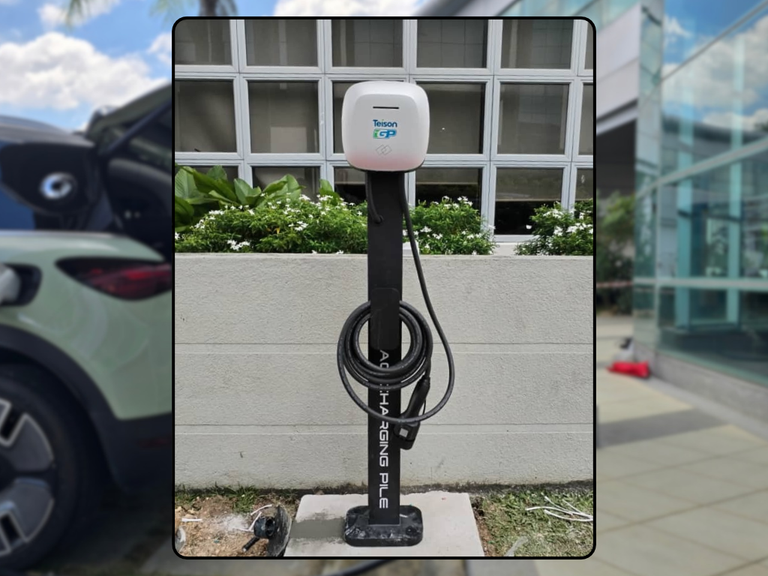
For regular EV charging at home, the correct approach is to install a dedicated EV charger (Mode 3) with its own independent circuit. This includes:
- A dedicated final circuit sized to match the EV charger load
- Proper overcurrent protection such as an MCB or MCCB
- Earth leakage protection via an RCCB Type A, 30mA
- Professional installation by a competent, Suruhanjaya Tenaga-registered electrical contractor
This ensures your charging system is designed for continuous high load, with safety layers to cut power in case of fault.
Checklist for Safe EV Charging at Home
For new EV owners, here’s a simple checklist to protect your vehicle and your home:
- Use granny chargers only for emergencies or travel.
- Do not run an EV charger on aged or visibly worn sockets.
- Avoid extension cords or multi-plug adapters.
- Check sockets periodically for heat, burn marks, or smell if using a granny charger temporarily.
- Plan for a dedicated EV charger installation as soon as possible.
- Ensure your installation includes a dedicated MCB and RCCB Type A, 30mA.
- Hire only competent, registered electricians to handle the wiring.
- Keep records of the installation for warranty and insurance protection.
Key Takeaway
Your 3-pin plug EV charger is not a bomb—it can be used occasionally without issue. But relying on it every night as your main charging solution is unsafe, unpredictable, and places strain on old sockets and wiring.
For peace of mind, safety, and to protect both your home and your EV, always move towards a dedicated EV charging system with proper protection and independent wiring.