When people start shopping for a home EV charger, the first thing they usually compare is the charger itself.
Brand. Power rating. App features. Price. Design.
That is understandable. The charger is the most visible part of the setup. It is the box you see on the wall, the cable you plug into the car, and the app you may use every day.
But from an installer’s point of view, the charger is only one part of the system.
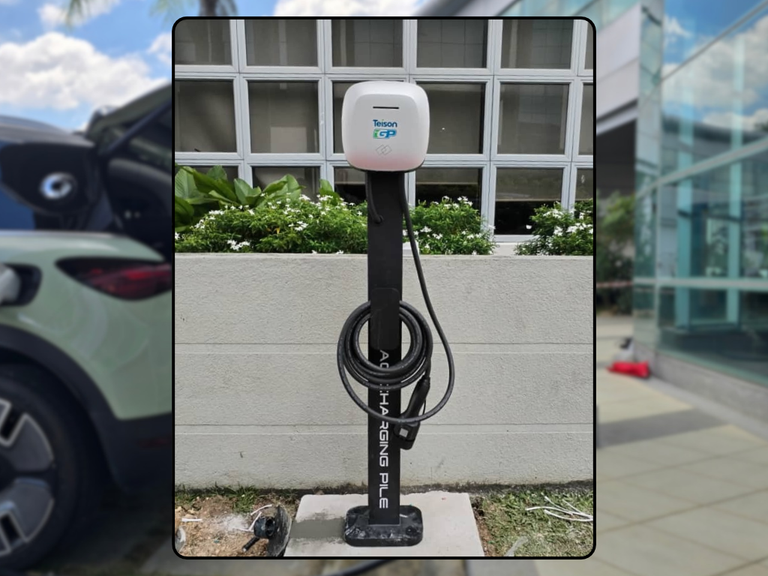
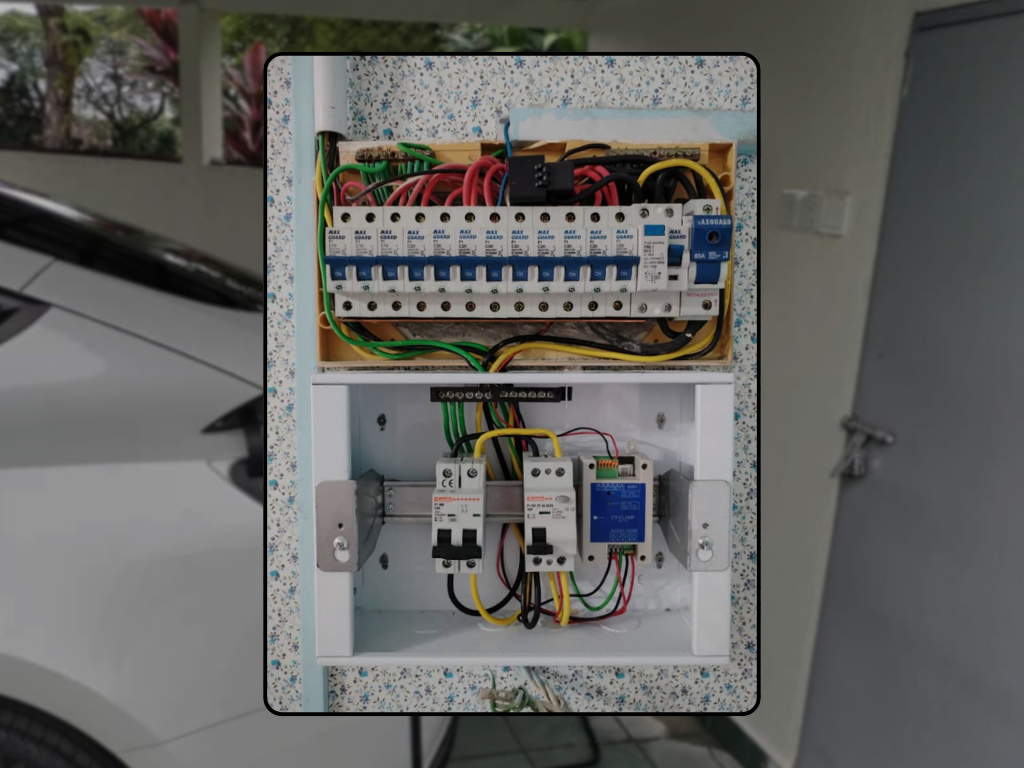
A home EV charger is not like buying a phone charger, a water filter, or a normal household appliance. Once it is installed, it becomes part of your home’s electrical installation. That means it is connected to your distribution board, cable route, protection devices, earthing system, and available electrical capacity.
This is why we always remind customers: the charger is important, but the system behind the charger is what protects your home.
Why This Matters for EV Owners
EV charging is very different from most household electrical loads.
A kettle may use high power, but only for a few minutes. An air conditioner cycles on and off. A water heater is usually used for a short period.
An EV charger can run continuously for hours. For many EV owners, home charging happens overnight. That means the charging system may be carrying significant current for six, eight, or even ten hours at a time.
This is where installation quality becomes important.
If the cable is undersized, the protection device is wrongly selected, or the termination is poorly done, the problem may not show immediately. The charger may still turn on. The car may still charge. Everything may look normal on day one.
But electrical problems often develop quietly. Heat builds up. Connections loosen over time.
Insulation ages faster. Protection devices may operate under unnecessary stress.
By the time the owner notices frequent tripping, burning smell, melted parts, or charger faults, the issue may already have been developing for months.
This is why EV charging cannot be treated as “just install and use.”
What Is Actually Behind a Safe EV Charger Installation?
A proper EV charger installation is not just the charger on the wall.
It usually involves several important parts working together:
- The charger itself
- A dedicated final circuit
- Properly sized cables
- MCB or suitable overcurrent protection
- RCCB or suitable earth leakage protection
- Local isolator
- Proper earthing
- Correct cable route and mechanical protection
- Testing and commissioning after installation
Each part has a job. The cable carries the load. The protection devices respond when something goes wrong. The isolator allows safe disconnection. The earthing system provides fault protection. The installation route affects heat, protection, and long-term reliability. Testing confirms the system is ready to operate.
If one part is weak, the whole system becomes weaker. This is also why comparing charger prices alone can be misleading. Two installations may look similar from the outside, but the internal design can be completely different.
The Dedicated Circuit Is Not Optional Thinking
A common misunderstanding is that an EV charger is simply another electrical point. It is not.
For EV charging, the circuit should be designed specifically for the charger. This means the charger should not share wiring with general socket circuits, air conditioners, water heaters, or other household appliances.
A dedicated circuit gives the charger a controlled electrical path from the distribution board to the EVSE. It also allows the protection devices to be selected properly for that specific load.
This matters because EV charging is predictable but demanding. We know the charger may pull high current. We know it may run for long hours. We know it may be used regularly.
Because of that, the circuit must be designed for the job. Shortcuts such as tapping from an existing socket circuit or sharing with another load may reduce installation cost, but they also reduce safety margin.
Malaysian Homes Are Not All the Same
One reason we insist on inspection and assessment is because Malaysian homes vary a lot.
Some homes have newer wiring and more available capacity. Some homes have older distribution boards. Some homes are single-phase with many high-load appliances. Some homes already have solar. Some homes have long cable routes from DB to parking area. Some homes have limited DB space. Some homes have earthing conditions that should be checked before installation.
So, when a customer asks, “Can my house support this charger?”, the honest answer is we need to understand the home first.
The EV model matters. The charger model matters. But the home electrical condition matters just as much.
A good installation recommendation should consider existing household load, incoming supply condition, available spare capacity, cable route length, installation environment, charger location, required protection devices, and future usage pattern.
Without checking these, the recommendation is mostly guesswork.
Why Smart Chargers Make More Sense Today
This is where smart chargers become important.
A basic charger may simply supply power at a fixed setting. That can work in some homes, but it may not be ideal for homes with limited capacity or changing household loads.
A smarter charger can do more. For example, the Smart Mini charger can support features such as adjustable charging current, dynamic load balancing, and solar-related charging functions where properly configured.
Dynamic Load Balancing is especially useful for many Malaysian homes. Instead of forcing the charger to draw a fixed high current all the time, the system can monitor the home’s electrical usage and adjust charging output based on available capacity.
This helps the charging system work more intelligently within the limits of the home.
It does not magically increase the home’s supply capacity. It does not replace proper installation. It does not remove the need for correct protection devices. But it gives the system a better way to manage real-world household load.
For many homes, that is more practical than blindly chasing maximum charging speed.
The Real Question Is Not “Which Charger Is Cheapest?”
Many EV owners begin with this question: “How much is the charger?”
A better question is: “What charging system is suitable for my home?”
That question changes the decision completely.
Instead of looking only at the charger brand or price, we start looking at the complete setup: Can the home support the intended charging current? Is the cable route suitable? What cable size is required? What protection devices are needed? Should the charger current be limited? Is dynamic load balancing recommended? Is there any DB upgrade required? Will the installation remain safe for long-term daily use?
This is the difference between buying a charger and installing a home charging system.
What IGP Looks at Before Recommending a Charger
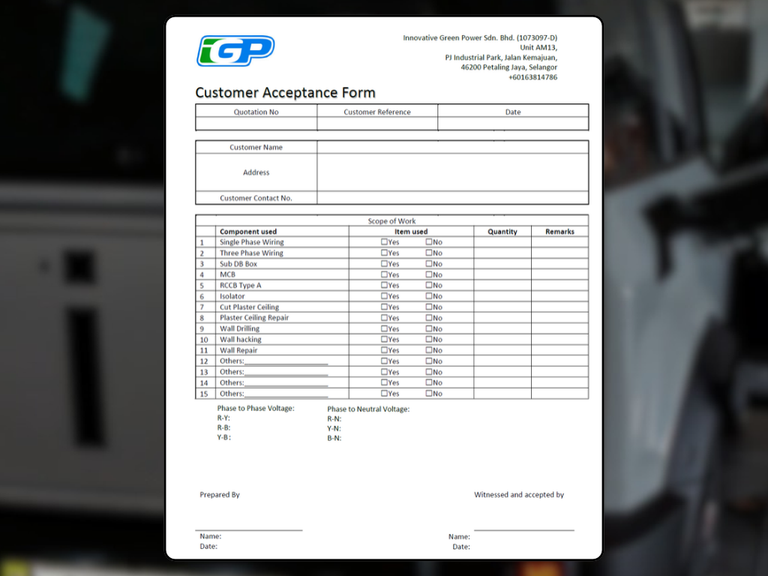
At IGP, we prefer to understand the site before making a firm recommendation.
A proper assessment helps us determine whether the home is suitable for a standard installation, whether additional protection or DB work is needed, and whether smart charging features such as load balancing would be useful.
For many customers, the inspection also helps them understand their home better.
They may realise that a 7-kW charger does not need to run at 7 kW every night. They may realise that a three-phase upgrade is not always the first answer. They may realise that dynamic load balancing can be a safer and more practical solution. They may realise that the installation quality matters as much as the charger.
This is the kind of understanding that helps EV owners make better decisions.
Final Thought
Your EV charger is not just a gadget. It is part of your home electrical system.
That means the decision should not be based only on charger price, charger design, or charging speed. It should be based on whether the full system is properly designed, safely installed, and suitable for your home.
A good charger installed badly is still a bad charging system.
A properly designed charging system gives you something more valuable than fast charging. It gives you confidence that your EV can charge safely and reliably at home, every day.
IGP enforces high standards as a deliberate benchmark to maximise safety in residential EV charging.
Because a home is not just an electrical installation. It is where lives and livelihoods are protected.
EV charging should be an upgrade to modern living, not a compromise in safety.
Let our obsession with quality protect your safety.
Because when it comes to EV charging and electrical systems, there is no room for compromise.
IGP’s Safety Principles
IGP enforces high standards as a deliberate benchmark to maximise safety in residential EV charging. Because a home is not just an electrical installation—it is where lives and livelihoods are protected. EV charging should be an upgrade to modern living, not a compromise in safety.
Let our obsession with quality protect your safety.
Because when it comes to EV charging and electrical systems, there’s no room for compromise.
Need your EV charger or electrical setup professionally inspected?
WhatsApp Us: https://wa.me/60125954786
Stay connected with us:
Instagram: https://www.instagram.com/InnovativeGreenPowerMY
Facebook: https://www.facebook.com/innovativegreenpower
YouTube: https://www.youtube.com/@IGPEVCharging-ir8rv
Website: https://www.innovativegreenpower.com